




Imagine needing to send money to a relative in Lagos while you're stuck in London, only to find that traditional banks charge you nearly 8% in fees and take three days to process the transfer. Now imagine doing it in under five minutes for a fraction of that cost, using just your smartphone and a local bank app. This isn't a hypothetical scenario; it is the daily reality for millions of Nigerians who have turned to P2P crypto trading as their financial lifeline.
Nigeria’s relationship with digital assets is unique. While many countries view cryptocurrency as speculative gambling, in Nigeria, it has become a practical tool for survival against inflation and currency devaluation. With the Naira losing significant value against the US dollar over the past decade, peer-to-peer (P2P) markets have exploded. But with great opportunity comes complexity. Which platform is safest? How do you avoid scams? And what changed after the new regulations hit in 2025?
The Rise of Peer-to-Peer Crypto in Nigeria
Why did P2P trading boom here more than almost anywhere else? The answer lies in necessity. According to recent data, approximately 36% of Nigerian adults remain unbanked, while many others are underbanked. Traditional financial institutions often fail to meet the needs of this population, especially when it comes to cross-border transactions. Before P2P platforms became mainstream, sending remittances was slow and expensive. Today, Nigeria ranks second globally in cryptocurrency adoption, a statistic driven not by hype, but by utility.
The shift accelerated due to regulatory whiplash. In 2021, the Central Bank of Nigeria (CBN) issued a circular prohibiting banks from servicing crypto businesses. This initially caused panic, but it inadvertently fueled the P2P sector because users had to transact directly with each other rather than through centralized exchanges holding fiat deposits. By 2023, the CBN reversed course, allowing banks to service licensed crypto businesses. Then, in early 2025, the Investments and Securities Act (ISA 2025) established the Securities and Exchange Commission (SEC) as the primary regulator for digital assets. This legal clarity reduced scam incidents by 63% compared to late 2024, giving traders the confidence to move larger sums.
How P2P Platforms Actually Work
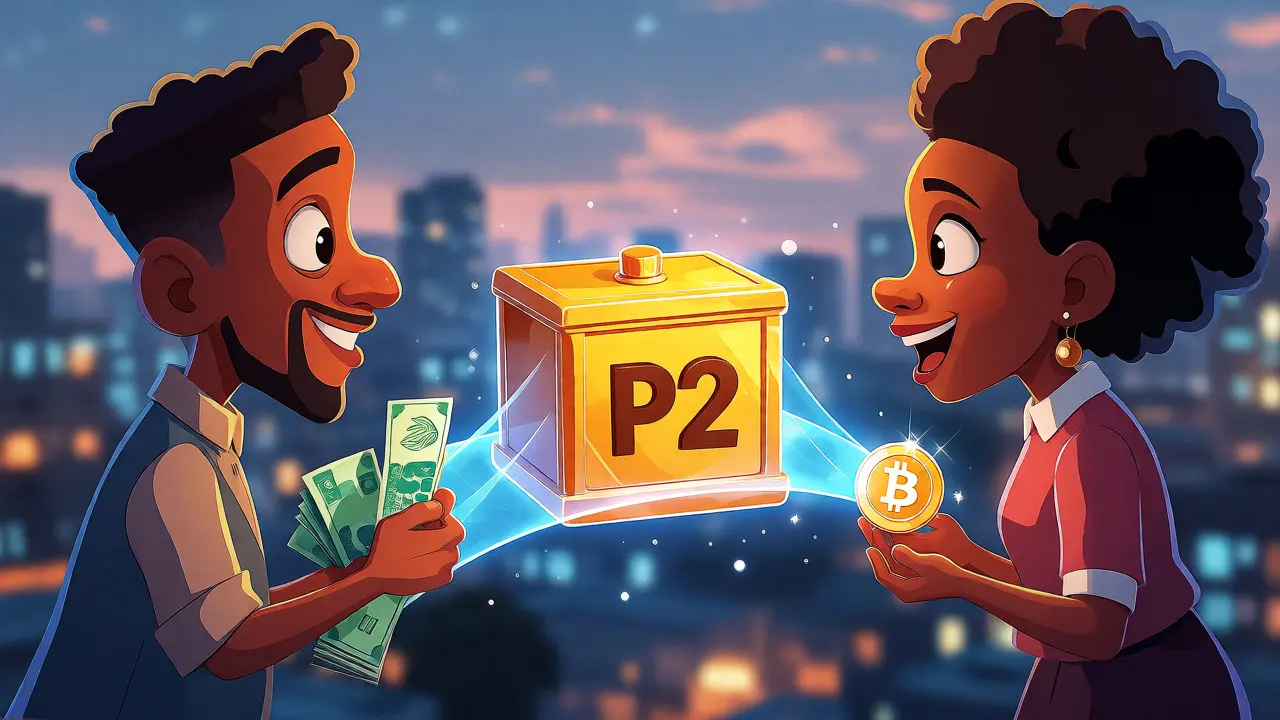
If you are new to this, think of a P2P platform like a secure marketplace, similar to eBay or Craigslist, but specifically for buying and selling cryptocurrency using local currency. You don’t buy Bitcoin directly from the exchange; you buy it from another person. The platform acts as the escrow agent, holding the crypto until the buyer confirms payment via bank transfer, mobile money, or other local methods.
The process typically looks like this:
- Select an Ad: You browse offers from verified sellers who accept your preferred payment method (e.g., GTBank, Zenith, Opay).
- Place an Order: The platform locks the seller’s crypto in escrow.
- Make Payment: You transfer Naira directly to the seller’s bank account outside the platform.
- Release Funds: Once the seller confirms receipt, the platform releases the crypto to your wallet.
This model bypasses traditional banking bottlenecks. For instance, Binance P2P supports over 20 payment methods, including direct bank transfers and mobile wallets, facilitating transactions with minimal friction. However, speed varies. While some trades complete in minutes, others can drag on if there are disputes or verification issues.
Top P2P Platforms Operating in Nigeria
Not all platforms are created equal. Some offer better liquidity, others provide superior customer support, and a few specialize in instant payouts. Based on current market performance and user feedback, here are the key players dominating the landscape in 2026.
| Platform | Key Strength | Fees | Payment Methods | User Rating |
|---|---|---|---|---|
| Binance P2P | Highest liquidity & volume (45% market share) | 0.1% maker/taker | 20+ (Bank, Mobile Money) | 4.8/5 |
| Bybit | Local language support (Yoruba, Igbo, Hausa) | 0.1% | Multiple local options | 4.6/5 |
| YellowCard | Educational resources & Pan-African reach | Zero trading fees* | Instant Naira deposits | 4.5/5 |
| Busha | First SEC-licensed exchange; easy UI | Variable spread | Bank Transfer, Card | 4.4/5 |
| Breet | Instant bank payouts (avg. 3 mins) | Spread-based | Direct Bank Payouts | 4.3/5 |
*Note: YellowCard may apply network fees or spreads despite zero explicit trading fees.
Binance P2P remains the heavyweight champion. It holds roughly 45% of the market share in Nigeria, largely due to its massive user base and deep liquidity. If you need to sell a large amount of USDT quickly, you will likely find a buyer on Binance within seconds. However, its sheer size means you must be vigilant about counterparty risk. Always check the seller’s completion rate and number of orders before proceeding.
Bybit has carved out a niche by focusing on localization. Unlike global giants that treat Nigeria as an afterthought, Bybit offers 24/7 support in Yoruba, Igbo, and Hausa. This cultural integration builds trust among users who might feel alienated by English-only interfaces. Their transaction processing times are also competitive, often beating global averages by 12-15% due to deeper integration with local banking infrastructure.
YellowCard appeals to beginners and those looking for education. They provide over 120 localized tutorial videos, helping users understand not just how to trade, but why they are trading. While their mobile app has faced criticism for occasional crashes during peak hours, their expansion across 20 African countries creates a network effect that smaller platforms struggle to match.
Busha deserves mention as Nigeria’s first SEC-licensed exchange under the ISA 2025 framework. This regulatory compliance makes it a safer bet for conservative investors wary of offshore risks. Its interface is simplified, offering features like recurring purchases, which is ideal for those trying to dollar-cost average into Bitcoin despite Naira volatility.
Breet focuses on speed. If your priority is converting crypto back to Naira instantly, Breet specializes in this. Most transactions complete within three minutes, verified by high user satisfaction ratings. It’s less of a trading floor and more of an off-ramp/on-ramp service, making it perfect for freelancers receiving payments in USDT who need cash immediately.
Navigating Risks and Scams
Despite regulatory improvements, scams persist. The Economic and Financial Crimes Commission (EFCC) noted that 22% of reported fraud cases in mid-2025 involved impersonation of verified sellers. A common tactic involves a buyer paying from a stolen bank account. The seller releases the crypto, thinking the money is safe, only for the real account owner to dispute the transaction days later. The funds vanish, leaving the seller with nothing.
To protect yourself:
- Never release crypto before confirming receipt: Check your actual bank app, not just an SMS alert or a screenshot sent by the buyer.
- Use Escrow: Ensure the platform holds the funds. Never trade off-platform.
- Verify Counterparties: Look for users with high completion rates (above 95%) and hundreds of completed orders.
- Avoid Third-Party Payments: If a buyer pays from a name different from their profile, cancel the order. This is a major red flag for money laundering or stolen funds.
Security researcher Chinedu Okoro highlights another vulnerability: Two-Factor Authentication (2FA). While platforms advertise 2FA protection, up to 68% of Nigerian users disable it due to SMS delivery issues. This leaves accounts exposed. Where possible, use authenticator apps (like Google Authenticator) instead of SMS-based 2FA to ensure consistent access.
Regulatory Landscape: What Changed in 2025?
The passage of the Investments and Securities Act (ISA 2025) was a watershed moment. Previously, the regulatory environment was murky, leading to uncertainty for both platforms and users. The SEC now mandates real-time transaction monitoring systems for all platforms, a requirement set to be fully implemented by the end of 2025. This has forced upgrades in compliance infrastructure, reducing the prevalence of anonymous, high-risk trades.
Dr. Amina Bello, Chief Economist at ChainUp Africa, notes that while licensing delays created temporary consolidation among early-approved platforms like Busha and Quidax, the long-term effect is positive. Fraud has decreased significantly, and institutional participation is rising. Expect to see more traditional financial players entering the space by 2026, bringing greater stability and lower spreads.

Practical Tips for New Traders
Getting started requires some patience. New users typically spend 2-3 hours completing initial setup, including KYC (Know Your Customer) verification. Be prepared to upload government IDs and proof of address. Once verified, start small. Test the waters with ₦10,000 ($6.50) before moving larger sums.
Keep these heuristics in mind:
- Time of Day Matters: Liquidity is higher during business hours (9 AM - 6 PM WAT). Spreads tend to widen late at night when fewer traders are active.
- Watch the Spread: The difference between the buy and sell price is your hidden cost. Compare rates across Binance, Bybit, and YellowCard before executing.
- Keep Records: Save screenshots of every transaction confirmation. If a dispute arises, the platform support team will ask for proof of payment and communication logs.
Community resources are abundant. There are over 147 active Telegram groups dedicated to Nigerian crypto trading, averaging 1,200 members each. These groups are invaluable for real-time updates on platform downtimes, best rates, and emerging scams. Don’t hesitate to ask questions there; the community is generally helpful to newcomers.
The Future of P2P in Nigeria
The trajectory is upward. Analysts predict the P2P market will reach $5.1 billion by 2027, growing at 27% annually. This growth is driven by increasing institutional participation and the continued depreciation of the Naira. As traditional savings lose value, digital assets remain one of the few accessible hedges for the average citizen.
However, challenges remain. Technological infrastructure limits affect 31% of rural users, creating a digital divide. Additionally, while regulation helps, it cannot eliminate human error. The sophistication of scams continues to evolve, requiring constant vigilance from traders. Yet, the resilience of the Nigerian spirit ensures that P2P crypto trading will continue to adapt and thrive, serving as a critical pillar of the nation’s financial inclusion efforts.
Is P2P crypto trading legal in Nigeria?
Yes, following the Investments and Securities Act (ISA 2025), cryptocurrency trading is regulated by the Securities and Exchange Commission (SEC). Banks are allowed to service licensed crypto businesses, making P2P transactions legally recognized and protected under consumer laws.
Which P2P platform has the lowest fees?
Binance P2P charges a flat 0.1% maker/taker fee. YellowCard advertises zero trading fees but applies a spread on the exchange rate. Breet uses a spread-based model without explicit commission fees. For most users, the total cost difference is negligible unless trading very large volumes, where Binance's transparent fee structure often wins.
How fast can I withdraw Naira from P2P platforms?
Withdrawal speeds vary by platform and bank. Breet specializes in instant payouts, averaging 3 minutes. Binance and Bybit typically process withdrawals within 15-30 minutes, depending on network congestion and bank processing times. Weekends and holidays may cause delays.
What should I do if I get scammed on a P2P trade?
Immediately contact the platform's customer support and open a dispute. Provide all evidence, including chat logs and bank statements. If the platform fails to resolve it, report the incident to the EFCC. Always keep communications within the platform to maintain a verifiable record.
Do I need a separate wallet for P2P trading?
Most platforms allow you to hold crypto in their internal wallet. However, for security, it is recommended to move large amounts to a personal hardware wallet or a non-custodial software wallet like Trust Wallet or MetaMask. This reduces reliance on the platform's solvency and security.