





You might think that because SushiSwap is a massive multi-chain protocol, every deployment of it is equally robust. That’s not the case. If you’re looking at the Avalanche C-Chain instance of SushiSwap, you are stepping into a niche corner of the decentralized finance world. It’s not the bustling marketplace you see on Ethereum or Arbitrum. As of late August 2026, this specific exchange handled a mere $197 in 24-hour trading volume. Yes, one hundred and ninety-seven dollars. This stark reality defines the user experience here: it is a functional, secure, but extremely thin layer of liquidity within the broader Sushi ecosystem.
| Metric | Value / Status | Implication for Users |
|---|---|---|
| 24-Hour Volume | $197.05 | Extremely low activity; high slippage risk for large trades. |
| Active Pairs | 4 Trading Pairs | Limited asset selection compared to other chains. |
| Top Pair | USDC/WAVAX (92% of vol) | Liquidity is heavily concentrated; other pairs are illiquid. |
| Trading Fee | 0.30% | Standard AMM fee; 0.25% goes to LPs, 0.05% to treasury. |
| Launch Year | 2021 | Established deployment, but not a primary growth hub. |
What Exactly Is SushiSwap on Avalanche?
Think of SushiSwap as a giant network of automated market makers (AMMs). While the original code lives on Ethereum, the Avalanche version is a copy-paste deployment on the Avalanche C-Chain. It uses the same smart contract logic to let you swap tokens without a middleman. You don’t send money to a company like Coinbase; you interact directly with code. The Avalanche Builder Hub lists it as a supported integration, meaning the core Avalanche team recognizes its role in providing on-chain liquidity infrastructure. But recognition doesn’t equal traffic. This instance exists primarily so that users can access the familiar Sushi interface and tools while staying on the fast, low-cost Avalanche network.
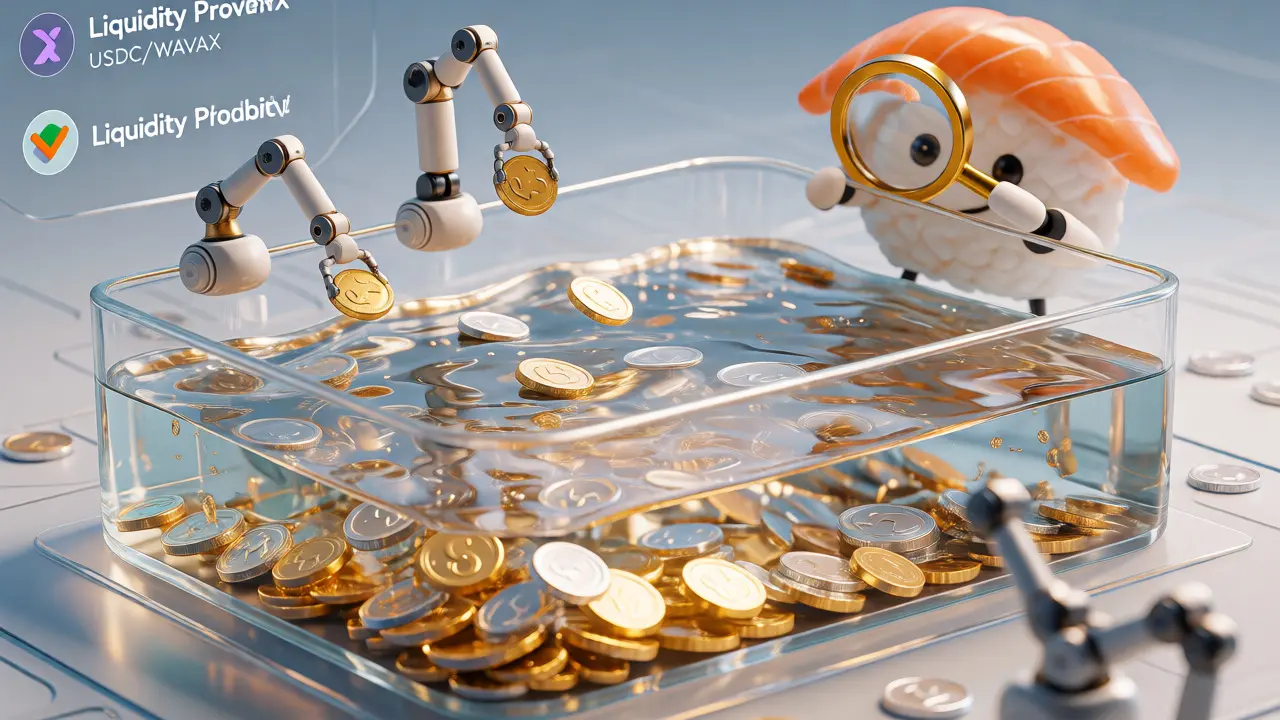
The technical backbone here is identical to the rest of the Sushi family. It relies on constant product formulas to price assets. When you trade, you aren’t matching orders with another person in real-time; you’re buying from or selling to a pool of reserves. On Avalanche, these pools are smaller. The most active market is the USDC/WAVAX pair, which accounts for over 92% of all volume. If you try to trade anything else, like a small-cap meme coin against AVAX, you might find yourself fighting against significant price impact because there simply isn’t enough capital locked in those pools.
Fees and Rewards: Where Does Your Money Go?
When you execute a swap on SushiSwap (Avalanche), you pay a flat 0.3% fee. This is standard across most major AMMs, including Uniswap V2-style forks. But who gets paid? It’s split. About 0.25 percentage points go to the people who provided the liquidity-the Liquidity Providers (LPs). The remaining 0.05 percentage points go to the SushiSwap treasury to fund development and buy back SUSHI tokens. This model incentivizes users to lock up their funds, hoping the fees earned outweigh the losses from impermanent loss.
Here is the catch for Avalanche users: because the total trading volume is so low ($197/day), the absolute dollar amount of fees generated is tiny. If you provide liquidity to a non-USDC/WAVAX pair, you might earn fractions of a cent per day. Unless you are using leverage or have a very specific reason to be on this chain, the yield farming returns on this specific deployment are likely negligible compared to gas costs and opportunity costs. The yield earning strategies exist-staking xSUSHI, lending-but they are dwarfed by the activity on networks like Arbitrum or Base.
How to Use SushiSwap on Avalanche: A Step-by-Step Guide
If you decide to use this exchange, the workflow is standard DeFi fare, but you need your wallet ready. You cannot use a credit card here. There is no "Sign Up" button. You connect, you approve, and you sign.
- Connect Your Wallet: Open the SushiSwap interface and select the Avalanche network. Connect a Web3 wallet like MetaMask or Rabby. Ensure your wallet is configured for the Avalanche C-Chain.
- Fund with Gas: You must hold AVAX in your wallet. Every transaction-swapping, approving tokens, adding liquidity-costs AVAX. Even though Avalanche fees are low, running out means you’re stuck.
- Select Tokens: Choose the token you want to sell (e.g., WAVAX) and the token you want to buy (e.g., USDC). If the pair doesn’t appear automatically, you may need to add the contract address manually.
- Review Slippage: Because liquidity is thin, set your slippage tolerance carefully. For the main USDC/WAVAX pair, 0.5% might suffice. For obscure pairs, you might need 1-2%, but beware of front-running bots.
- Confirm Transactions: You will likely need two signatures: one to approve the token spending (if it’s your first time using that token) and one to execute the swap.
Cross-chain swaps are also possible via SushiXSwap. You can bridge assets from Polygon or BNB Chain directly to Avalanche through the interface. This requires multiple approvals and takes longer than a simple swap, but it keeps you within the Sushi ecosystem rather than forcing you to use a separate bridge aggregator.
Pros and Cons: Who Should Actually Use This?
Let’s be blunt about the trade-offs. This isn’t a platform for everyone.
- Pro: Self-Custody Control. You hold your keys. No one can freeze your account. This is crucial for privacy-focused users or those who distrust centralized exchanges like Binance or Coinbase.
- Pro: Multi-Chain Routing. If you already use SushiSwap on other chains, the interface and governance token (SUSHI) are consistent. You don’t need to learn a new UI.
- Con: Tiny Liquidity. With only four active pairs, your choices are limited. If you want to trade a newly launched Avalanche-native token, check if it has a pool here first. Often, native DEXs like Trader Joe or Pangolin have better depth for local projects.
- Con: No Fiat Ramps. You cannot deposit GBP or USD directly. You must buy crypto elsewhere and bridge it over. This adds friction and extra fees.
- Con: Historical Baggage. SushiSwap suffered an "exit scam" controversy in 2020 when the founder withdrew $13 million. While the project has matured and governance has decentralized, some users still hesitate due to this history.

Risk Assessment: What Could Go Wrong?
Using any DeFi protocol involves risks, but they are amplified on low-volume deployments. First, consider smart contract risk. While the code is audited, bugs happen. Second, impermanent loss is real. If you provide liquidity to a volatile pair and the price moves significantly away from your entry point, you might end up with less value than if you had just held the tokens. On a low-volume chain, price swings can be more erratic because a single large trade can move the market.
There is also the risk of rug pulls for newer tokens added to these pools. Since listing is permissionless, anyone can create a fake token and add liquidity. Always verify the contract address and social presence of any token before swapping. Community feedback on Reddit often highlights confusion around reward mechanics-users sometimes stake LP tokens but forget to claim rewards or misunderstand how xSUSHI staking works. Documentation is key here.
Verdict: Is It Worth Your Time?
SushiSwap on Avalanche is a tool, not a destination. It serves a specific purpose: giving DeFi-savvy traders access to the Sushi ecosystem on a fast chain. If you are already deep in the Avalanche DeFi landscape and need a secondary venue for swapping stablecoins or AVAX, it works fine. The interface is clean, and the security model is proven.
However, if you are looking for high-yield farming, diverse asset options, or a place to trade long-tail altcoins, look elsewhere. Native Avalanche DEXs often offer better incentives and deeper liquidity for local projects. And if you are a beginner who wants to buy Bitcoin with a debit card and never touch a private key, stay on a centralized exchange. SushiSwap (Avalanche) demands technical competence and patience with low volumes. It is a legitimate, maintained part of the crypto infrastructure, but it is currently a quiet room in a very loud house.
Is SushiSwap on Avalanche safe to use?
Yes, the smart contracts are well-audited and battle-tested since the protocol's inception in 2020. However, "safe" does not mean risk-free. You are exposed to smart contract vulnerabilities, impermanent loss, and the risk of interacting with fraudulent tokens listed in low-liquidity pools. Always verify token contract addresses.
Why is the trading volume so low on SushiSwap Avalanche?
Liquidity on decentralized exchanges follows where the users and incentives are. On Avalanche, native competitors like Trader Joe and Pangolin captured the majority of the market share early on. SushiSwap remains available but hasn't secured the dominant position it holds on chains like Ethereum or Arbitrum, leading to fragmented and lower volume.
Can I buy crypto with fiat currency on SushiSwap Avalanche?
No. SushiSwap is a decentralized exchange (DEX) and does not support direct fiat deposits or withdrawals. You must acquire crypto (like AVAX or USDC) on a centralized exchange first, then withdraw it to your Avalanche wallet to use on SushiSwap.
What is the fee structure for trading on SushiSwap Avalanche?
The standard trading fee is 0.3% per swap. Of this, 0.25% is distributed to liquidity providers as rewards, and 0.05% goes to the SushiSwap treasury. You also pay network gas fees in AVAX for each transaction.
Which tokens are most traded on SushiSwap Avalanche?
The USDC/WAVAX pair is by far the most active, accounting for over 90% of the total trading volume. Other pairs exist but have significantly lower liquidity, making them prone to higher slippage.

Write a comment