






Have you seen the notifications popping up on your social media feeds promising free Bake Coin tokens? It’s easy to get excited when someone offers you something for nothing, especially in the fast-moving world of cryptocurrency. But before you rush to connect your wallet or click that suspicious link, we need to pause and look at the facts. As of mid-2026, there is no official, verified announcement from the core team behind BakerySwap (the platform associated with the BAKE token) regarding a new "BAKECOIN" airdrop.
This lack of official information is the biggest red flag. In the crypto space, silence from the developers usually means the event isn't happening-or worse, it’s a trap set by scammers trying to steal your assets. Let’s break down what is actually going on with the BAKE token, how real airdrops work, and how you can protect yourself from falling victim to fake giveaways.
The Reality of the BAKE Token and BakerySwap
To understand why this specific airdrop claim is likely false, we first need to clarify what the BAKE token actually is. The BAKE token is the native utility token of BakerySwap, a decentralized exchange (DEX) and NFT marketplace operating primarily on the BNB Chain. It was launched several years ago and has established itself as a key player in the Binance Smart Chain ecosystem.
Historically, BakerySwap has distributed rewards through its liquidity mining programs and staking mechanisms rather than random, open-to-the-public airdrops. When projects like this want to reward users, they typically do so via:
- Liquidity Provider (LP) Rewards: Users who provide liquidity to trading pairs earn BAKE tokens over time.
- Staking Programs: Holding BAKE in designated vaults yields additional BAKE or other partner tokens.
- NFT Minting Events: Early access or discounts for holders of specific NFT collections within the BakerySwap ecosystem.
If a genuine airdrop were to occur, it would almost certainly be announced on their official Twitter account, Discord server, and website. It would target existing users-those who have traded on the platform, held NFTs, or provided liquidity-not random internet users clicking links from Telegram bots.
Why "BAKECOIN" Sounds Like a Scam
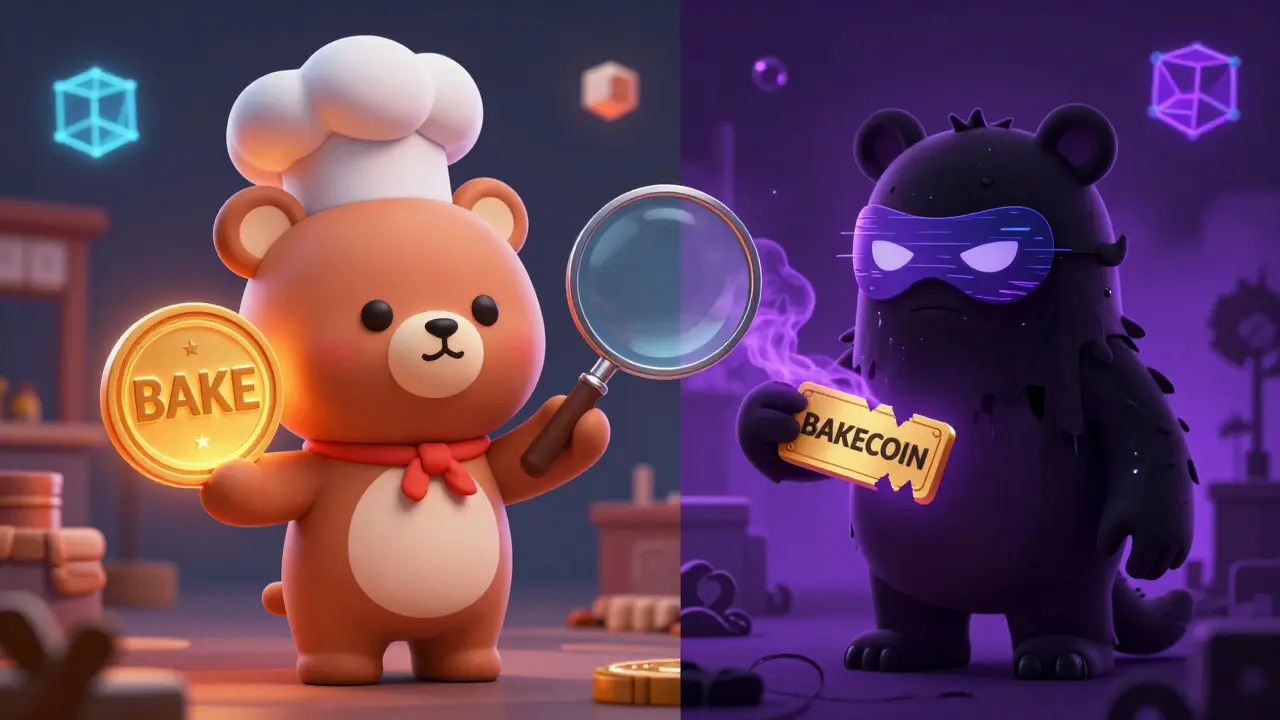
Notice the naming convention used in these viral posts: "BAKECOIN." This slight alteration from the actual ticker symbol "BAKE" is a classic tactic used by fraudsters. Here is why this distinction matters:
- Trademark Confusion: Scammers use names that sound similar to legitimate projects to catch people off guard. They rely on your excitement overriding your critical thinking.
- Token Sniping: On chains like BNB Chain or Ethereum, anyone can create a token named "BAKECOIN" in minutes. These tokens often have zero value and are designed solely to drain wallets.
- Phishing Links: Most of these "airdrop" announcements lead to fake websites that look identical to the real BakerySwap interface. Once you connect your wallet to claim the "free" tokens, the site executes a malicious smart contract that drains your ETH, BNB, or other valuable assets.
In 2025 and early 2026, we saw massive, legitimate airdrops from projects like Berachain (BERA) and Kaito AI (KAITO). These were major events covered by top-tier news outlets. If BakerySwap were launching a comparable event, it wouldn’t be hiding in obscure Telegram channels; it would be headline news across the entire crypto industry.
How Real Crypto Airdrops Work in 2026
Not all airdrops are scams, but the landscape has changed significantly. The days of simply signing up for an email list and receiving thousands of dollars worth of tokens are largely over. Today, legitimate airdrops are highly strategic and require substantial user interaction. Understanding this helps you spot fakes.
| Feature | Legitimate Airdrop | Fake Airdrop (Scam) |
|---|---|---|
| Announcement Source | Official project website, verified Twitter/X, Discord | Random DMs, unverified Telegram groups, pop-up ads |
| Requirement | Past transaction history, holding specific tokens, governance participation | Connecting wallet immediately, paying gas fees upfront, completing surveys |
| Urgency | Clear deadlines, transparent eligibility criteria | "Claim now or lose out!", "Limited spots remaining!" |
| Cost | Usually free (you pay standard network gas fees only) | Asks for "verification fee", "tax payment", or private keys |
| Token Name | Exact match with project branding (e.g., BAKE) | Slight variations (e.g., BAKECOIN, BAKE-TOKEN, Real-BAKE) |
For example, the Berachain airdrop rewarded users who had actively participated in their testnet and mainnet ecosystems. Kaito AI targeted users who had engaged with their data tools. These were earned rewards based on utility, not free handouts for strangers. If a project asks you to do nothing but connect your wallet to get rich, it is almost certainly a scam.
Steps to Verify Any Airdrop Claim
You don’t need to be a blockchain expert to stay safe. Follow this simple checklist whenever you encounter an airdrop offer, whether it’s for BAKE, Bitcoin, or any new altcoin.
- Check the Official Website: Go directly to bakeryswap.org (or the project’s known URL). Do not click links from social media bios unless you verify them against the official site. Look for a dedicated "Airdrop" or "Rewards" page.
- Verify Social Media Handles: Check the project’s verified Twitter/X account. Look for blue checks or gold badges. Read the recent tweets. If they haven’t mentioned the airdrop, assume it doesn’t exist.
- Use Reputable Aggregators: Sites like Airdrop.io, CoinMarketCap’s airdrop section, or DefiLlama track legitimate opportunities. If the "BAKECOIN" airdrop isn’t listed on these major platforms, it’s likely noise.
- Analyze the Contract Address: If you’re technically inclined, copy the token contract address provided in the offer and paste it into BscScan (for BNB Chain tokens). Check if the liquidity is locked and if the holder distribution looks normal. Scammer tokens often have one wallet holding 90%+ of the supply.
- Ask the Community: Post about it in the official Discord or Reddit community of the project. Ask, "Is this real?" You’ll usually get a quick response from moderators or experienced users warning you away.
The Future of BAKE and BNB Chain Opportunities
While the "BAKECOIN" airdrop appears to be a myth, the underlying asset-the BAKE token-remains relevant. Analysts throughout 2025 and 2026 have noted potential growth drivers for BakerySwap, including deeper integration with the broader BNB Chain ecosystem and continued development of its NFT marketplace.
Price predictions for BAKE vary, with some models suggesting steady climbs toward the $0.60 mark by late 2026, contingent on overall market conditions and DeFi adoption. However, investing in the token itself carries risk. Always do your own research (DYOR) before buying any cryptocurrency. Don’t buy just because you heard about a fake airdrop; buy because you believe in the utility of the platform.
For those interested in legitimate airdrop farming in 2026, focus on emerging Layer 1 and Layer 2 blockchains that are still in their early stages. Projects building new infrastructure often distribute tokens to early adopters to bootstrap liquidity and governance. Keep an eye on protocols that announce "points systems" or "seasons," as these are modern precursors to traditional airdrops.
Protecting Your Wallet in a Wild West Environment
The best defense against airdrop scams is a robust security setup. Here are three non-negotiable practices for every crypto user:
- Use a Burner Wallet: Never connect your primary wallet (where you store your life savings) to unknown dApps or airdrop claim sites. Use a separate wallet with minimal funds for interacting with new protocols.
- Revoke Permissions Regularly: Tools like Revoke.cash allow you to see which contracts have access to your wallet and remove them. If you accidentally connected to a shady site during a fake airdrop attempt, revoke that permission immediately.
- Enable Hardware Security: For significant holdings, use a hardware wallet like Ledger or Trezor. Even if your computer gets malware, your private keys remain offline.
Remember, in crypto, if it sounds too good to be true, it is. There is no such thing as a free lunch. Every "free" token comes with a cost, either in your time, your data, or your existing assets. Stay skeptical, stay informed, and keep your hands on your keys.
Is there an official BAKECOIN airdrop happening in 2026?
No, as of July 2026, there is no official announcement from BakerySwap regarding a "BAKECOIN" airdrop. The term "BAKECOIN" is likely being used by scammers to mimic the legitimate BAKE token. Always verify information through official BakerySwap channels.
What is the difference between BAKE and BAKECOIN?
BAKE is the legitimate native token of the BakerySwap decentralized exchange on the BNB Chain. "BAKECOIN" is not an official token name associated with the project and is likely a fraudulent token created to trick users into connecting their wallets to phishing sites.
How can I tell if a crypto airdrop is a scam?
Red flags include unsolicited messages, requests to pay upfront fees, slightly altered token names, and links from unverified sources. Legitimate airdrops are always announced on official project websites and verified social media accounts, and they rarely require immediate action without prior engagement with the protocol.
Did BakerySwap ever have an airdrop?
BakerySwap has historically rewarded users through liquidity mining and staking programs rather than traditional open airdrops. Early participants in their ecosystem received tokens for providing liquidity or participating in governance, but these were structured incentives, not random giveaways.
Where can I find legitimate crypto airdrops in 2026?
You can find legitimate airdrop opportunities on reputable tracking platforms like Airdrop.io, CoinMarketCap, and DefiLlama. Additionally, following official announcements from emerging blockchain projects on verified Twitter/X accounts and Discord servers is the safest way to discover upcoming distributions.
Is it safe to connect my wallet to claim an airdrop?
It can be risky. Only connect your wallet to verified, official URLs. Use a secondary "burner" wallet with minimal funds for claiming airdrops. After claiming, consider revoking the contract's permissions using tools like Revoke.cash to prevent future unauthorized transactions.
What happened to the Berachain and Kaito AI airdrops?
Both Berachain (BERA) and Kaito AI (KAITO) successfully distributed millions of dollars worth of tokens to eligible users in 2025. These were legitimate events that required prior interaction with their respective ecosystems, serving as examples of how modern, merit-based airdrops operate compared to older, random giveaway models.