


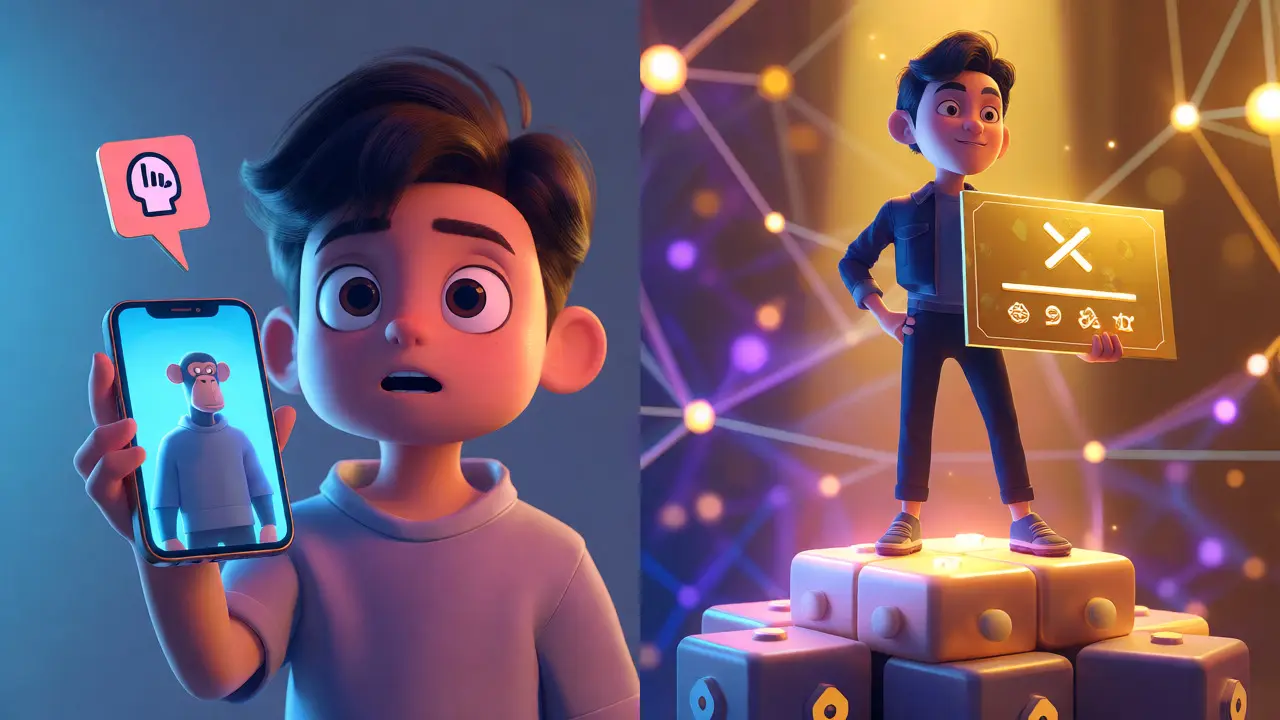
You screenshot a Bored Ape. You right-click, save image. You now have the same picture as someone who paid 50 ETH for it. So why does one person own a fortune and the other just has a JPEG? It’s the million-dollar question that keeps popping up whenever crypto Twitter gets heated. The truth is, NFTs aren't valued because of the pixels on your screen. They’re valued because of what those pixels represent: verifiable ownership, social status, utility, and scarcity in a world where everything else can be copied infinitely.
If you’ve ever looked at an NFT collection and wondered why one pixelated punk sells for millions while another sits unsold at 0.1 ETH, you’re not alone. Pricing isn’t random, even if it feels like it sometimes. It’s driven by specific mechanics-some logical, some purely psychological. Let’s break down exactly how these digital assets get their price tags, without the jargon that usually clouds the conversation.
The Core Concept: Scarcity vs. Copyability
In the physical world, scarcity is easy to understand. There’s only one Mona Lisa in the Louvre. If you want to hang it in your living room, you need to pay a premium because no one else can have the original. Digital files don’t work that way. I can send you a copy of my favorite meme, and we both have the exact same file. No quality loss. No degradation.
Non-Fungible Tokens solve this by using blockchain technology to create unique digital identifiers that cannot be substituted for each other. Think of it like a signed baseball card versus a photocopy. Both show the same player, but one has provenance. The token itself doesn’t store the image; it stores a pointer to the image and proof that *you* hold the rights to that specific instance. This distinction is critical. When people buy NFTs, they aren’t buying the copyright (usually). They are buying the receipt that proves they were first, or that they hold the "official" version recognized by the community.
This creates artificial scarcity. Creators mint limited editions-say, 10,000 CryptoPunks. Once all 10,000 are gone, no more exist. If demand rises, prices rise. Simple supply and demand. But unlike stocks, there are no earnings reports backing this up. It’s entirely based on what collectors believe the asset is worth.
Floor Price: The Market’s Pulse Check
If you spend any time on OpenSea or Blur, you’ll see a number labeled "Floor Price." This is arguably the most important metric for understanding NFT valuation. The floor price is simply the lowest listing price for any item in a specific collection. If the floor for the Bored Ape Yacht Club is 15 ETH, that means the cheapest available ape costs 15 ETH.
Why does this matter? Because it sets the baseline. Investors watch floor prices like hawks. If the floor climbs from 10 ETH to 15 ETH over a month, it signals growing confidence. More people want in than want out. Conversely, if the floor drops, it suggests holders are panicking or losing interest. However, be careful with this metric. A single whale dumping a rare item can skew the average, but the floor specifically tracks the entry point for new buyers. It’s the barrier to entry. High floors mean high barriers, which often correlates with perceived prestige.
| Metric | What It Measures | Impact on Price |
|---|---|---|
| Floor Price | Lowest current listing in a collection | Sets minimum entry cost; indicates market sentiment |
| Rarity Score | Uniqueness of traits compared to others | Higher rarity commands premiums above floor |
| Trading Volume | Total ETH/USD traded in a period | High volume suggests liquidity and active interest |
| Holders Count | Number of unique wallets owning items | Broad distribution reduces manipulation risk |
Rarity and Traits: Why One Pixel Matters More Than Another
Not all NFTs in a collection are created equal. Take a project like Mutant Ape Yacht Club. Most apes might have standard skin colors and accessories. But maybe 1% of them have "Gold Skin" or "Laser Eyes." These are rare traits. Algorithms calculate rarity scores based on how common each trait is within the total supply. The rarer the combination, the higher the score.
Collectors obsess over these scores. In secondary markets, a rare trait can sell for 5x or 10x the floor price. It’s similar to trading cards. Everyone wants the holographic Charizard. The utility is identical-a piece of cardboard-but the status and scarcity drive the price. For NFTs, this dynamic is amplified because the data is transparent. Anyone can check the rarity rank instantly. This transparency drives competition. If you know only three people own the "Diamond Hands" trait, you’re willing to pay more to join that exclusive club.
Utility: Beyond the Artwork
Early NFT hype was mostly about art. Buy a picture, hope it goes up in value. But smart projects realized that pictures alone are fragile investments. Enter utility. Utility refers to what the NFT actually *does* for the owner besides sitting in a wallet.
Consider virtual real estate in platforms like Decentraland or The Sandbox. Owning a plot of land isn’t just about having a pretty map icon. You can build experiences, host events, or rent the space to brands. That generates income. Suddenly, the NFT isn’t just a collectible; it’s an asset class with cash flow potential. Similarly, membership NFTs grant access to private Discords, alpha groups, or real-world parties. The value here is network effect. Being in a room with influential people has tangible benefits. If an NFT gives you access to a community that leads to business deals, the price reflects that potential ROI, not just aesthetic appeal.
Creator Reputation and Social Proof
Who made the NFT matters immensely. An artwork by Beeple sold for $69 million largely because of his reputation. He had years of daily posts building a following before he entered the NFT space. New creators struggle to command high prices unless they have a massive existing fanbase or celebrity endorsement.
Social proof plays a huge role here. If a famous athlete buys a specific NFT, its price often spikes immediately. This is the FOMO factor-Fear Of Missing Out. People assume that if someone with money and taste bought it, it must be valuable. While this can lead to bubbles, it also establishes legitimacy. Institutional adoption helps too. When major brands like Nike or Adidas launch NFT projects, they bring credibility that purely speculative collections lack. They signal that the technology has staying power beyond internet trends.
Liquidity and Market Dynamics
One thing traditional art struggles with is liquidity. Selling a painting takes months. Finding a buyer, negotiating, shipping-it’s slow. NFTs trade instantly. This speed changes valuation. High trading volume makes an NFT less risky because you can exit quickly if needed. Low-volume collections are illiquid; you might own a "valuable" NFT, but if no one is buying, your paper gains are meaningless.
Research from ETH Zurich highlighted that trading volume is a stronger predictor of future price than social media buzz. Surprisingly, heavy social media activity sometimes correlates negatively with sustained price growth, suggesting hype fades faster than actual utility or community strength. Liquidity breeds stability. Collections with consistent daily trades tend to maintain their floor prices better during market downturns than those that go weeks without a sale.
The Role of Gas Fees and Blockchain Choice
We can’t ignore the technical costs. Minting or trading on Ethereum used to involve gas fees ranging from $50 to $200+ per transaction. This acted as a filter. Only serious investors could afford to play, which ironically helped stabilize prices by keeping out casual flippers. As networks like Solana or Polygon offered lower fees, accessibility increased, but so did volatility due to higher turnover rates.
Today, with Ethereum’s layer-2 solutions reducing costs significantly, the barrier is lower. This democratizes ownership but dilutes exclusivity. Some argue that high friction was part of the value proposition. When it costs money to move an asset, people think twice before selling, leading to longer holding periods and potentially higher long-term appreciation.
Community Strength: The Invisible Hand
Finally, never underestimate the community. An NFT project is essentially a club. The Discord server, the Twitter interactions, the roadmap updates-these form the culture. Strong communities retain value even when the broader market crashes. Look at projects that survived the 2022 bear market. They didn’t just have good art; they had engaged owners who continued to support the brand, organize meetups, and promote the ecosystem.
Weak communities vanish. If the chat goes silent and the developers stop posting, the floor price collapses regardless of how nice the graphics are. Buyers are investing in the tribe as much as the token. A vibrant, active community signals resilience and future development potential, justifying higher valuations.
Do I own the copyright when I buy an NFT?
Usually, no. Most NFT licenses allow personal use, such as using the image as a profile picture, but commercial rights remain with the creator. Always check the specific terms of service for the collection, as some newer projects are beginning to transfer full IP rights to holders.
Why do some NFTs sell for millions while others are worthless?
It comes down to a mix of scarcity, creator reputation, utility, and community strength. High-value NFTs typically have limited supply, strong brand recognition, active communities, and additional perks like access to events or games. Worthless NFTs often lack these drivers and suffer from low liquidity.
What is a floor price?
The floor price is the lowest listed price for any single item in a specific NFT collection. It serves as the baseline entry cost for new buyers and is a key indicator of overall market sentiment toward that project.
Can I lose money on an NFT?
Yes, absolutely. NFTs are highly volatile assets. Prices can drop rapidly due to market corrections, loss of community interest, or negative news about the creator. Unlike stocks, there are no dividends or underlying cash flows to cushion losses.
How does rarity affect NFT pricing?
Rarity is calculated based on the uniqueness of traits (like color, accessory, or background) compared to the rest of the collection. Rarer traits command higher prices because fewer people own them, creating competitive bidding among collectors seeking status symbols.


Write a comment