






Imagine sending money to a family member in Kabul. You don’t use Western Union. You don’t walk into a bank branch that might be closed or frozen. Instead, you tap a button on your phone, convert dollars into Tether (USDT), and send it through a peer-to-peer network that technically doesn’t exist legally. This isn’t science fiction. It’s daily reality for many Afghans navigating a financial landscape where cryptocurrency is officially banned, yet practically essential.
The situation in Afghanistan as of late 2026 presents a stark paradox. The Taliban government has declared all cryptocurrency activities "haram"-forbidden under Islamic law-and strictly prohibits their use for payments, investments, or remittances. Yet, underground adoption thrives. Why? Because when traditional banks fail, sanctions freeze assets, and inflation bites, people find ways to survive. USDT and Bitcoin have become lifelines, not just for traders, but for families trying to keep food on the table and women seeking financial autonomy in a restrictive society.
The Legal Wall: Why Crypto Is Banned
Let’s get the rules straight before we look at how people break them. Since the Taliban takeover in 2021, and solidified by enforcement actions starting in 2022, Afghanistan has maintained an uncompromising stance against digital assets. The central bank, Da Afghanistan Bank (DAB), supports this prohibition, labeling crypto as unstable and contrary to Islamic principles. The Financial Transactions and Reports Analysis Center of Afghanistan (FinTRACA) acts as the watchdog, hunting for money laundering and terrorism financing links, which often includes crypto transactions.
The penalties are real. Authorities have shut down exchanges, arrested traders, and confiscated funds. There is no gray area in official policy: if you are caught using Bitcoin or USDT for commercial purposes, you face fines or worse. This contrasts sharply with neighbors like Uzbekistan, which legalized mining powered by solar energy, or other Muslim-majority nations experimenting with regulated frameworks. Afghanistan chose isolation over innovation, citing concerns over electricity usage, economic stability, and regulatory control.
But laws on paper rarely match laws on the street. Enforcement is inconsistent. While major crackdowns make headlines, the sheer volume of small, anonymous trades makes total eradication impossible. The ban exists, but so does the market.
Why Afghans Turn to Digital Assets
If it’s illegal, why risk it? The answer lies in the collapse of traditional finance. After the Taliban takeover, international sanctions froze billions in Afghan reserves. Banks struggled to operate, often denying services to those who worked for the previous regime, civil society organizations, or women’s rights groups. For ordinary citizens, accessing cash became a nightmare. Wire transfers slowed to a crawl or stopped entirely.
This vacuum created a demand for alternatives. Enter USDT. As a stablecoin pegged to the US dollar, Tether offers something the Afghan Afghani (AFN) cannot: stability. With local currency volatility a constant threat, holding value in USD-pegged tokens preserves purchasing power. Bitcoin, meanwhile, offers borderless transferability. You can send value across borders without relying on SWIFT codes or correspondent banks that may refuse to deal with Afghan entities.
The driving force here isn’t speculation-it’s survival. People aren’t buying Bitcoin hoping for a moonshot; they’re using it to receive remittances from relatives abroad who want to avoid high fees, delays, or outright refusal by traditional providers.
The Underground Economy: How P2P Works
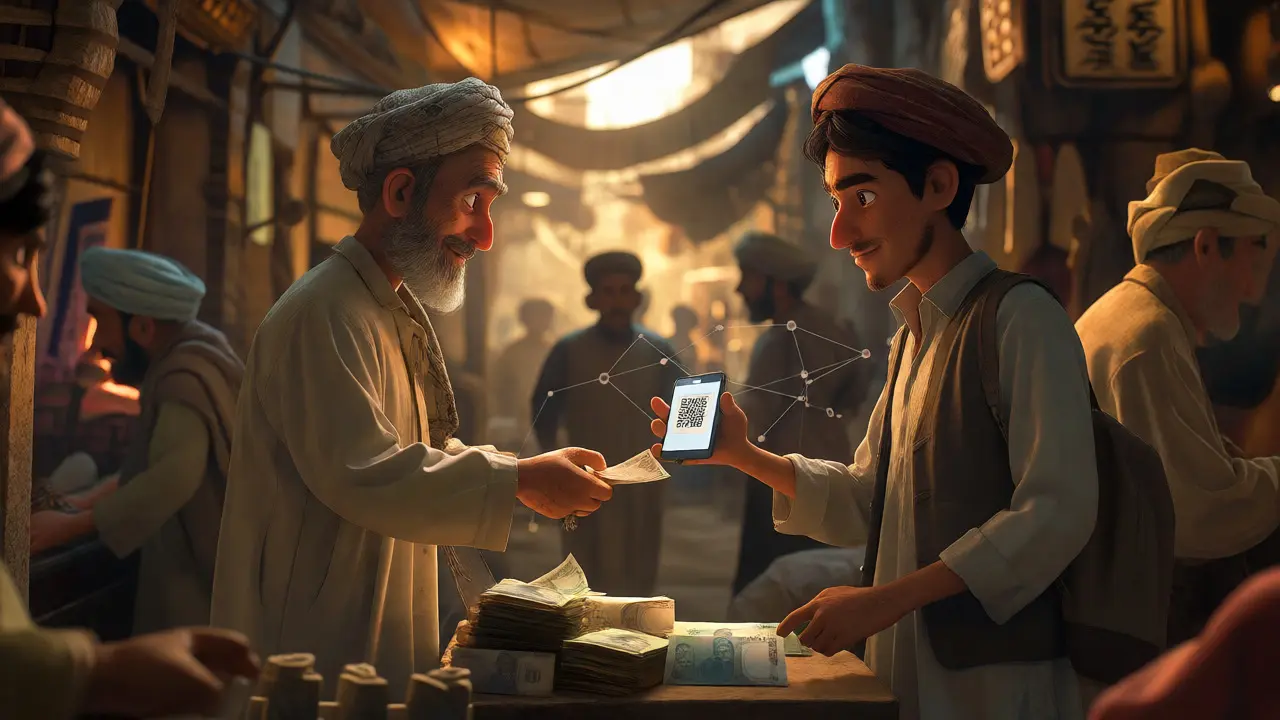
So, how do you actually buy USDT in Kabul without getting arrested? You go peer-to-peer (P2P). Platforms like Pursa advertise anonymous trading, allowing users to exchange AFN for USDT via bank transfers or cash-in-hand deals. These platforms claim transactions complete within seconds, requiring no registration or Know Your Customer (KYC) checks-a direct challenge to FinTRACA’s oversight capabilities.
| Feature | Traditional Banking | Crypto P2P Market |
|---|---|---|
| Accessibility | Limited by sanctions, ID requirements, and branch closures. | High; requires only a smartphone and internet access. |
| Speed | Days to weeks for international transfers. | Minutes to hours for settlement. |
| Cost | High fees due to intermediary banks and compliance costs. | Lower spreads, though risk premiums apply. |
| Legal Status | Regulated but dysfunctional. | Illegal but tolerated in practice. |
| Anonymity | Low; full KYC required. | High; often no ID verification needed. |
These networks rely on trust. Operators position themselves as trusted intermediaries, bridging the gap between the digital wallet and physical cash. A trader in Herat might hold USDT and sell it to someone needing local currency, settling the deal in person or via a mobile money transfer. The lack of centralized infrastructure means the system is fragile, but its flexibility allows it to adapt where rigid banks cannot.
Women and the Fight for Financial Freedom
Perhaps the most poignant story in this narrative involves Afghan women. Under Taliban rule, women face severe restrictions on employment, education, and movement. Many lack national identification documents, making access to formal banking nearly impossible. If you can’t prove who you are to a bank, you can’t open an account. If you can’t work openly, you can’t deposit a paycheck.
Roya Mahboob, founder of the Digital Citizen Fund (DCF), highlights this crisis. Speaking at recent policy summits, she emphasized that Bitcoin and crypto offer hope for financial freedom. Through underground channels and online training, DCF teaches women how to own and use digital assets. For these women, crypto isn’t just about moving money; it’s about agency. It allows them to save independently, hide assets from potential seizure, and participate in the economy despite societal constraints.
The Human Rights Foundation collaborates with such initiatives, viewing decentralized finance as a tool for democratization. In a country where the state controls almost every aspect of life, a non-custodial wallet represents a rare space of personal sovereignty. Even if the law says crypto is haram, the need for dignity and security drives adoption.

Challenges and Risks
Don’t mistake resilience for safety. The risks are significant. First, there’s the legal threat. Periodic crackdowns mean that a successful trader today could be detained tomorrow. Confiscation of funds is a real possibility, leaving users with nothing.
Second, technical barriers persist. Internet connectivity in rural areas remains spotty. Smartphones are not universal. For older generations or those in remote provinces, the learning curve for managing private keys and wallets is steep. One lost password means one lost fortune.
Third, liquidity issues arise. While P2P markets are active, they aren’t deep. During times of heightened enforcement, buyers disappear, and sellers panic-sell, leading to volatile pricing relative to the global rate. Arbitrage opportunities exist, but so do traps for the unprepared.
What Comes Next?
As of October 2026, there are no signs of policy relaxation. The Taliban government shows little interest in developing Central Bank Digital Currencies (CBDCs) or regulating blockchain technology. Their focus remains on maintaining control and adhering to strict interpretations of Sharia law. Consequently, the underground market will likely persist as long as the banking sector remains unstable and international sanctions limit traditional financial flows.
For now, USDT and Bitcoin serve as crucial financial lifelines. They are imperfect tools, fraught with legal danger and technical hurdles, but they fill a void left by failed institutions. Whether this evolves into a sustainable parallel economy or remains a desperate stopgap depends on broader political developments. But for millions of Afghans, the debate isn’t about regulation-it’s about survival.
Is it illegal to use Bitcoin in Afghanistan?
Yes, the Taliban government has banned all cryptocurrency activities, including trading, mining, and using crypto for payments or remittances. Violators can face fines, asset confiscation, or arrest.
Why do Afghans still use USDT if it's banned?
Traditional banking is unstable due to sanctions and mismanagement. USDT provides a stable store of value pegged to the US dollar, protecting against local currency inflation, and enables faster, cheaper cross-border remittances than failing banks.
How do people buy crypto in Afghanistan?
Mostly through peer-to-peer (P2P) platforms and informal networks. Users exchange Afghan Afghani (AFN) for USDT or Bitcoin directly with other individuals or small operators, often bypassing formal exchanges to maintain anonymity.
Can Afghan women use cryptocurrency?
Yes, and many do. Organizations like the Digital Citizen Fund train women in crypto literacy. Since women often face barriers to formal banking due to lack of ID or employment restrictions, crypto offers a way to manage savings and receive funds privately.
Are there any plans to legalize crypto in Afghanistan?
No current plans exist. The Taliban view crypto as "haram" and a threat to economic control. Unlike neighbors such as Uzbekistan, Afghanistan maintains a strict prohibitionist stance with no visible move toward regulation or CBDC development.


Write a comment