






When you think of crypto exchanges, you probably picture Binance, Coinbase, or Kraken - places where you click a button to buy Bitcoin, sell Ethereum, or trade altcoins with leverage. But what if you could trade Kwenta - not just the token, but entire markets like gold, oil, Apple stock, or the euro - without ever giving up control of your money? That’s what Kwenta does. It’s not a typical exchange. It’s a decentralized derivatives platform built on top of Synthetix, and it’s changing how people trade synthetic assets on-chain.
What Is Kwenta, Really?
Kwenta isn’t a company with a CEO or a headquarters. It’s a smart contract. It runs on Ethereum and Optimism, meaning you interact with it directly through your wallet - no KYC, no sign-up forms, no bank accounts. You don’t deposit funds into Kwenta. Instead, you lock collateral (usually sUSD or ETH) into the Synthetix protocol, and then you trade synthetic versions of real-world assets.
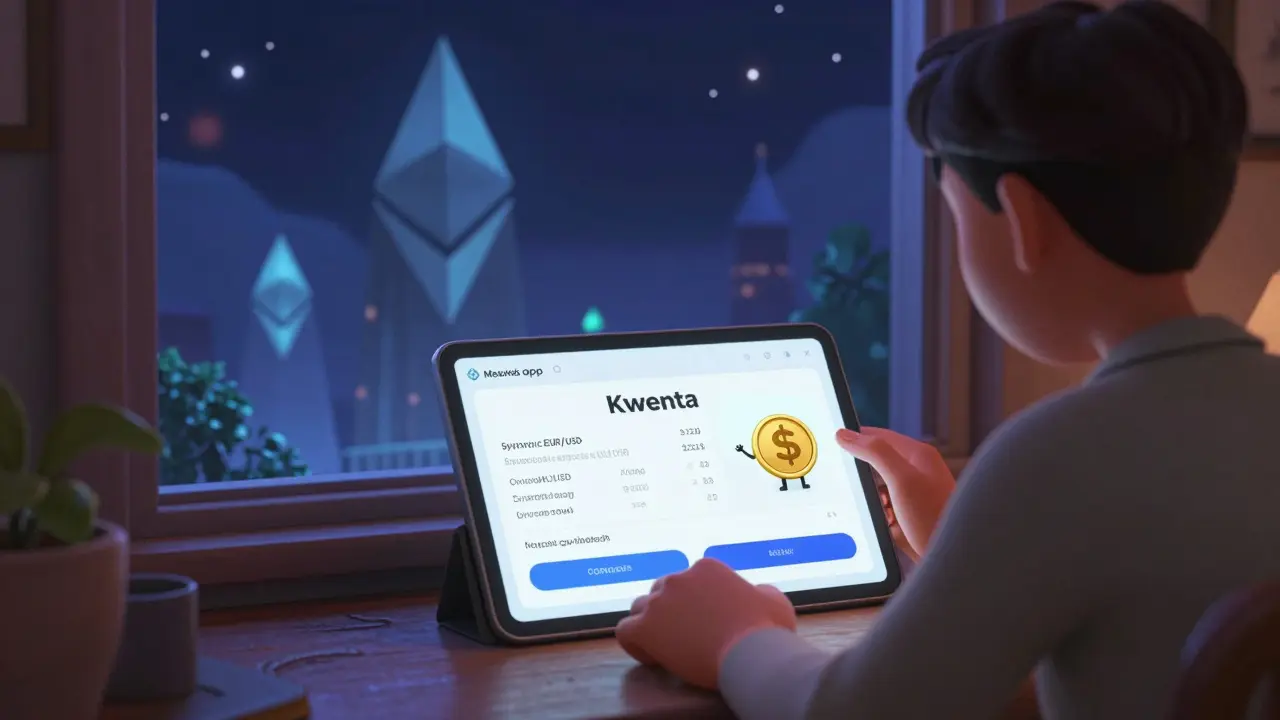
These aren’t just crypto coins. You can go long on synthetic gold (sXAU), short synthetic Tesla stock (sTSLA), or trade synthetic EUR/USD forex pairs. All of it happens on-chain, with trades settled automatically by the protocol. There’s no counterparty. No middleman. No risk of the exchange freezing your account or disappearing overnight.
The magic behind this is Synthetix. Kwenta is the front-end interface for trading Synthetix’s synthetic assets. The protocol backs every synthetic token with overcollateralized debt. If you want to trade 10x leveraged sBTC, you need to stake more than $10,000 worth of sUSD or ETH as collateral. That’s how the system stays solvent - even if everyone goes long on Bitcoin and the price crashes.
How Does Kwenta Work?
Using Kwenta is simple in theory, but tricky in practice if you’re new to DeFi. Here’s how it works step by step:
- Connect your wallet (MetaMask, WalletConnect, etc.) to Kwenta.app.
- Deposit collateral - most users use sUSD (Synthetix’s stablecoin) or ETH.
- Choose your market: crypto, commodities, forex, or equities.
- Set your leverage (up to 10x, depending on asset risk).
- Place your trade - long or short.
- Monitor your position. Close it manually or let it auto-close if your collateral falls too low.
You don’t need to own Bitcoin to trade it. You don’t need to own Apple shares to short them. You just need collateral and a basic understanding of how leverage works. If the market moves against you, your position gets liquidated. If it moves in your favor, you profit - and your gains are paid out in sUSD or your chosen settlement asset.
Why Kwenta Stands Out
Most decentralized exchanges (DEXs) let you swap tokens. A few let you trade spot markets. Kwenta is one of the few that lets you trade perpetual futures - with leverage - fully on-chain. That’s rare. And it’s powerful.
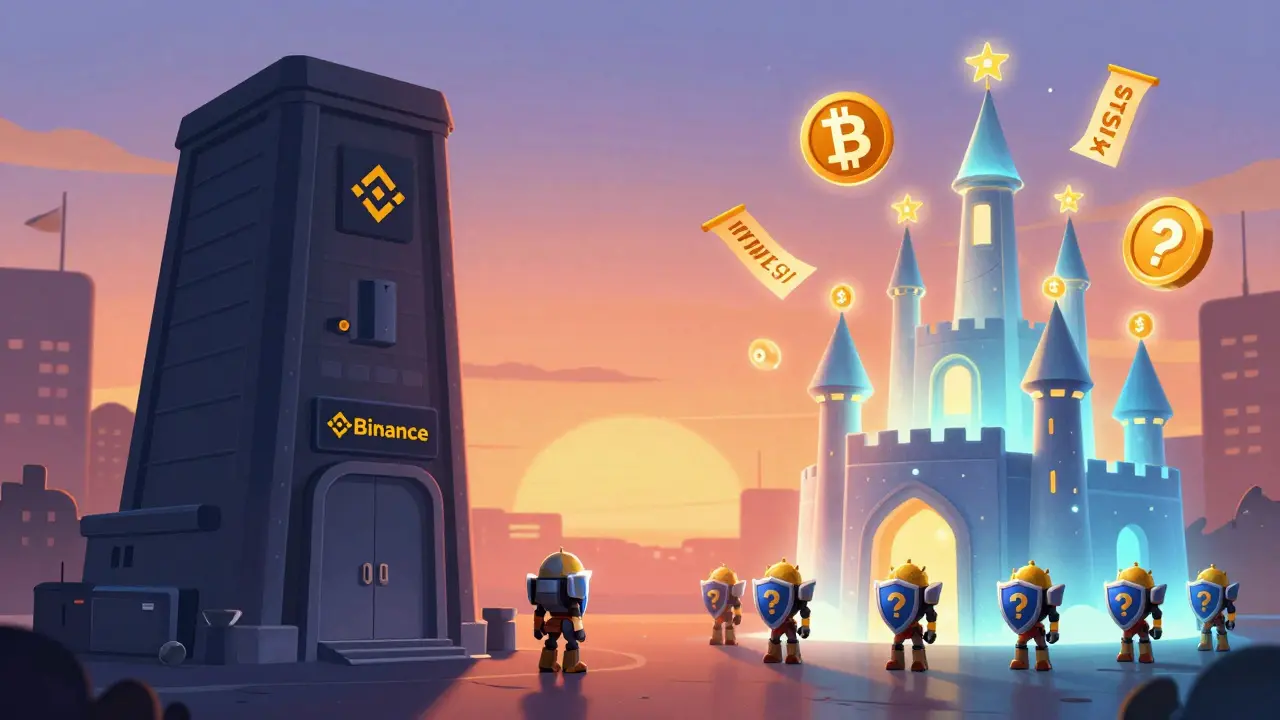
Compare it to centralized platforms like Bybit or Binance Futures. They offer 125x leverage, deep liquidity, and user-friendly apps. But they’re custodial. You don’t own your keys. If they get hacked, shut down, or banned in your country, your money is gone.
Kwenta doesn’t have that risk. Your collateral stays in your wallet. Your trades are immutable. The protocol is governed by $KWENTA token holders - not a board of directors. That’s the real difference.
It also works on Optimism, Ethereum’s Layer 2. That means gas fees are under $0.10 per trade. On Ethereum mainnet, a single trade could cost $5-$10. That’s why Kwenta defaults to Optimism. It’s the only way this kind of trading makes sense for everyday users.
The KWENTA Token: More Than Just a Utility
The $KWENTA token isn’t just a speculative asset. It’s the backbone of governance. Holders vote on protocol upgrades, fee structures, and even which new synthetic assets get added. Want to trade synthetic Bitcoin Cash? Someone has to propose it. Then $KWENTA holders vote.
As of early 2026, $KWENTA trades mostly on Velodrome Finance - a DeFi DEX on Optimism. It’s not listed on major centralized exchanges like Binance or Coinbase. That means liquidity is thinner, and price swings can be wild. According to 2025 price forecasts from multiple AI-driven analytics platforms (3Commas, WalletInvestor, TradingBeasts), the token could hit between $11.72 and $13.07 by December 2025. That’s up from under $3 in early 2024.
But here’s the catch: not everyone agrees. PricePrediction.net says $KWENTA could fall to $19.70 in 2025 - which seems like a mistake, since $19.70 is higher than the $13 peak others predict. That inconsistency shows how unreliable long-term crypto predictions are. The token’s value depends entirely on adoption. If more traders use Kwenta, demand for $KWENTA rises. If no one trades, it’s just another memecoin.
Who Is Kwenta For?
Kwenta isn’t for beginners. If you’ve never connected a wallet or paid a gas fee, this isn’t your first stop. It’s for people who:
- Understand how leverage works (and the risk of liquidation)
- Already use MetaMask or a similar wallet
- Want exposure to traditional assets without using regulated exchanges
- Trust code over companies
- Are okay with limited customer support (there’s none)
It’s also great for DeFi natives who want to hedge their crypto portfolios. If you own a lot of ETH and are worried about a market crash, you can short synthetic ETH on Kwenta to offset your risk. That’s not possible on most centralized exchanges without going through complex margin accounts.
What’s Missing?
Kwenta has no mobile app. No fiat on-ramps. No customer service. No help center. If you mess up a trade, you’re on your own. There’s no phone number. No email. No live chat. You’re dealing with a smart contract - not a company.
Also, liquidity isn’t as deep as on centralized platforms. Slippage can be high on large trades. The platform supports 20+ synthetic assets, but that’s far fewer than Binance’s 500+ futures pairs. You won’t find synthetic Dogecoin or Shiba Inu stock here. It’s focused on serious assets: BTC, ETH, gold, oil, EUR, USD, Apple, Nvidia.
And yes - user reviews are sparse. Cryptogeek gives it a 4.0 based on one review. CoinGate gives it 2.6 based on five. That’s not because it’s bad. It’s because few people have tried it. Most still stick to centralized exchanges because they’re easier.
Is Kwenta Safe?
Yes - if you understand the risks. The Synthetix protocol has been live since 2018. It’s been audited. It’s survived bear markets. Its smart contracts are open-source. No major exploit has occurred.
But safety here isn’t about hacking. It’s about your understanding. If you trade 10x leverage on synthetic gold and the price spikes 15%, you get liquidated. Poof. Your collateral is gone. No warning. No grace period. That’s how DeFi works.
Also, if you’re in a country where derivatives trading is restricted, using Kwenta might put you in legal gray territory. There’s no KYC - but regulators don’t care about that. They care that you’re trading leveraged financial instruments.
Bottom Line: Should You Use Kwenta?
If you’re looking for a simple way to buy Bitcoin - no, don’t use Kwenta. Use Coinbase or Kraken.
If you’re a seasoned crypto trader who wants to short Apple stock, hedge your ETH holdings, or trade synthetic oil without a broker - then yes. Kwenta is one of the few places where you can do that without surrendering control of your assets.
The platform isn’t perfect. It’s clunky. It’s quiet. It has no marketing. But it’s real. And it’s working. Thousands of trades happen on Kwenta every day. The volume isn’t huge - but it’s growing. And every trade is a step toward a future where financial markets aren’t controlled by banks or exchanges - but by code and community.
For now, Kwenta remains a niche tool. But for those who need it, there’s nothing else like it.
Can I trade real stocks on Kwenta?
No, you can’t trade real stocks. Kwenta only offers synthetic versions - digital tokens that mirror the price of real assets like Apple, Tesla, or Nvidia. These synthetics track the underlying asset’s price using oracles, but you’re not buying actual shares. You’re trading a derivative on-chain.
Do I need to own ETH to use Kwenta?
You don’t need ETH to trade, but you do need it to pay gas fees if you’re on Ethereum Layer 1. Most users operate on Optimism Layer 2, where gas fees are near zero. You’ll still need a small amount of ETH (or OP) to cover transaction costs, even on Layer 2.
Is Kwenta better than Binance Futures?
It depends on what you want. Binance offers higher leverage (up to 125x), more assets, better UI, and customer support. Kwenta offers decentralization, non-custodial trading, and access to traditional markets without KYC. If you value control over convenience, Kwenta wins. If you want ease and liquidity, Binance does.
Can I withdraw my profits in fiat?
No. Kwenta only allows withdrawals in crypto - usually sUSD or ETH. To turn profits into dollars, you’d need to swap your sUSD for USDC or DAI on a DeFi exchange like Velodrome, then bridge it to a centralized exchange like Coinbase to cash out.
What happens if I get liquidated?
If your position’s collateral ratio falls below the liquidation threshold, your trade is automatically closed. You lose your entire margin. The protocol uses the remaining collateral to cover losses. There’s no recourse. That’s why risk management - not leverage - is the key to surviving on Kwenta.
Is the KWENTA token a good investment?
There’s no clear answer. Some analysts predict $12-$13 by end of 2025. Others say it could crash to $0. The token’s value depends entirely on adoption. If more traders use Kwenta, demand rises. If the platform stalls, the token loses utility. Treat it as a speculative bet on DeFi’s future - not a guaranteed return.


Write a comment