






Most cryptocurrencies are built on hype, promising to revolutionize things that don't really exist yet. Then there's Minutes Network Token is a utility token powering the first blockchain-based voice network designed to overhaul how wholesale telecom termination works. Also known as MNTX, it isn't just another digital coin; it's a tool meant to strip away the massive infrastructure costs that keep legacy phone companies in a grip of inefficiency. Instead of relying on old-school cables and corporate monopolies, MNTX uses a decentralized model to move voice data across borders.
The Big Idea: Fixing a Broken Phone System
If you've ever wondered why international calling or corporate telecom fees feel like a racket, it's because the legacy system is bogged down by "termination fees" and expensive physical hardware. Minutes Network wants to kill that model. By integrating traditional telecom protocols with Blockchain and mobile apps, they've created a borderless operational model. Essentially, they are replacing expensive corporate servers with a distributed network of users.
The goal is massive: onboarding 2 billion users within two years of full operation. While that sounds like a moonshot, the project already showed real traction by engaging 34 million users by the third quarter of 2024. They aren't just dreaming of a user base; they are already building one.
How the MNTX Economy Actually Works
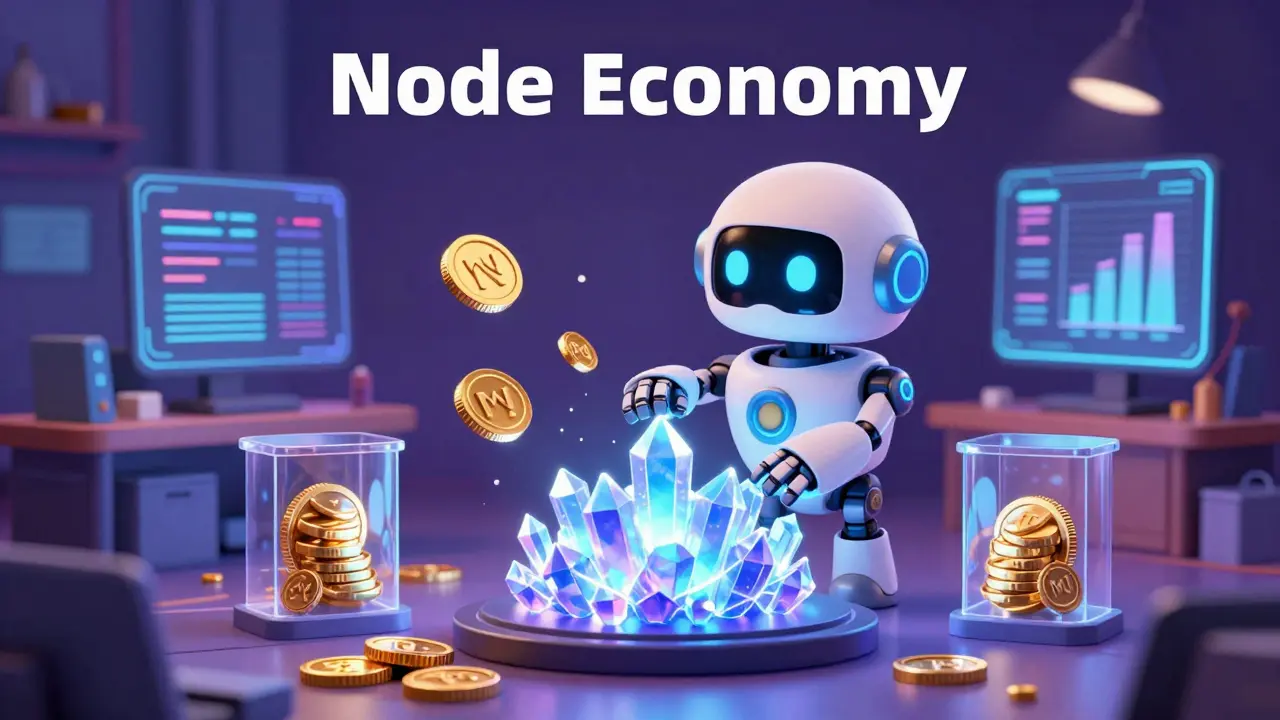
The real magic of Minutes Network Token lies in its "Node Economy." Think of it as a system where people provide the "muscle" (computational power and connectivity) to keep the network running, and in exchange, they get paid. These nodes handle capacity provisioning and run integrity checks to make sure your call doesn't drop or sound like you're underwater.
The reward structure is designed to keep people locked in. Node Stakers get a 10% slice of all rewards. Meanwhile, a larger 60% pool is shared between Node and MNT Stakers, though this is subject to an algorithmic burn to prevent inflation. For those who jumped in early, there was an even bigger incentive: a share of 37.5 million MNT over the first 24 months, with some potentially earning up to 75% of their initial stake in bonus tokens.
| Attribute | Value/Detail |
|---|---|
| Maximum Supply | 500,000,000 MNTX (Fixed) |
| Circulating Supply | ~75M to 89.5M MNTX |
| Current Price Range | $0.058 - $0.099 |
| Market Cap | ~$5M - $8.07M |
| 24h Trading Volume | ~$113K - $114K |
The "Real World" Value: Revenue-Backed Crypto
Here is where MNTX separates itself from the thousands of "meme coins" flooding the market. Most tokens derive value from people simply hoping the price goes up. MNTX is backed by actual telecommunications revenue. The network operates on a model where 100% of its net monthly revenues are used to buy MNTX tokens back from the open market.
This creates a deflationary loop. As more people use the voice network, more revenue is generated, which means more tokens are bought back and removed from the circulating supply. In a world of infinite minting, a fixed maximum supply of 500 million tokens combined with a revenue-driven buyback creates a theoretical floor for the token's value.
Where Can You Trade MNTX?
If you're looking to get your hands on MNTX, it's available across several different types of platforms. You can find it on major centralized exchanges like Kraken , Bybit, and Crypto.com. For those who prefer decentralized trading, Uniswap V3 on the Ethereum network offers MNTX/WETH pairs.
One thing to watch out for is the price variance. Because different exchanges have different liquidity levels and update their feeds at different speeds, you might see MNTX listed at $0.058 on one site and $0.099 on another. This is common for mid-tier coins, but it's a reminder to always check multiple sources before hitting the "buy" button.

The Risks: Is It All Upside?
No investment is without a catch. The biggest hurdle for Minutes Network is execution. Predicting a 2-billion-user adoption rate is an incredibly bold claim, and failing to hit those targets could dampen investor enthusiasm. There's also the regulatory nightmare of the telecom industry. Governments are notoriously protective of their communication infrastructures, and scaling a decentralized voice network globally means fighting a lot of red tape.
Technically, the market has seen some volatility. In late 2025, the "Fear & Greed Index" dipped to 27, signaling a period of fear among traders. While the token has climbed over 150% from its all-time low, it still trades below its peak. It's a classic high-reward, high-risk play.
What makes MNTX different from other crypto coins?
Unlike speculative coins, MNTX is backed by real-world telecom revenue. 100% of the network's net monthly revenue is used to buy back tokens from the market, creating a deflationary mechanism based on actual usage rather than just hype.
Is there a limit to how many MNTX tokens exist?
Yes. MNTX has a fixed maximum supply of 500,000,000 tokens. No more tokens will ever be minted, which introduces a scarcity element as the network grows.
How do I earn rewards with Minutes Network?
Rewards are primarily earned through the Node Economy. By becoming a Node Operator and staking tokens, you can receive a portion of the reward pool (ranging from 10% for Node Stakers up to a shared 60% for Node and MNT stakers).
Where is the best place to buy MNTX?
MNTX is traded on several platforms including Kraken, Bybit, and Crypto.com for a centralized experience, or Uniswap V3 if you prefer using a decentralized exchange (DEX) on Ethereum.
What is the main risk of investing in MNTX?
The main risks include the project's ability to hit its massive user targets (2 billion users), the high volatility of the crypto market, and potential regulatory hurdles within the global telecommunications industry.
Next Steps for Interested Users
If you're new to the ecosystem, start by exploring the official Minutes Network app to see how the voice termination actually functions. For those looking to earn, investigate the requirements for becoming a Node Operator to see if your hardware and staking capacity align with the reward tiers. Finally, if you are trading, set up alerts on both CoinMarketCap and CoinGecko to track the price discrepancies across exchanges and find the best entry point.


Write a comment