




Imagine waking up to find that the cash in your pocket is worth half of what it was yesterday. For millions of Venezuelans, this isn't a hypothetical nightmare; it is their daily reality. With annual inflation hitting 229% in mid-2024, the bolívar has ceased to function as a reliable store of value. In this vacuum, cryptocurrency has stepped in-not as a speculative investment for tech enthusiasts, but as a critical survival mechanism. You might think Bitcoin is just for digital hoarders, but here, it is the difference between buying groceries and going hungry.
This shift didn't happen because people love blockchain technology. It happened because the traditional banking system collapsed under the weight of hyperinflation and international sanctions. When the government stopped defending the currency in late 2023, citizens turned to digital assets out of sheer necessity. Today, over 65% of merchants in Caracas accept crypto for routine transactions. This article breaks down how this parallel economy works, the severe restrictions that shape it, and why stablecoins like Tether (USDT) have become more important than Bitcoin itself for everyday survival.
The Collapse of the Bolívar and the Rise of Digital Cash
To understand why Venezuela is a global leader in crypto adoption, you first need to look at the failure of its national currency. The Venezuelan Finance Observatory recorded an annual inflation rate of 229% in May 2024. Between October 2023 and June 2024 alone, the bolívar lost over 70% of its value. This rapid devaluation made saving money impossible. If you earned a salary on Monday, by Friday, you could buy significantly less with it.
In response, private sector cryptocurrency transactions surged. By July 2025, these transactions reached $119 million in a single month, according to data from AInvest. This wasn't driven by ideological belief in decentralization. Economist Aarón Olmos noted that Venezuelans adopted crypto due to "inflation, low wages, foreign currency shortages, and difficulty opening bank accounts." The crypto market became a lifeline, processing transactions that the traditional financial system simply could not handle.
| Metric | Value / Status | Impact on Crypto Usage |
|---|---|---|
| Annual Inflation (May 2024) | 229% | Forces immediate conversion to stable assets |
| Bolívar Devaluation (Oct 2023-Jun 2024) | -70% | Erodes savings; drives demand for USD pegs |
| Crypto Remittances (2023) | $461 million (9% of total) | Provides vital foreign income without banks |
| Merchant Acceptance (Caracas) | Over 65% | Enables daily commerce outside formal banking |
Why Stablecoins Beat Bitcoin for Daily Survival
You might expect Bitcoin to be the king of this revolution. After all, it is the most famous cryptocurrency. But in a crisis where every minute counts, volatility is a luxury you cannot afford. Bitcoin’s price can swing wildly in hours. If you are trying to pay for rent or food, you need stability, not speculation.
This is why Tether (USDT) has become the dominant currency in Venezuela. Pegged to the U.S. dollar, USDT offers relative stability. Locals often refer to it as "Binance dollars." According to Chainalysis, Tether Limited controls 76% of Venezuela's stablecoin market. This dominance makes sense: USDT maintains near-perfect parity with the dollar while the bolívar crumbles. Furthermore, technical efficiency plays a huge role. Bitcoin transactions can take 10 to 60 minutes to confirm during peak times. USDT on the Tron network confirms in under two minutes. For a merchant selling produce, waiting an hour for payment is not an option.
However, this reliance on USDT creates a different kind of risk. Unlike Bitcoin, which is decentralized, USDT is issued by a centralized company, Tether Limited. If regulators were to shut down Tether, the entire parallel economy in Venezuela could face immediate disruption. This centralization paradox is one of the biggest vulnerabilities in the current system.
Navigating Restrictions: Sanctions and Infrastructure
The phrase "crypto freedom" sounds appealing, but the reality in Venezuela is heavily restricted. These restrictions come from three main sources: U.S. sanctions, local government crackdowns, and poor infrastructure.
U.S. Sanctions: Since 2017, U.S. sanctions have severely limited Venezuela's access to traditional banking. While this pushes people toward crypto, it also complicates crypto usage. Platforms like Binance must comply with U.S. laws, meaning they restrict services for accounts linked to sanctioned Venezuelan banks or individuals. Internal data shared with CoinTelegraph indicates that approximately 18% of attempted transactions are blocked due to these sanctions. You might try to send money to a family member abroad, only to find the transaction frozen because their bank is on a watchlist.
Government Crackdowns: The Venezuelan government has an inconsistent stance. In 2018, they launched their own cryptocurrency, the Petro, which collapsed in 2024 amid corruption allegations. Simultaneously, they have cracked down on private exchanges. In 2023, the National Superintendence of Crypto Assets and Related Activities (SUNACRIP) was effectively shut down, creating regulatory uncertainty. There is no clear legal framework protecting users, leaving them vulnerable to fraud and platform failures.
Infrastructure Limits: Even if you bypass sanctions and regulations, you still need internet. Venezuela ranks 153rd globally for internet speed, averaging just 14.79 Mbps download speed in Q2 2025. Connectivity issues affect 37% of crypto users, according to surveys. During power outages or network congestion, converting crypto to physical goods becomes nearly impossible. This digital divide means that while urban centers like Caracas thrive on crypto, rural areas remain largely excluded.
The P2P Revolution: Bypassing the Banking System
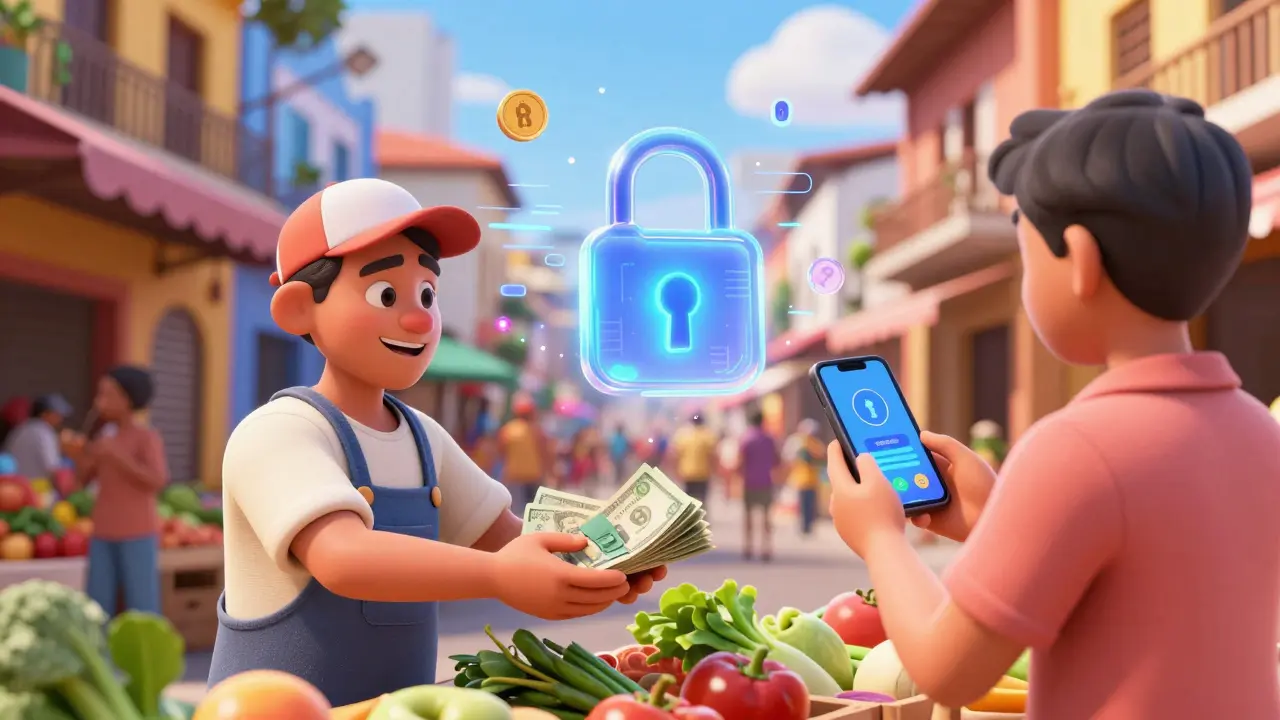
How do ordinary people actually use crypto without a bank account? They use Peer-to-Peer (P2P) platforms. Services like Binance P2P and LocalBitcoins allow users to trade directly with each other. Instead of depositing money into a bank, you agree to meet a buyer or seller, transfer crypto digitally, and exchange cash or goods physically.
This model has created a de facto parallel banking system. Diego Morales, Head of Latin America Strategy at Binance, described it as processing transactions that traditional finance cannot handle. In 2023, crypto remittances accounted for 9% of the $5.4 billion total remittance flow-roughly $461 million. For families relying on relatives abroad, this is life-changing. Traditional wire transfers can take days and incur high fees. Crypto remittances arrive in minutes with lower costs.
However, this system is not without risks. Scams are prevalent. Users must verify counterparties carefully. The lack of consumer protection means that if a counterparty disappears after receiving crypto, there is little recourse. Community-driven education has helped fill this gap, with YouTube channels like 'Cripto Para Todos' teaching thousands of new users how to spot fraud and secure their wallets.

User Experience: A Steep Learning Curve
Adopting crypto in a crisis is not easy. University of Carabobo studied 500 new users and found that most mastered basic transactions within 2-3 weeks. But that learning curve comes with stress. Common challenges include:
- Connectivity Issues: Slow internet speeds lead to failed transactions or missed payment windows.
- Volatility Spreads: During high-demand periods, the cost to convert bolívars to crypto can average 3.7%, eating into already meager incomes.
- Platform Complexity: Documentation varies. Binance’s Spanish resources are rated highly (4.2/5), while others like LocalBitcoins score lower (3.1/5) due to limited support.
Real user experiences highlight both the benefits and the frustrations. Victor Sousa, a Caracas resident, noted that many places now accept USDT, allowing him to save his earnings securely. Conversely, Reddit discussions in r/BitcoinVenezuela reveal stories of hardship. User 'CryptoSurvivorVE' posted that without USDT, he couldn't feed his family after his bolívar salary became worthless overnight. Yet, 22% of survey respondents cited difficulties converting crypto to physical goods during network outages, showing that even this solution is fragile.
Future Outlook: Can Crypto Survive the Crisis?
Is this sustainable? Experts are divided. On one hand, IMF Senior Advisor David Lipton cautioned that "digital assets provide tactical relief but cannot substitute for sound monetary policy." He argues that crypto is a bandage on a broken system. On the other hand, Chainalysis reports show continued growth, with Venezuela ranking 13th globally in crypto adoption in 2024, seeing 110% year-over-year growth.
Short-term projections suggest crypto will remain essential until bolívar inflation falls below 50% annually-a threshold unlikely before 2027. Long-term viability faces hurdles. Centralized stablecoin risks and U.S. sanctions complicate the picture. However, potential integration with regional payment systems, such as BRICS cross-border initiatives discussed since February 2025, could offer alternative infrastructure less vulnerable to U.S. pressure.
The most optimistic scenario involves crypto transitioning from a survival tool to a formalized parallel payment system. The pessimistic view, held by 43% of surveyed economists, suggests adoption will decline rapidly if the bolívar stabilizes, leaving users exposed to centralized risks without the immediate necessity driving current usage. For now, however, crypto remains the backbone of Venezuela's informal economy.
Is it legal to use Bitcoin in Venezuela?
Yes, using cryptocurrency is not illegal in Venezuela. The 2020 Crypto Assets Law provides minimal guidance but does not ban private ownership. However, the regulatory environment is uncertain, and the government has previously cracked down on exchanges. Users operate in a gray area with little consumer protection.
Why do Venezuelans prefer USDT over Bitcoin?
Venezuelans prefer USDT because it is pegged to the U.S. dollar, offering stability against hyperinflation. Bitcoin's price volatility makes it risky for daily transactions like buying food or paying rent. Additionally, USDT transactions on networks like Tron are faster and cheaper than Bitcoin's slower confirmation times.
How do U.S. sanctions affect crypto users in Venezuela?
U.S. sanctions restrict access to certain banking services, pushing people toward crypto. However, they also limit crypto usage. Platforms like Binance block accounts linked to sanctioned banks or individuals. Approximately 18% of transactions are blocked due to compliance with these sanctions, creating significant friction for users.
What are the biggest risks of using crypto in Venezuela?
Key risks include dependency on centralized issuers like Tether (which could be shut down), vulnerability to U.S. sanctions blocking transactions, poor internet connectivity causing failed payments, and the lack of consumer protection against scams or platform failures.
Can I send money to Venezuela using crypto?
Yes, sending crypto via P2P platforms like Binance P2P is a common method for remittances. It is faster and cheaper than traditional wire transfers. However, recipients must have reliable internet access and knowledge of how to safely receive and convert the funds, as there is no customer support if errors occur.