





When the market swings 5% in a single day, it’s easy to panic. But that kind of movement isn’t random-it’s part of a pattern. Whether you’re watching Bitcoin, Ethereum, or the S&P 500, volatility doesn’t behave the same way in bull markets versus bear markets. Understanding these differences isn’t about predicting the next crash or breakout. It’s about knowing what to expect when the noise gets loud.
What Really Defines a Bull or Bear Market?
A bull market isn’t just when prices go up. It’s when they rise 20% or more from a recent low and hold that gain for at least two months. A bear market is the mirror image: a drop of 20% or more from a recent high, with no meaningful recovery for months. These aren’t opinions-they’re the standard definitions used by Wall Street, central banks, and data firms since the 1920s. The confusion comes when people mix up corrections and bear markets. A 10% to 19.9% drop? That’s a correction. It happens every few months. A 20%+ plunge? That’s a bear market. And it changes everything. Since 1928, there have been 27 bear markets and 28 bull markets. That means, on average, you’re in a bull market far more often than a bear one. But here’s the twist: bear markets don’t last long. They average just under 10 months. Bull markets? They last nearly three years. So while bear markets feel like they’re swallowing your portfolio, they’re actually the short, sharp shocks. Bulls are the slow, steady climbs that build real wealth.Bear Markets Are More Violent-But Shorter
If you look at the S&P 500’s daily moves since 1928, bear markets show a clear pattern: big swings, packed tightly. During the 2008 crisis, 72 out of 253 trading days saw the index move up or down by 2% or more. In 2017, a calm year, there were zero such days. That’s not an accident. Bear markets concentrate fear. Investors sell fast. Algorithms react instantly. News spreads in seconds. The result? Extreme volatility in a short time. And here’s something counterintuitive: nearly half of the S&P 500’s biggest single-day gains in the last 20 years happened during bear markets. In 2022, the index fell 18% for the year-but on half of the 46 most volatile days, prices actually rose. That’s not a contradiction. It’s how markets work. Volatility isn’t just about falling. It’s about uncertainty. And uncertainty creates wild swings in both directions.Bull Markets Are Calmer-But Last Longer
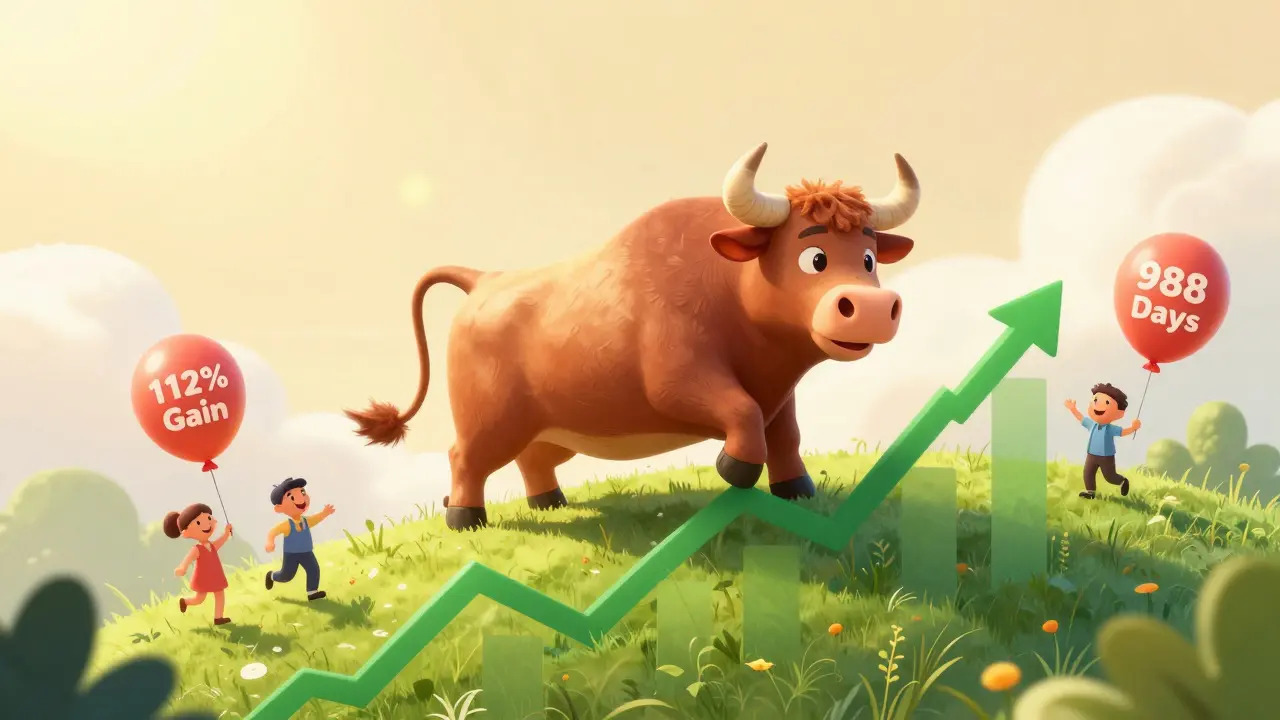
Bull markets don’t roar. They creep. Daily moves are smaller. The average gain during a bull cycle is 112%. But it takes 988 days to get there. That’s over two and a half years of slow, steady growth. You won’t see 5% daily spikes often. Instead, you’ll see 1% up days, 0.5% down days, and long stretches where nothing much happens. That’s normal. It’s the quiet phase where investors gain confidence, earnings grow, and money flows in. But don’t mistake calm for safety. The longest bull market in history ran from December 1987 to March 2000. It survived a 19.9% drop in 1990-just shy of the 20% bear market line. That near-miss shows how thin the line is. One bad earnings season, one surprise rate hike, and the whole thing can flip.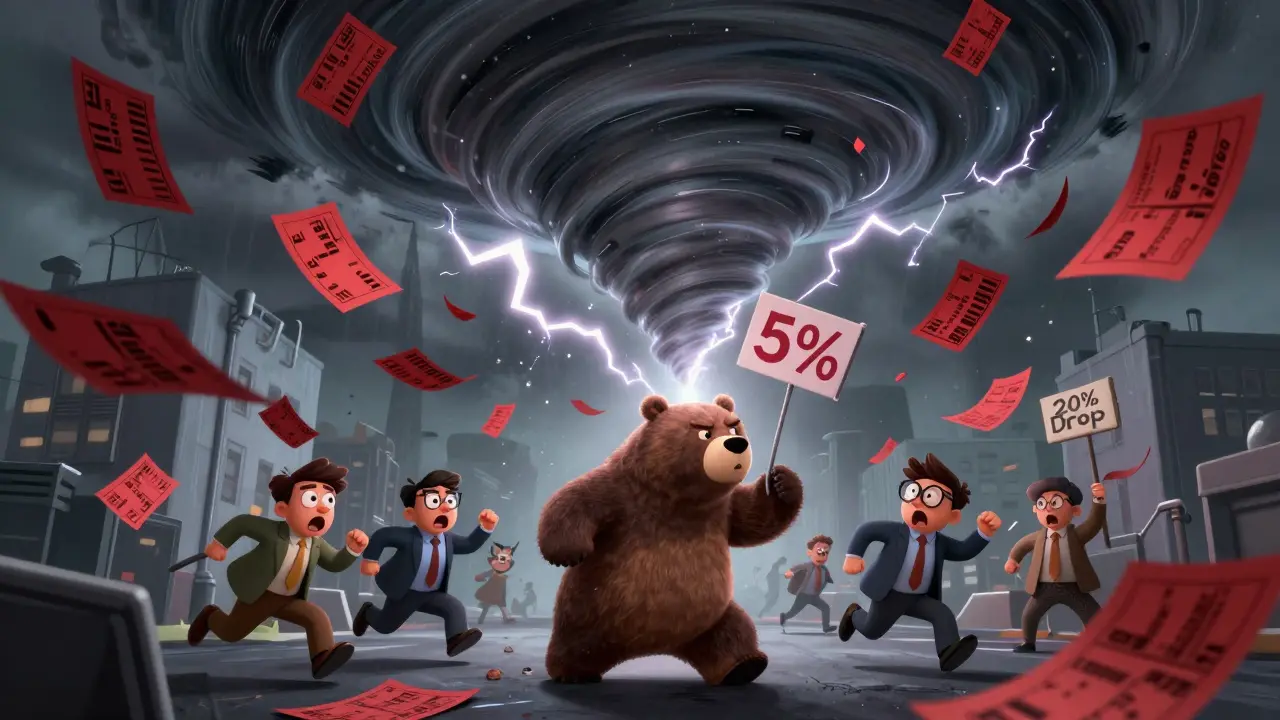
What Triggers a Bear Market?
There’s no single cause. But certain patterns keep showing up:- Economic recessions: When companies start earning less, investors sell.
- High inflation: Prices rise faster than wages. Consumers cut back. Profits shrink.
- Rising interest rates: Borrowing gets expensive. Businesses delay expansion. Real estate slows.
- Geopolitical chaos: Wars, pandemics, trade wars-anything that makes the future feel unpredictable.
- Overvalued markets: When stocks or crypto prices are way above what fundamentals support, a correction is inevitable.
Volatility Spills Over
Markets don’t live in isolation. When stocks crash, bonds react. When the S&P 500 drops 5%, the 10-year Treasury yield might jump 30 basis points in a day. That’s what happened in early 2024 when tariff threats sent equities tumbling, then rebounded 9.5% after the threat paused-only to drop 3.5% the next day. This back-and-forth isn’t noise. It’s price discovery. Markets are trying to find the right value amid uncertainty. And with AI-driven trading and real-time news feeds, that process happens faster than ever.
What Should You Do?
Don’t try to time the market. No one consistently does. But you can prepare.- Expect volatility: If you’re in crypto or stocks, assume there will be 20%+ drops every 5 years or so. Plan for it.
- Don’t panic-sell: Most of the biggest gains happen in the first few days after a crash. If you’re out, you miss them.
- Keep cash ready: When fear peaks, opportunities appear. Having dry powder lets you buy low without stress.
- Ignore headlines: A 5% drop isn’t the end. A 20% drop isn’t the start of Armageddon. It’s just a market cycle.
Is This Time Different?
People ask this every cycle. Crypto is new. AI is changing trading. Central banks are more active. Yes, all true. But the 20% rule still holds. The pattern of short, violent bear markets and long, steady bulls still fits. What’s changed is speed. News moves faster. Reactions are instant. But the underlying rhythm? It’s the same. If you’re holding Bitcoin or Ethereum, remember: the longest bull run in crypto history lasted over 1,000 days. The biggest bear market wiped out 80% of value-but it took just 10 months. That’s the pattern. Volatility isn’t your enemy. It’s the price of entry. The market rewards those who stay through the noise.What’s the difference between a correction and a bear market?
A correction is a drop of 10% to 19.9% from a recent high. It’s common and usually lasts weeks or a few months. A bear market is a drop of 20% or more, lasting at least two months. Bear markets are rarer, deeper, and signal broader economic stress. Corrections are normal. Bear markets are transitions.
Do bear markets always lead to recessions?
Not always, but often. Most bear markets since 1945 have coincided with recessions, but not all recessions trigger bear markets. For example, the 2020 crash was fast and caused by a pandemic, not a slow economic decline. Meanwhile, the 1987 crash was a one-day plunge with no recession. The link exists, but it’s not automatic.
Why do markets bounce back after big drops?
Because prices eventually reflect reality. When fear drives prices too low, buyers step in. Companies still make money. People still need goods and services. Central banks cut rates. Investors see value. The market doesn’t care about your emotions-it cares about future earnings. And those don’t disappear just because the news is scary.
Can crypto markets follow the same patterns as stocks?
Yes, increasingly so. Bitcoin and Ethereum now react to interest rates, inflation data, and macro trends just like stocks. The 20% bull/bear threshold still applies. Crypto’s volatility is higher, but the rhythm is similar: long bull runs, sharp bear drops. The difference? Crypto cycles are compressed-bull markets last 1-2 years, not 3. But the pattern? Identical.
Should I sell during a bear market to avoid losses?
Selling locks in your losses. History shows that most of the recovery happens in the first few weeks after the worst drop. If you’re out, you miss the rebound. Instead, hold what you believe in. If you have cash, use dips to buy more. Volatility isn’t a signal to run-it’s a signal to reassess your plan, not your holdings.


Write a comment