






Imagine you just sent $5,000 worth of Bitcoin to a merchant. The transaction confirms on the blockchain. You get a receipt. But the merchant says they never received it. Or worse, you are the merchant, and your customer paid, but the funds landed in a wallet you don’t recognize. This isn't a glitch; it's a specific vulnerability inherent to how many centralized crypto payment gateways operate.
The core problem is trust. When you use a traditional payment processor like Stripe or PayPal, the money moves through their internal ledgers first. With crypto, the ledger is public and immutable. If a gateway gives you an address that doesn't belong to you, or if it substitutes that address during the checkout process, the funds are gone forever. Verifying that a crypto payment gateway is an intermediary service that facilitates cryptocurrency transactions between merchants and customers telling the truth about addresses requires moving beyond simple copy-paste habits and into cryptographic verification.
Understanding the Threat: Man-in-the-Middle Address Substitution
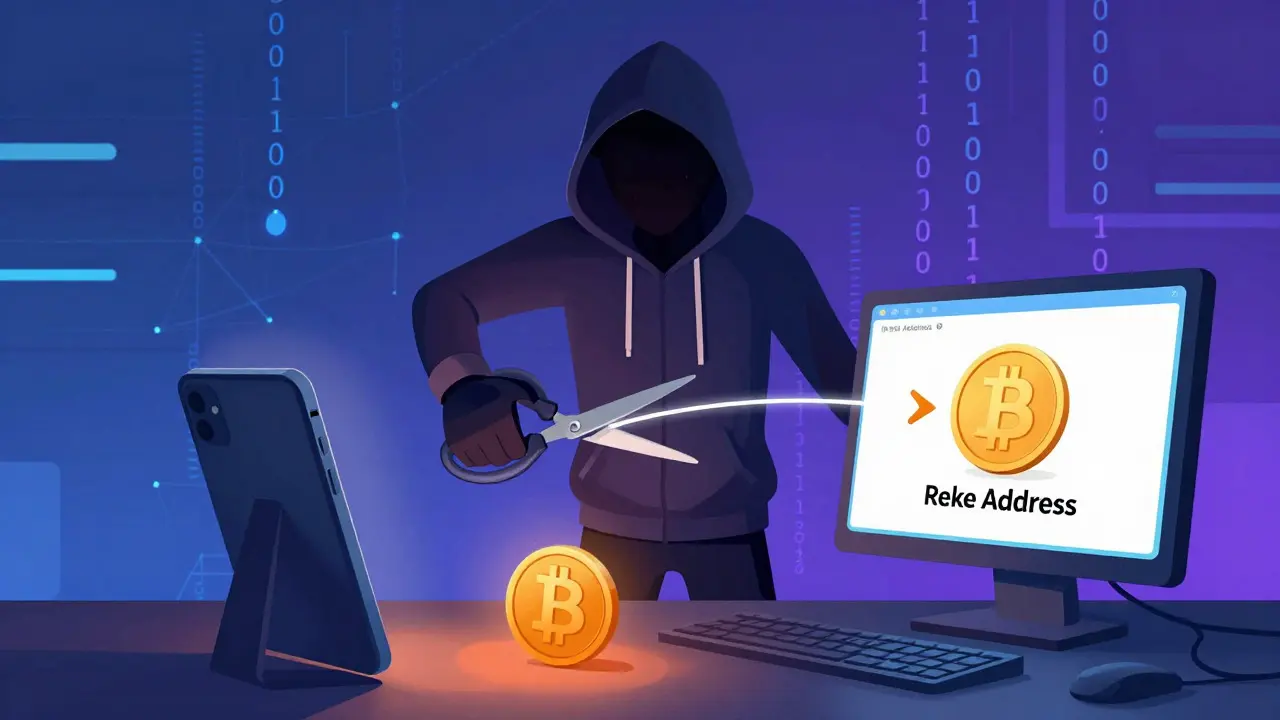
To verify security, you first need to understand what can go wrong. The most dangerous attack vector here is man-in-the-middle (MitM) address substitution. In this scenario, an attacker-or a compromised gateway server-intercepts the communication between the merchant's dashboard and the customer's wallet. They replace the legitimate destination address with one they control.
This isn't theoretical. It happens when users rely solely on visual cues. A gateway might display an invoice page where the address looks correct because it starts and ends with the same characters as your real address, but the middle section is different. This is often compounded by "address poisoning," where attackers send tiny dust transactions to addresses similar to yours, making them appear in recent transaction lists on wallets and explorers. When a user glances at the screen, sees a familiar-looking address, and copies it, the funds vanish.
Centralized gateways like BitPay have historically been targets for these attacks. Their support documentation explicitly warns about imposters pretending to be the service to trick users into sending Bitcoin to attacker-controlled addresses. The risk exists because the gateway acts as a black box: it generates the address, shows it to the buyer, and promises to forward the funds. If that promise breaks, or if the box is hacked, there is no recourse.
Layer 1: Structural Validation and Checksums
The first line of defense is ensuring the address is even valid for the network it claims to be on. This is basic hygiene, but it catches the most obvious errors.
- Bitcoin (UTXO-based): Bitcoin addresses must pass strict format checks. Tools like those offered by infrastructure providers such as Cryptoapis is a blockchain infrastructure provider offering API services for validation and data retrieval validate that the structure and checksum match the expected network rules. If the checksum fails, the address is rejected before any transaction is created.
- Ethereum and EVM Chains: Ethereum addresses include a mixed-case checksum. This means the capitalization of letters in the address encodes a hash of the address itself. Validating this checksum catches typographical errors with extremely high probability. If a gateway provides an all-lowercase address or one with incorrect casing, it should raise a red flag immediately.
However, structural validation only proves the address is mathematically possible. It does not prove the gateway owns it. An invalid address sends funds to nowhere; a valid but fraudulent address sends funds to someone else. To bridge that gap, you need deeper verification methods.
Layer 2: Payment Protocol and Certificate Verification
For inbound payments from customers, the industry standard for verification is the Payment Protocol. This mechanism binds a payment request to a verified domain using TLS certificates, similar to how HTTPS secures web browsing.
When a customer uses a secure wallet that supports Payment Protocol, the wallet verifies the certificate chain of the invoice URL. If the invoice comes from `bitpay.com`, the wallet checks that the certificate belongs to BitPay. If it matches, the wallet displays a green lock icon and the verified owner name next to the address. This prevents a generic phishing site or a compromised third-party mirror from substituting an address without also compromising the certificate authority system.
The limitation here is scope. Payment Protocol protects the customer from sending to the wrong place, but it doesn't necessarily help the merchant verify that the gateway is forwarding funds correctly. Furthermore, BitPay’s own terms of use state that while they check if an address is valid and not sanctioned, they "cannot confirm that the address truly belongs to the Recipient." This disclaimer highlights a critical gap: technical validity does not equal ownership verification.
Layer 3: Independent Derivation via Extended Public Keys (xpub)
This is the gold standard for merchants who want to ensure a gateway isn't lying. Instead of trusting the gateway to generate random addresses, you provide the gateway with your extended public key (xpub). The xpub allows the generation of infinite receiving addresses derived from your master seed, without ever exposing the private keys needed to spend the funds.
Here is how you verify the gateway's honesty using this method:
- Generate Your xpub: Create an xpub from your hardware wallet (like a Ledger or Trezor) or software wallet.
- Local Derivation: Use a tool like Bitcoin Core’s
deriveaddressesRPC method or a local library to generate the exact address the gateway *should* be showing for Invoice #123. - Compare: Compare the locally derived address with the one displayed on the gateway's dashboard or invoice page.
If the addresses match, you know the gateway is deriving from your key. If they differ, the gateway is either using a different key (custodial model) or has been compromised. This approach aligns with Ruben Somsen’s "Trustless Address Server" proposal, which suggests that servers handing out addresses should sign them with an identity key so senders can verify the derivation path independently.
Modern non-custodial solutions like TxNod is a non-custodial multi-chain crypto payment gateway designed for solo founders and developers build this verification directly into their architecture. By connecting a Ledger or Trezor via WebHID or WebUSB, the merchant’s TypeScript SDK independently re-derives every payment address locally. If the gateway tries to serve an address that doesn't match the local derivation from the connected xpub, the SDK refuses to proceed. This removes the need for manual checking; the code enforces the truth.
Layer 4: Webhook Signature Verification
Address verification isn't just about the deposit phase; it's also about confirming payouts and payment receipts. Gateways communicate payment status via webhooks-HTTP requests sent to your server when an event occurs. If an attacker spoofs these webhooks, they can trick your system into marking an unpaid invoice as paid, or vice versa.
To prevent this, every webhook must include a cryptographic signature computed from the payload and a shared secret key. Services like Meshpay emphasize this in their developer guides, warning that without verification, attackers could forge notifications to mask misdirection of funds. Cryptomus’ merchant API similarly describes structured webhook endpoints where merchants must validate signatures.
Your server should perform a constant-time comparison of the provided signature against the one it calculates. If they don't match, reject the notification. This ensures that the data claiming a payment was made to a specific address actually came from the gateway's authenticated servers.

Comparing Gateway Models: Custodial vs. Non-Custodial
| Feature | Custodial Gateway (e.g., BitPay) | Non-Custodial Gateway (e.g., TxNod) |
|---|---|---|
| Address Control | Gateway generates addresses; merchant trusts forwarding. | Merchant provides xpub; addresses derived from merchant keys. |
| Fund Flow | Customer → Gateway Wallet → Merchant Payout. | Customer → Merchant Wallet (Direct On-Chain). |
| Verification Method | Payment Protocol certs, KYC compliance. | Local SDK re-derivation, hardware wallet binding. |
| Counterparty Risk | High (Gateway holds funds temporarily). | None (Funds never enter platform custody). |
| Chargebacks/Holds | Possible (Policy-driven freezes). | Impossible (Structurally final settlement). |
In a custodial model, you are relying on the gateway's integrity and solvency. Even with robust identity checks like BitPay ID-which verifies personal data via third parties like Onfido-the gateway still disclaims responsibility for whether the payout address truly belongs to you. In a non-custodial model, the architecture itself prevents lies. Since the funds settle straight to the merchant's wallet on-chain, there is no intermediate balance to freeze or divert. For solo founders and indie hackers who prioritize autonomy, this structural impossibility of fraud is a decisive advantage.
Practical Checklist for Merchants
If you are integrating a new payment solution today, run through this checklist to ensure your addresses are secure:
- Enforce Payment Protocol: Ensure your checkout flow uses BIP70/BIP73 compatible requests so wallets can verify the domain certificate.
- Verify Checksums: Implement client-side and server-side checksum validation for all supported chains (especially Ethereum’s mixed-case encoding).
- Use Hardware Wallets: Connect your gateway to a Ledger or Trezor. Never paste raw private keys or mnemonics into a web interface.
- Independent Monitoring: Run a lightweight blockchain node or use a trusted explorer API to monitor incoming transactions to your derived addresses, independent of the gateway’s dashboard.
- Sign Webhooks: Validate HMAC signatures on all incoming payment notifications to prevent spoofed events.
- Test in Sandbox: Use sandbox environments (available in roughly 30 seconds on platforms like TxNod) to simulate address derivation and webhook flows before going live.
Conclusion: Trust Through Code, Not Promises
The era of blindly trusting a website to tell you where to send money is over. As crypto adoption grows, so does the sophistication of address-substitution attacks. By leveraging cryptographic proofs-from TLS certificates to xpub derivations-you shift the burden of proof from the gateway's reputation to mathematical certainty. Whether you choose a legacy custodial provider or a modern non-custodial alternative, the principle remains the same: if you can't verify the address origin independently, you aren't really in control of your payments.
What is address poisoning in crypto?
Address poisoning is an attack where scammers send small amounts of cryptocurrency to addresses that look very similar to your actual wallet address. This makes the fake address appear in your recent transaction history or wallet suggestions, increasing the chance that you or a customer will accidentally copy and send funds to the wrong destination.
How does Payment Protocol prevent address substitution?
Payment Protocol uses digital certificates (similar to HTTPS) to bind a payment request to a specific domain. When a wallet supports this protocol, it verifies that the invoice URL matches the certificate owner. If a hacker tries to substitute the address on a fake page, the certificate won't match, and the wallet will warn the user or refuse to display the address.
Why is xpub derivation more secure than static addresses?
An extended public key (xpub) allows a gateway to generate unique addresses for each invoice based on your master key. Because you can independently derive these same addresses locally using your xpub, you can mathematically prove that the gateway is using your key. Static addresses offer no way to verify that the gateway hasn't swapped them out behind the scenes.
Do I need a hardware wallet to verify my gateway?
While not strictly mandatory, a hardware wallet like Ledger or Trezor is highly recommended. It keeps your private keys offline and allows you to generate xpubs securely. Many modern non-custodial gateways integrate directly with hardware wallets via WebHID or WebUSB, enabling real-time address verification without exposing sensitive data to the internet.
What is the difference between custodial and non-custodial gateways?
In a custodial gateway, funds are sent to the gateway's wallet first, then forwarded to you. This creates counterparty risk. In a non-custodial gateway, funds are sent directly from the customer to your wallet on-chain. The gateway merely facilitates the invoice creation and notification, meaning it never holds your money, eliminating the risk of the gateway lying about address ownership or freezing your funds.