





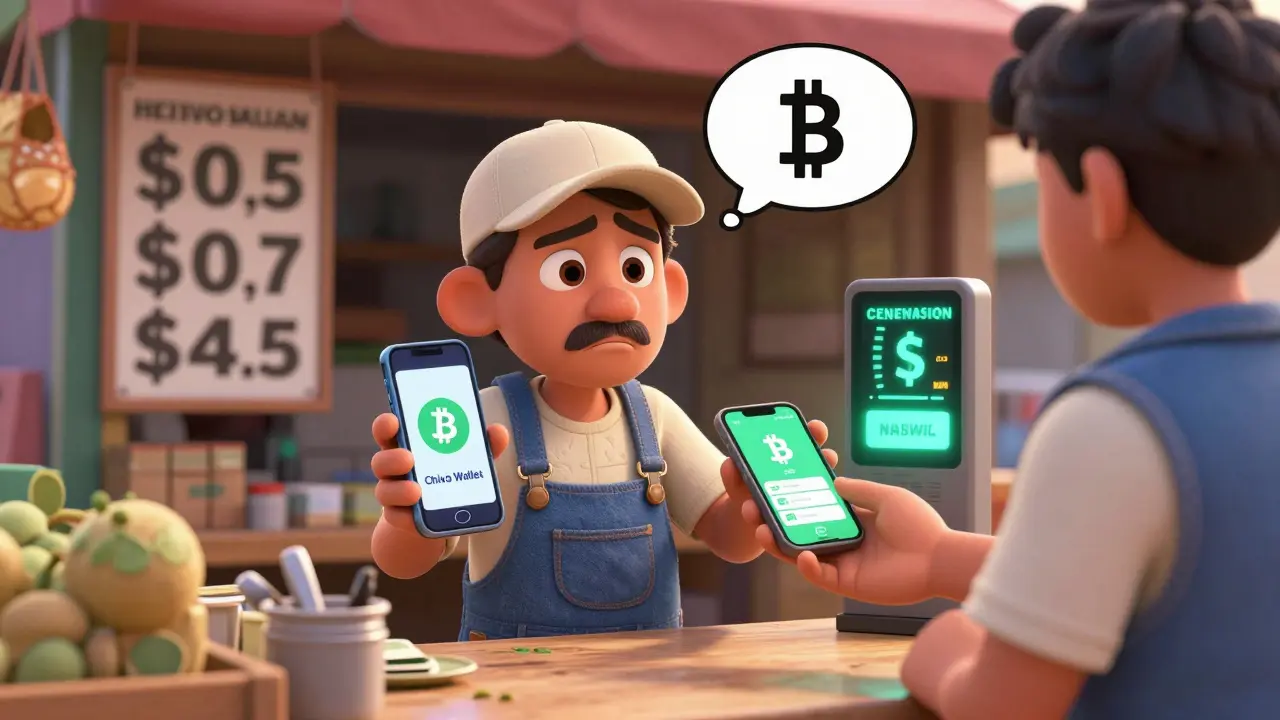
When El Salvador made Bitcoin legal tender in September 2021, the world took notice. For the first time ever, a country officially recognized a decentralized digital currency as equal to its national currency - the US dollar. But behind the headlines and government promotions, the international response was anything but unified. While some cheered it as a bold step toward financial freedom, others warned of risks that could destabilize an already fragile economy. The truth? The experiment has been far more complicated than anyone predicted.
What the Law Actually Did
El Salvador’s Bitcoin Law didn’t just allow Bitcoin as a payment option - it forced businesses to accept it. Under Article 7, every economic agent, from street vendors to banks, must accept Bitcoin when offered for goods or services. That’s not a suggestion. It’s a legal requirement. The government also created the Chivo Wallet app, giving users $30 in Bitcoin just for signing up, hoping to jumpstart adoption. But here’s the catch: even though Bitcoin is now legal tender, the US dollar didn’t disappear. It’s still the backbone of the economy. Prices are listed in dollars. Taxes are calculated in dollars. The government even built a system that automatically converts Bitcoin to dollars at the point of sale. That’s not because Bitcoin is stable - it’s because people don’t trust it to hold value.Why the IMF and Global Financial Institutions Warned Against It
The International Monetary Fund (IMF) didn’t hold back. Within weeks of the law’s implementation, they issued a public statement urging El Salvador to reconsider. Their concerns? Volatility, lack of transparency, and the risk of undermining financial stability. They pointed out that Bitcoin’s price swings - sometimes over 20% in a single day - make it terrible for everyday transactions. Imagine paying for your lunch in Bitcoin, only to find out the next day that the same meal costs 15% more because Bitcoin dropped in value. They also questioned how El Salvador could enforce anti-money laundering rules with a currency that doesn’t have a central authority. Bitcoin transactions are pseudonymous, not anonymous, but tracing them requires technical expertise most regulators don’t have. The IMF noted that countries like the Bahamas and Nigeria were moving toward Central Bank Digital Currencies (government-backed digital currencies issued by national central banks) - not decentralized coins like Bitcoin. These CBDCs give governments control over monetary policy, while Bitcoin gives that control to a global network of miners.Legal Experts Say Forced Tender Violates Basic Rights
Beyond finance, legal scholars around the world raised alarms. Dror Goldberg, a legal historian who studies compulsory tender laws, called El Salvador’s move a dangerous precedent. He explained that forcing people to accept a form of payment - especially one as volatile as Bitcoin - violates the fundamental principle of freedom of contract. In most countries, businesses can refuse cash if they want to. In the US, for example, a coffee shop can legally say, "We only accept cards." But in El Salvador, if you run a small shop, you’re legally required to take Bitcoin - even if you don’t understand how it works. Worse, the law doesn’t give businesses a way to opt out. There’s no exception for small vendors, elderly customers, or people without smartphones. Critics argue this isn’t financial innovation - it’s coercion disguised as progress.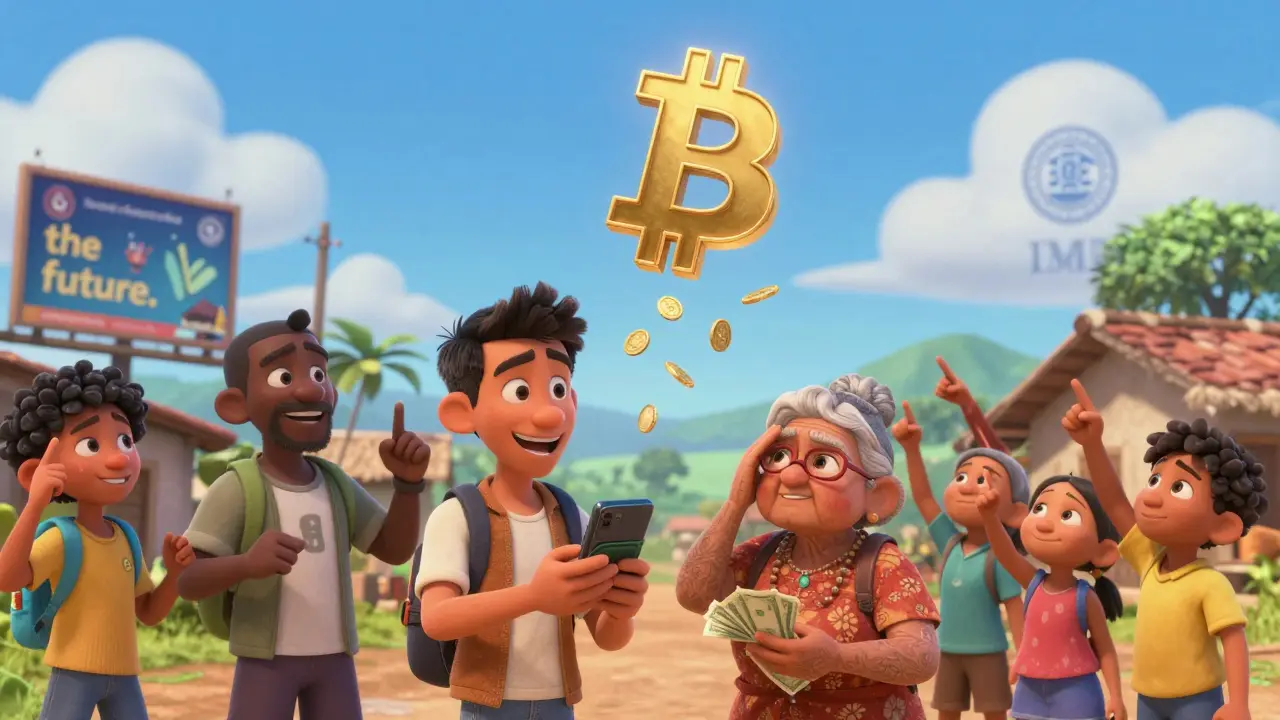
Adoption Numbers Tell a Different Story
The government claimed Bitcoin would help the 70% of Salvadorans without bank accounts. But data from a 2023 study by researchers at the National Bureau of Economic Research shows a different picture. Half of households downloaded the Chivo Wallet at launch. But by early 2022, more than 60% of those users never made another transaction after their $30 bonus ran out. Twenty percent never even spent the bonus. And only 5% of all sales in the country were paid in Bitcoin. Even more telling: 88% of businesses that received Bitcoin immediately converted it into US dollars. That means Bitcoin isn’t being used as money - it’s being used as a speculative asset. People aren’t saving in Bitcoin. They’re not paying bills in Bitcoin. They’re using it as a temporary bridge to dollars. The users who actually use the wallet regularly? Mostly young, urban, male, and already banked. The very people the law was supposed to help - rural women, informal workers, elderly citizens - barely use it at all. The mean number of ATM withdrawals per active user? 2.59. That’s not mass adoption. That’s a handful of tech-savvy users driving the system.Why Other Countries Are Watching - But Not Copying
Several countries, especially those with high inflation or unstable currencies, have looked at El Salvador’s move. Argentina, Nigeria, and Venezuela have all had public debates about adopting Bitcoin. But none have followed through. Why? Because the risks are too clear. Countries like Nigeria are rolling out their own Central Bank Digital Currencies - digital naira that the central bank can control. They want efficiency, not volatility. They want traceability, not pseudonymity. They want to keep monetary sovereignty, not hand it over to Bitcoin’s decentralized network. Even Panama, which considered adopting Bitcoin in 2022, shelved the idea after consulting with the IMF and seeing El Salvador’s low adoption rates. The lesson? Legalizing Bitcoin doesn’t mean people will use it. And forcing them to doesn’t make it work.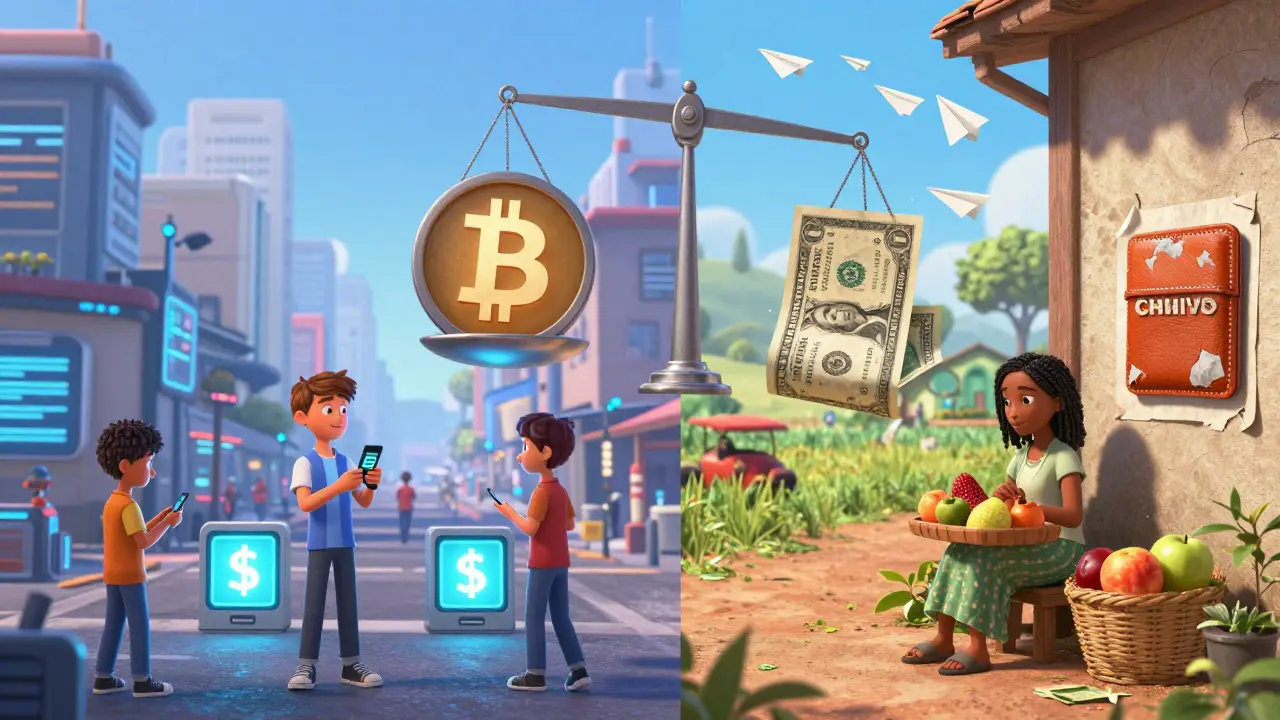
The Bigger Picture: Bitcoin as Money or as Speculation?
At its core, El Salvador’s experiment forces us to ask: Can Bitcoin be money? Or is it just a high-risk investment? Money has three jobs: a medium of exchange, a unit of account, and a store of value. Bitcoin fails two of them in practice. It’s rarely used to pay for everyday goods. Prices aren’t listed in Bitcoin. And because its value swings wildly, no one uses it to save. That’s why, even in El Salvador, Bitcoin is treated like a lottery ticket - not a currency. The cryptocurrency community still celebrates the move as historic. But the real-world data tells a quieter story: innovation without practical adoption is just a show. The world isn’t rejecting Bitcoin because it’s too new. It’s rejecting it because it doesn’t solve the problems it claims to fix.What Comes Next?
El Salvador hasn’t reversed the law. But it hasn’t expanded it either. The Chivo Wallet is still active, but usage has flatlined. The government still promotes Bitcoin as a symbol of national pride. But behind the scenes, most businesses are quietly relying on dollar conversion. The international community isn’t calling for sanctions. But it’s not offering support either. El Salvador’s experiment remains a single data point - a real-world test that didn’t go as planned. Other nations are watching, learning, and choosing a different path: digital currencies they control, not ones they can’t. The lesson isn’t that Bitcoin is dead. It’s that legal status doesn’t create adoption. Real use does. And for now, most people - even in El Salvador - still trust dollars more than algorithms.Why did El Salvador adopt Bitcoin as legal tender?
El Salvador’s government said it adopted Bitcoin to reduce the cost of international remittances (which make up 20% of the economy), to bring financial services to the 70% of people without bank accounts, and to attract investment by positioning the country as a crypto-friendly nation. But data shows that remittance costs didn’t drop significantly, most users didn’t benefit from financial inclusion, and investment didn’t surge as expected.
Is Bitcoin really used for everyday transactions in El Salvador?
No. Only about 5% of all sales in the country are paid in Bitcoin. Most businesses that receive Bitcoin immediately convert it into US dollars. Even users who downloaded the Chivo Wallet often made zero transactions after receiving their $30 bonus. Bitcoin isn’t functioning as money - it’s being used as a temporary digital voucher.
Why do international financial institutions oppose El Salvador’s Bitcoin law?
They worry about Bitcoin’s extreme price volatility, which can destabilize personal finances and business planning. They also question how the country can enforce anti-money laundering rules without a central authority to track transactions. The IMF and World Bank prefer central bank digital currencies because they offer digital efficiency without sacrificing monetary control.
Did Bitcoin help the unbanked population in El Salvador?
Not really. The users who actively use the Chivo Wallet are mostly young, urban, educated men who already had bank accounts. Rural communities, women, and older citizens - the groups most in need of financial access - rarely use the app. The policy failed to reach its intended beneficiaries.
Could other countries follow El Salvador’s model?
So far, none have. Countries like Nigeria and Argentina are exploring their own digital currencies, not Bitcoin. The lack of real adoption, high volatility, and legal concerns make El Salvador’s model a risky template. Most governments prefer control over chaos.


Write a comment