






Most people hear "stablecoin" and picture USDT or USDC. But LUAUSD is a USD-backed stablecoin within the Lumiterra ecosystem designed for digital finance and in-game activities. If you’ve stumbled upon this ticker on a chart or a gaming platform, you’re probably wondering: is it actually stable? Who backs it? And why should you care if you aren’t already deep in the Lumi Finance world?
The short answer is that LUAUSD is a niche asset. It’s not trying to be the next Tether. Instead, it serves a specific job: providing price stability for users inside the Lumiterra gaming and investment environment. For most retail investors outside that ecosystem, it’s a curiosity. For those inside, it’s a utility tool that solves real problems with volatility.
Key Takeaways
- LUAUSD is an ecosystem-specific stablecoin tied to the Lumi Finance platform, not a general-purpose payment token.
- It aims for a $1.00 peg but has historically traded between $0.78 and $1.86, showing it behaves more like a soft-pegged asset than a hard-pegged one.
- Backed by diversified stablecoin reserves rather than a single collateral, which theoretically reduces depeg risk compared to some competitors.
- Trades primarily on Katana DEX (Ronin Network) and Uniswap V3 (Arbitrum), with very low daily volume (~$30k-$35k).
- Best suited for Lumiterra gamers and Lumi Finance stakers; risky for general DeFi users due to low liquidity and limited adoption.
What Exactly Is LUAUSD?
To understand LUAUSD, you first need to understand its parent project, Lumi Finance. Lumi Finance positions itself as an investment platform focused on sustainable wealth preservation. Its core token, LUA, features a unique mechanism called "partial collateralization," which creates a floor price that theoretically prevents the token from dropping to zero.
LUAUSD fits into this structure as the stable component. When you stake LUA, you receive LUAUSD at the current floor price. This means every LUAUSD token is meant to represent a specific USD value backed by the protocol’s reserves. Think of it as a bridge: LUA provides upside potential through market demand, while LUAUSD provides downside protection through stability. You can swap LUA for LUAUSD when you want safety, and swap back when you want exposure to price growth.
This isn’t just a technicality. In volatile markets, having a native stable asset lets users park their value without leaving the ecosystem or paying high gas fees to move funds to Ethereum mainnet. It keeps capital locked in the system, which benefits both the user and the protocol.
How Does the Stability Mechanism Work?
Traditional stablecoins like USDC or DAI rely on centralized reserves or algorithmic mechanisms. LUAUSD takes a different approach by using "diversified stablecoin reserves." Instead of holding only cash or a single type of asset, the protocol holds a basket of other stable assets. This diversification is designed to safeguard against the risk of any single reserve asset failing or depegging.
Another critical feature is protocol-owned liquidity. Unlike many decentralized exchanges where liquidity providers can pull their funds out at any time, causing slippage or price impact, Lumi Finance owns the liquidity for LUA and LUAUSD pairs. The protocol acts as the counterparty for each transaction. This means you don’t have to worry about a random LP withdrawing their funds and leaving you stuck with illiquid tokens. It’s a design choice that prioritizes execution certainty over decentralization purity.
However, "stable" doesn’t mean "static." As of early 2026, LUAUSD trades around $0.985, slightly below the $1.00 target. Its all-time high was $1.86 in March 2024, and its all-time low was $0.78 in April 2025. This range suggests that while the token aims for stability, it still reacts to market sentiment and ecosystem activity. It’s a "soft peg" rather than a hard one.

Where Can You Trade LUAUSD?
If you’re looking to buy or sell LUAUSD, your options are limited compared to major stablecoins. The token is listed on a handful of platforms, primarily within the ecosystems it supports:
| Platform | Network | Pair | 24h Volume (Approx.) | Liquidity Depth |
|---|---|---|---|---|
| Katana DEX | Ronin | LUA/LUAUSD | $28,085 | ~$4,200 - $4,500 (±2%) |
| Katana DEX | Ronin | LUAUSD/RON | $3,985 | Low |
| Uniswap V3 | Arbitrum One | LUAUSD/LUA | $25 | Very Low |
| Bybit | Cex | LUAUSD/USDT | Varies | Moderate |
Notice the stark difference in volume. The primary action happens on Katana DEX, which is built for the Ronin Network (used by Axie Infinity and other games). This makes sense because Lumiterra is heavily focused on gaming. If you’re a gamer on Ronin, Katana is your go-to. If you’re a DeFi user on Arbitrum, Uniswap V3 offers access, but the volume is so low that large trades will likely suffer from significant slippage.
For most users, Bybit remains the easiest entry point due to its centralized interface and deeper order books, though you’ll still face lower liquidity than you’d see with USDT or USDC.
LUAUSD vs. Major Stablecoins: A Reality Check
It’s easy to get excited about new stablecoins, but context matters. Let’s compare LUAUSD to the giants in the room:
- Market Cap: LUAUSD sits at ~$6 million. USDT is in the hundreds of billions. USDC is in the tens of billions. This is a micro-cap asset.
- Holders: LUAUSD has about 2,640 holders. USDC has millions. This indicates a very concentrated user base, likely dominated by early adopters and team members.
- Use Case: USDT and USDC are global settlement tools. LUAUSD is an internal utility token for Lumiterra.
- Volatility: While major stablecoins stay within a few cents of $1.00, LUAUSD has swung nearly 100% from its low to high. It is not risk-free.
So, should you hold LUAUSD instead of USDC? Probably not, unless you are actively participating in the Lumiterra ecosystem. For general DeFi yield farming or cross-chain swaps, the established majors offer better liquidity, trust, and regulatory clarity. LUAUSD is a specialized tool, not a general-purpose currency.
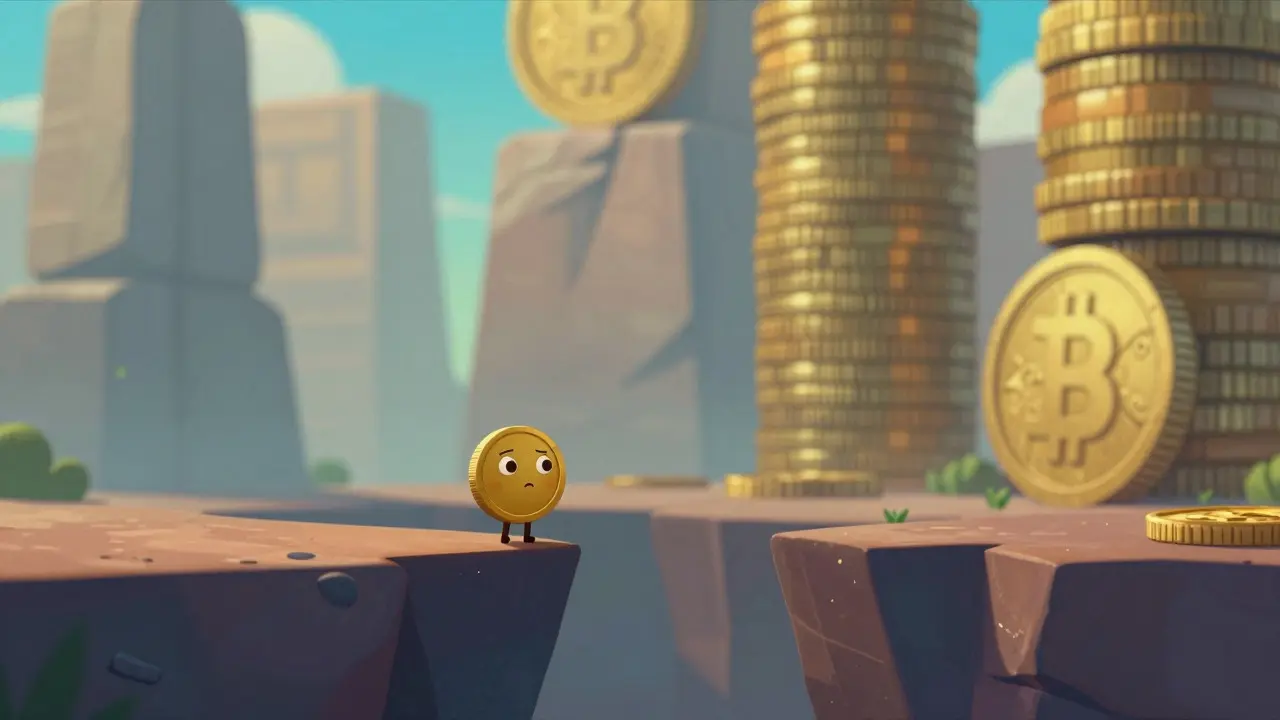
Risks and Things to Watch
Before you invest, keep these risks in mind:
- Liquidity Risk: With only ~$30k in daily volume across all markets, exiting a large position could move the price significantly. Always check the order book before trading.
- Smart Contract Risk: Like all DeFi protocols, LUAUSD relies on code. If there’s a bug in the reserve management or the swapping mechanism, funds could be at risk. Audits help, but they don’t eliminate risk.
- Ecosystem Dependency: LUAUSD’s value is tied to the success of Lumiterra. If the gaming platform loses users, demand for LUAUSD drops. It’s not a standalone asset; it’s a derivative of the broader ecosystem’s health.
- Regulatory Uncertainty: There is no clear regulatory status for LUAUSD in major jurisdictions. As governments tighten rules on stablecoins, smaller, less transparent projects may face compliance challenges.
Who Is LUAUSD Actually For?
LUAUSD isn’t for everyone. It’s best suited for:
- Lumiterra Gamers: Players who want to avoid volatility when managing in-game assets or rewards.
- LUA Stakers: Investors who hold LUA and want to toggle between growth (LUA) and stability (LUAUSD) without leaving the platform.
- DeFi Niche Traders: Users specifically interested in the Ronin or Arbitrum ecosystems who want to experiment with newer, lower-competition assets.
If you’re a casual investor looking for a safe place to park dollars, stick with USDC or USDT. If you’re deep in the Lumiterra world, LUAUSD is a valuable utility that simplifies your workflow.
Frequently Asked Questions
Is LUAUSD fully backed by USD?
LUAUSD is backed by diversified stablecoin reserves rather than direct USD cash holdings. This means its value depends on the stability of those underlying reserve assets. While designed to maintain a $1.00 peg, it has historically traded at a discount or premium to this value.
Can I use LUAUSD outside the Lumiterra ecosystem?
Yes, but it’s limited. You can trade it on Katana DEX (Ronin) and Uniswap V3 (Arbitrum), and buy/sell it on Bybit. However, it lacks broad acceptance in payments or other DeFi protocols, making it primarily useful within its native ecosystem.
What is the difference between LUA and LUAUSD?
LUA is the core investment token with a floor price and upside potential based on market demand. LUAUSD is the stablecoin version, designed to hold steady value close to $1.00. You can swap between them at the prevailing floor price, allowing you to switch between risk and stability.
Why is LUAUSD trading below $1.00?
Stablecoins often trade slightly off their peg due to supply and demand imbalances, arbitrage opportunities, or lack of liquidity. LUAUSD’s price reflects the current balance of buyers and sellers on its limited trading venues. A slight discount doesn’t necessarily indicate failure, but it does show it’s not a perfect hedge.
Is LUAUSD safer than DAI or USDC?
Not necessarily. USDC and DAI have larger market caps, more transparent audits, and broader regulatory scrutiny. LUAUSD uses diversified reserves, which is a plus, but its smaller size and lower liquidity make it more susceptible to price swings and smart contract risks. For pure safety, established majors are generally preferred.


Write a comment