





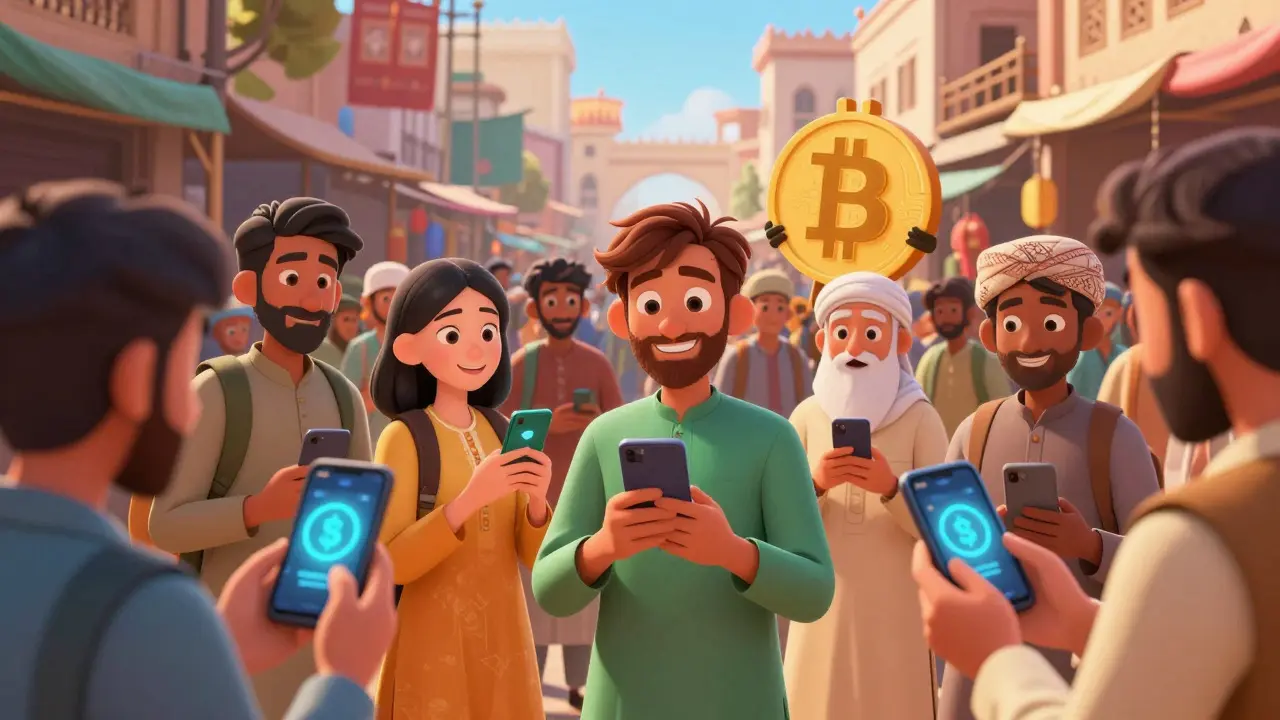
Imagine a country where the central bank banned cryptocurrency in 2018, yet by 2025, that same nation is processing an estimated $300 billion in annual crypto trading volume. That is Pakistan. It sounds like a contradiction, but it’s exactly what happened. The very restrictions that were meant to kill the market didn’t just fail; they accidentally created one of the most resilient and innovative crypto ecosystems on the planet.
For years, global observers watched Pakistan with skepticism. They expected the ban to work. Instead, they saw a population of over 40 million people find ways around the blockade. Today, Pakistan ranks third in the Global Crypto Adoption Index, right behind India and ahead of many Western nations. This isn't just a niche hobby for tech bros in Lahore; it's a massive economic lifeline driven by currency instability, young demographics, and a lack of traditional investment options. Let’s break down how a restrictive environment birthed a $300 billion giant and what it means for the future of digital assets in emerging markets.
The Paradox of the Ban: How Restrictions Created Opportunity
In 2018, the State Bank of Pakistan (SBP) moved to prohibit virtual currencies, fearing capital flight and regulatory risk. The logic seemed sound at the time: if you can’t buy it legally, people won’t. But human behavior rarely works that way, especially when the alternative-holding the local currency-is painful. The Pakistani Rupee has suffered significant depreciation over the last decade. For the average citizen, watching their savings lose value against the US Dollar is a daily stressor. When the official door was closed, traders went through the back door.
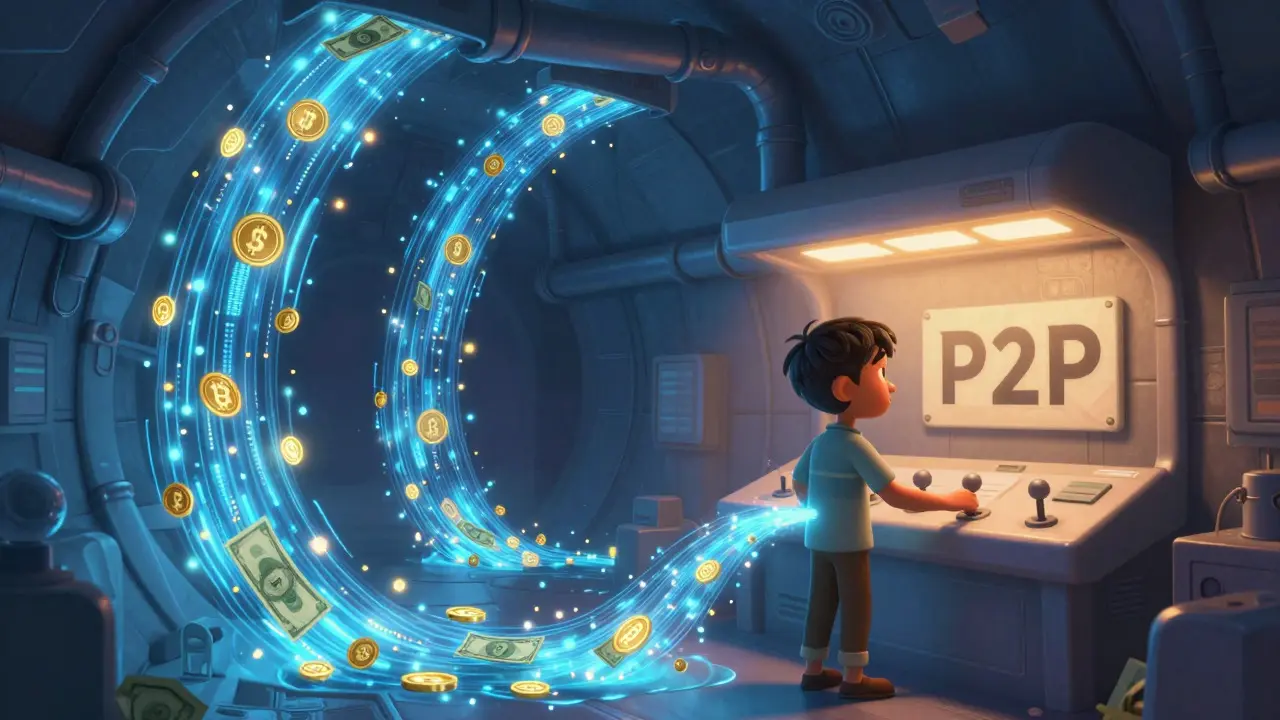
This shift forced innovation. Without direct banking integration, Pakistani traders turned to Peer-to-Peer (P2P) platforms. These are essentially online marketplaces where individuals sell crypto directly to each other using local payment methods. Instead of wire transfers, which are slow and expensive, users started using mobile wallets like Easypaisa and JazzCash. These apps became the bridge between fiat currency and blockchain assets. The restriction didn’t stop the flow of money; it just changed the plumbing. Now, the system is more decentralized and harder to shut down than a simple exchange would have been.
Why Pakistan? The Economic Drivers Behind the Numbers
You can’t understand the $300 billion figure without understanding the pain points of the local economy. There are three main drivers pushing millions into crypto:
- Currency Hedging: With the Rupee losing value, Bitcoin (BTC) and stablecoins like Tether (USDT) act as safe havens. Traders use USDT specifically because it holds a 1:1 parity with the US Dollar, offering stability without needing a foreign bank account.
- Limited Investment Options: Traditional stock markets in Pakistan are illiquid and often dominated by large corporations. Real estate is expensive and illiquid. Crypto offers a liquid, accessible asset class that anyone with a smartphone can access.
- Freelance Income: Pakistan has a massive IT and freelance sector. Many professionals earn in USD from clients abroad. Receiving these payments via traditional banks involves high fees and slow processing times. Crypto allows them to receive, hold, and spend their earnings efficiently.
The demographic factor cannot be ignored either. Pakistan has a young population with high internet penetration rates. According to recent data, the country added 5.4 million new crypto users in 2025 alone. This youth cohort is digitally native, comfortable with mobile-first financial tools, and less tied to traditional banking habits. They don’t see crypto as a speculative gamble; they see it as a practical tool for financial survival and growth.
Analyzing the $300 Billion Volume: What Does It Really Mean?
Let’s talk numbers. The claim of $300 billion in annual trading volume places Pakistan in the top tier of global crypto markets. To put this in perspective, this volume rivals or exceeds that of several established European economies. However, context matters. A significant portion of this volume comes from P2P transactions, which can sometimes involve repeated buying and selling to move funds between different wallets or payment methods. This doesn’t necessarily mean $300 billion in *new* wealth entered the market every year, but rather the *velocity* of trade within the ecosystem.
Despite the nuance in how volume is calculated, the scale is undeniable. The Asia-Pacific region saw a 69% year-over-year increase in on-chain activity in the 12 months leading up to June 2025. Pakistan was a primary driver of this surge, alongside India and Vietnam. The data shows that transaction volumes rose from $1.4 trillion to $2.36 trillion across the APAC region, with Pakistan contributing significantly to that growth curve. This isn’t a blip; it’s a sustained trend of organic adoption.
| Country | Global Adoption Rank | Estimated Active Users | Primary Driver |
|---|---|---|---|
| India | 1st | ~50 Million+ | Investment & Speculation |
| United States | 4th | ~70 Million | Institutional & Retail Investment |
| Pakistan | 3rd | ~40 Million | Currency Hedging & Remittances |
| Vietnam | Top 10 | ~10-15 Million | Gaming & DeFi |
The Role of Mobile Money and Infrastructure
If you look at how Pakistani traders actually move money, you’ll notice a unique infrastructure stack. Since banks are wary of crypto, mobile financial services (MFS) stepped in. Apps like Easypaisa and JazzCash, which are already widely used for bill payments and person-to-person transfers, became the default rails for crypto on-ramps. This integration lowered the barrier to entry dramatically. You don’t need a credit card or a complex bank transfer setup; you just need a mobile number and some cash loaded onto your wallet.
This also highlights a critical point: the success of crypto in Pakistan is tied to the success of local fintech. As MFS networks expand to rural areas, so does crypto adoption. The learning curve for urban youth is steep but short; for rural populations, it remains a challenge due to infrastructure gaps. However, the trend is clear. The more accessible the local payment rail becomes, the more seamless the transition to digital assets feels. It’s not about replacing the bank; it’s about bypassing the friction the bank creates.
Regulatory Shifts: From Ban to Blockchain Support
Here is where the story gets interesting. The government’s stance has softened, not because the ban worked, but because ignoring the market became too costly. In recent developments, Pakistan has allocated 2,000 megawatts of surplus energy capacity specifically for Bitcoin mining operations. Why would a government that banned crypto in 2018 support mining in 2025? Because energy needs to be sold, and crypto mining provides a consistent, off-peak demand for electricity. It’s a pragmatic move to monetize surplus power while signaling openness to the industry.
Furthermore, discussions are ongoing about establishing formal regulatory frameworks for virtual assets. Some analysts even suggest the possibility of a national Bitcoin reserve, mirroring trends seen in El Salvador and other nations. If Pakistan formalizes its market, the $300 billion in gray-area trading could transition into a regulated, tax-compliant ecosystem. This would bring clarity for investors and potentially attract institutional capital. The shift from "prohibition" to "strategic engagement" marks a turning point for the entire region.

Risks and Challenges Ahead
Don’t get too excited yet. The path forward isn’t smooth. Operating in a legal gray area carries risks. Traders face uncertainty regarding tax obligations, property rights, and consumer protection. If the regulatory framework changes abruptly, it could disrupt liquidity. Additionally, the heavy reliance on P2P markets means that counterparty risk is higher than on regulated exchanges. Scams and frauds are still prevalent, especially among newer users who may not understand the nuances of smart contracts or wallet security.
There is also the issue of macroeconomic stability. While crypto helps hedge against Rupee depreciation, a sudden stabilization of the currency could reduce the urgency for some traders. However, given the structural issues with the local economy, it’s unlikely the Rupee will become a strong store of value anytime soon. Crypto will likely remain a vital part of the financial toolkit for millions of Pakistanis, regardless of short-term price fluctuations.
What This Means for Global Crypto Adoption
Pakistan’s story is a case study in resilience. It proves that when people are motivated by necessity-protecting their savings, earning income, sending remittances-they will adopt technology no matter the barriers. For global crypto projects, this is a signal. Emerging markets aren’t just secondary players; they are primary drivers of grassroots adoption. The $300 billion volume isn’t just a statistic; it’s evidence that digital assets are becoming essential infrastructure in economies where traditional systems fall short.
As we look toward 2026 and beyond, watch for two things: the formalization of regulations in Pakistan and the continued integration of mobile money with blockchain protocols. If these two align, Pakistan could become a model for how emerging economies integrate digital assets without relying on legacy banking structures. The restrictions of 2018 didn’t kill the dream; they forged it in fire, creating a market that is now impossible to ignore.
Is cryptocurrency legal in Pakistan in 2026?
Technically, it exists in a regulatory gray area. The State Bank of Pakistan banned it in 2018, but enforcement has been lax, and the government has recently shown signs of opening up, such as allocating energy for mining. Most trading happens via P2P platforms and international exchanges, making it practically accessible despite the lack of explicit legalization.
How do Pakistanis buy crypto without bank cards?
They primarily use Peer-to-Peer (P2P) trading on major exchanges. Sellers offer crypto in exchange for local payments made via mobile wallets like Easypaisa or JazzCash. This allows buyers to convert fiat to crypto without needing a credit card or direct bank transfer to an overseas exchange.
Why is the trading volume so high ($300 billion)?
The high volume is driven by the sheer number of users (over 40 million) and the frequency of transactions. Many users trade frequently to hedge against Rupee volatility or to manage freelance earnings. P2P activity, which includes moving funds between wallets and payment methods, contributes significantly to the total reported volume.
What are the biggest risks for investors in Pakistan?
The main risks include regulatory uncertainty (laws could change suddenly), counterparty risk on P2P platforms (deals falling through), and lack of consumer protection. Additionally, general market volatility applies, and users must be vigilant about scams since there is no central authority to guarantee safety.
Will Pakistan create a national Bitcoin reserve?
It is currently under discussion. Analysts suggest that holding Bitcoin could help stabilize foreign reserves and attract sovereign wealth fund interest. While not yet confirmed, the government’s allocation of energy for mining suggests a strategic interest in integrating crypto into the national economic framework.


Write a comment