





Imagine trying to buy a car where the dealer won't show you the engine, refuses to give you the service history, and barely lets you sit in the driver's seat. That’s essentially what researching TWCX feels like right now. If you are looking for a clear-cut answer on whether this platform is safe or profitable, I have some bad news and some good news. The bad news? There is almost zero public data. The good news? Knowing that lack of information is itself a massive red flag can save you from losing your money.
This article isn't just another generic list of features because, frankly, we don't have many features to list yet. Instead, we are going to look at why silence in the crypto world is dangerous, how TWCX compares to established giants, and exactly what you need to check before depositing a single cent. By the end, you will know if TWCX is a hidden gem or a ghost town.
The Information Vacuum Surrounding TWCX
Let's be real: when you search for most major exchanges, you get thousands of pages of reviews, Reddit threads, YouTube tutorials, and regulatory filings. When you search for TWCX, you hit a wall. WikiBit describes it simply as "a reliable platform for users to engage in virtual currency exchange," but that is about as helpful as saying a restaurant serves food. It doesn't tell you if the kitchen is clean or if the chef has ever cooked before.
We cannot find founding dates, creator names, or headquarters locations. In the crypto industry, transparency is the first line of defense against scams. Platforms like Kraken publish their proof-of-reserves regularly. They list their team members on LinkedIn. They file reports with regulators. TWCX does none of these things publicly. This opacity makes it nearly impossible to assess its operational sophistication or competitive positioning.
Why does this matter? Because crypto is unregulated enough as it is. If an exchange hides its background, you are taking a significant risk. You aren't just betting on the market; you are betting on anonymous people holding your private keys. Without verifiable identity, who do you call if the site goes down? Who do you sue if they freeze your funds?
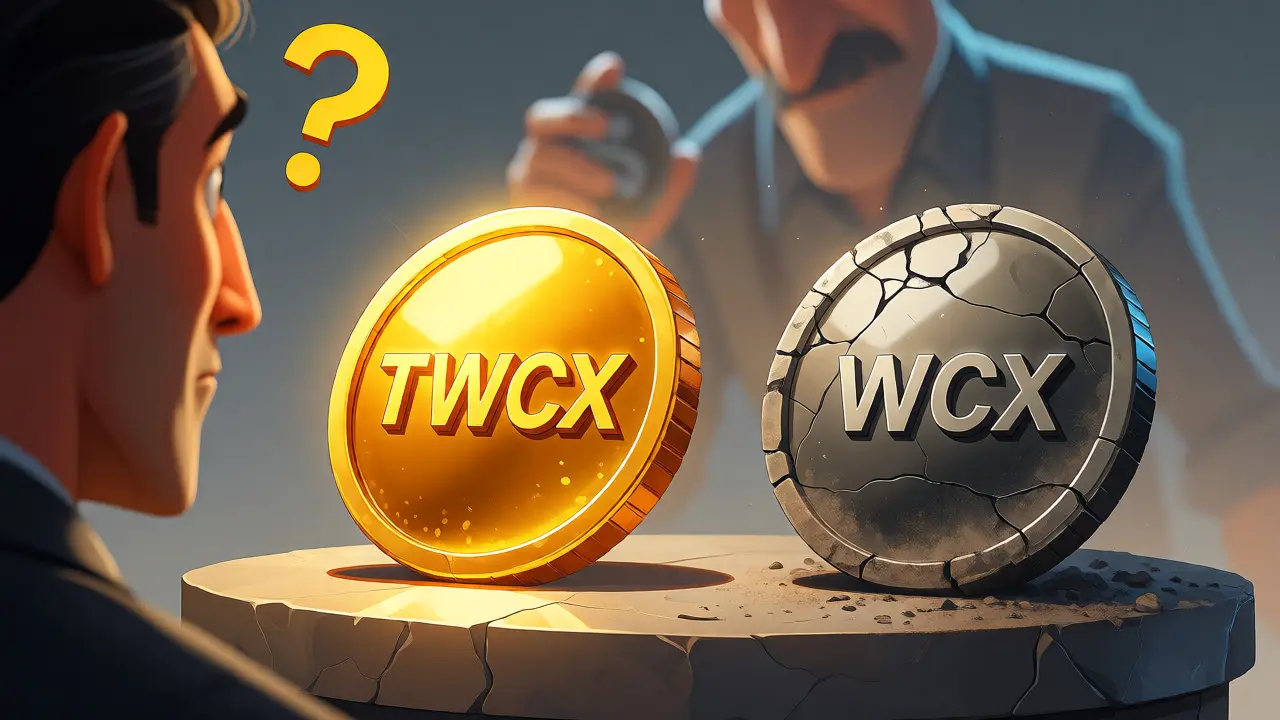
Distinguishing TWCX from WCX (The Scam Confusion)
Here is where things get tricky. Many users confuse TWCX with WCX. Do not make this mistake. WCX was revealed to be a scam back in March 2020. It promised insane leverage-up to 300x-and accepted only Bitcoin funding. Then, it vanished. It is marked as "dead" in most crypto databases.
Is TWCX related to WCX? We don't know. But the similarity in names is suspicious. Scammers often reuse brand elements or launch slightly tweaked versions of failed platforms to catch people off guard. If you see marketing materials for TWCX promising high returns with little effort, treat it with extreme caution. The legacy of WCX should serve as a warning bell. Always verify the URL. Make sure you are on the correct domain and not a phishing clone designed to look like a legitimate exchange.
What We Know About Features and Usability
Since specific technical specifications are missing, we have to rely on general expectations for modern exchanges. A functional crypto platform needs three things: security, liquidity, and support. Let's see how TWCX stacks up against the unknown.
- Security Protocols: Does TWCX use two-factor authentication (2FA)? Cold storage for assets? Multi-signature wallets? We don't know. Established competitors like Crypto.com highlight their vaults and insurance policies prominently. TWCX stays silent.
- Supported Assets: Which coins can you trade? Bitcoin? Ethereum? Altcoins? Without a listed inventory, you might sign up only to find they don't support the token you want to buy.
- User Interface: Is it beginner-friendly or built for pros? No screenshots or user manuals are readily available in public forums.
The absence of user feedback is perhaps the most telling part. Check Trustpilot, Reddit, or Bitcointalk. If you find no discussions, it means one of two things: either the platform is so new nobody uses it, or it is so obscure that it has no community presence. Neither is a great sign for long-term stability. Community sentiment acts as an early warning system. If users complain about withdrawal delays on other exchanges, you hear about it within days. With TWCX, you are flying blind.
Comparing TWCX to Industry Standards
To understand the gap between TWCX and reputable exchanges, let's look at what you typically get elsewhere. This comparison highlights what you might be missing by choosing an opaque platform.
| Feature | TWCX | Kraken / Crypto.com |
|---|---|---|
| Transparency | Low (No public team info) | High (Public audits, known teams) |
| User Reviews | Scarce/Non-existent | Thousands of verified reviews |
| Regulatory Status | Undocumented | Licensed in multiple jurisdictions |
| Asset Selection | Unknown | Hundreds of cryptocurrencies |
| Support Quality | Unverified | 24/7 Live chat and ticket systems |
Notice the pattern? Reputable exchanges compete on trust. They spend millions on compliance and customer service because they know that is what keeps customers coming back. TWCX lacks this infrastructure visibility. When you trade on Kraken, you know their deep liquidity enables precise trades. When you use Crypto.com, you benefit from low costs and robust security. With TWCX, you are guessing.
Risks of Trading on Low-Information Platforms
Why would anyone use TWCX if there is so much uncertainty? Usually, it comes down to fees or specific coin availability. Maybe TWCX offers lower trading fees than Binance or Coinbase. Or maybe they list a micro-cap altcoin that hasn't reached major exchanges yet. These are valid reasons to explore a new platform, but they come with risks.
The biggest risk is liquidity. If few people are trading on TWCX, the spread (the difference between the buy and sell price) will be wide. You might buy a coin for $100 and find the best bid is only $95. That is an instant 5% loss. Furthermore, low volume means slippage. If you try to sell a large amount, you might crash the local price on the exchange because there aren't enough buyers.
Another risk is withdrawal issues. Some shady exchanges allow deposits easily but make withdrawals difficult. They might impose arbitrary limits, require excessive verification documents, or charge hidden fees. Since there are no user testimonials for TWCX, you cannot predict if withdrawing your profits will be smooth or a nightmare.
Checklist Before Depositing Funds
If you still want to try TWCX, do not jump in headfirst. Treat it like a test drive. Here is a practical checklist to minimize your risk:
- Start Small: Deposit an amount you can afford to lose entirely. Think of it as tuition for learning about the platform.
- Test Withdrawals Immediately: After depositing, try to withdraw a small portion immediately. Did it work? How long did it take? Were there unexpected fees?
- Check the URL: Ensure you are on the official site. Look for SSL certificates (https). Beware of typosquatting domains.
- Contact Support: Send a simple question to their customer service. Do they reply? How fast? Are the answers helpful or robotic?
- Verify KYC Requirements: Read the terms regarding identity verification. Are they reasonable? Some exchanges lock accounts until you provide passport scans, which can be a hassle if you change your mind later.
Remember, in crypto, not your keys, not your coins. Even on reputable exchanges, keeping large sums on the platform is risky. For TWCX, given the lack of track record, moving assets to a hardware wallet after trading is highly recommended.
Final Verdict: Proceed with Extreme Caution
So, is TWCX a good exchange? Based on current data, it is hard to recommend it for serious investors. The lack of information is not just a minor inconvenience; it is a fundamental flaw. In an industry where trust is the primary commodity, opacity is a dealbreaker for most professionals.
If you are a complete beginner, stick to well-known platforms like Coinbase, Kraken, or Binance. Their interfaces are polished, their support is responsive, and their reputations are solid. If you are an advanced trader hunting for obscure altcoins, you might consider TWCX, but keep your position sizes small and your expectations low.
The crypto market moves fast. New exchanges pop up every week. Most fail. Some are scams. A few become giants. Until TWCX provides more transparency-public team info, audited reserves, and genuine user reviews-it remains a speculative choice. Don't let the promise of low fees blind you to the cost of uncertainty.
Is TWCX the same as WCX?
No, they appear to be different entities, though the names are confusingly similar. WCX was identified as a scam and shut down around 2020. TWCX is currently active but lacks detailed public records. Be careful not to confuse the two, as scammers sometimes exploit name similarities.
Does TWCX require KYC verification?
Specific details on TWCX's Know Your Customer (KYC) policies are not widely documented. Most modern exchanges require ID verification for fiat deposits and higher withdrawal limits. You should check their terms of service directly upon registration to confirm their specific requirements.
What cryptocurrencies does TWCX support?
There is no comprehensive public list of supported assets for TWCX. Users report varying experiences, suggesting the selection may be limited compared to major exchanges. It is advisable to create a free account to view the available trading pairs before depositing funds.
Are there user reviews for TWCX?
User reviews are extremely scarce. Major platforms like Trustpilot and Reddit have very few mentions of TWCX. This lack of community feedback makes it difficult to gauge user satisfaction, support quality, or reliability based on peer experience.
Is TWCX regulated?
Current research does not indicate that TWCX holds prominent regulatory licenses in major jurisdictions like the US, UK, or EU. Lack of regulation means fewer consumer protections and recourse options if disputes arise. Always verify regulatory status independently before investing significant capital.