




Most people think of crypto as a wild west of memes and moonshots. But there is a quiet revolution happening in the background, built for banks, governments, and massive enterprises rather than retail traders. That infrastructure is Venom, a high-performance blockchain network designed to handle the heavy lifting of the digital economy.
If you have seen the ticker symbol $VENOM popping up on exchanges, you might be wondering what makes it different from Ethereum or Solana. The short answer: scale and structure. Venom isn't just another Layer 1 chain trying to outdo its neighbors in speed; it is a hybrid system built to solve specific problems that stop big institutions from adopting blockchain technology today.
Key Takeaways
- Venom is a Layer 0 and Layer 1 blockchain network launched in March 2024, focusing on enterprise and governmental use cases.
- The native token, $VENOM, has a maximum supply of 8 billion coins and currently serves as both a utility and governance asset.
- The network achieves speeds of up to 150,000 transactions per second (TPS) with fees typically under $0.002.
- Its core innovation is a "Mesh" architecture that allows multiple blockchains to run in parallel, solving the scalability trilemma.
- Unlike retail-focused chains, Venom prioritizes regulatory compliance, including on-chain KYC/AML features for institutions.
What Exactly Is the Venom Network?
To understand $VENOM, you first need to understand the machine it powers. Venom is a heterogeneous multi-blockchain system that combines a central masterchain with numerous independent workchains. Think of it like a highway system. Traditional blockchains are like a single road where every car (transaction) must wait for the one in front. If traffic jams up, everything stops.
Venom uses a concept called Mesh technology. Instead of one road, it creates a web of interconnected lanes. At the center is the Layer 0 masterchain, which acts as the anchor for security and consensus. Branching off from this are Layer 1 workchains and shardchains. These can operate independently, handling their own smart contracts and applications without clogging the main artery.
This architecture was developed by Christopher Louis Tsu and Dr. Kai-Uwe Steck, who started working on the project back in 2018. After years of testing-including a closed testnet in 2022 and a public testnet in April 2023-the mainnet finally went live in March 2024. The goal wasn't to create the fastest meme coin platform; it was to build digital infrastructure robust enough for a country's central bank or a multinational corporation.
Understanding the VENOM Token
So, what do you actually get when you buy $VENOM? It’s not just a speculative asset. Within the ecosystem, the token plays three critical roles:
- Transaction Fuel: Every action on the network, from sending tokens to executing smart contracts, requires a small fee paid in $VENOM. Because the network is so efficient, these fees are negligible-often fractions of a cent.
- Governance: Holding $VENOM gives you voting rights on major protocol upgrades, parameter changes, and treasury decisions. This ensures the network evolves according to the will of its stakeholders, not just a central team.
- Staking Security: Validators secure the network by staking $VENOM. If they act maliciously or go offline, they face "slashing," where part of their stake is burned. This economic incentive keeps the network honest and secure.
The tokenomics are straightforward. There is a hard cap of 8,000,000,000 $VENOM tokens. As of mid-2026, the circulating supply hovers around 989 million, meaning roughly 12% of the total supply is in circulation. The initial model is inflationary to reward early validators and users, but the roadmap includes mechanisms to burn tokens over time, shifting toward a deflationary state as usage grows.

Performance: Speed and Cost
Numbers don't lie, and Venom's specs are impressive. In a stress test conducted in May 2025, the network sustained 150,000 TPS with finality times under three seconds. For context, Visa handles about 65,000 TPS at peak load, and Ethereum L1 manages far less without layer-2 solutions.
| Metric | Venom | Ethereum (L1) | Solana |
|---|---|---|---|
| Max Throughput (TPS) | ~150,000 | ~15-30 | ~65,000 |
| Avg Transaction Fee | < $0.002 | $0.50 - $5.00+ | $0.01 - $0.05 |
| Finality Time | < 3 seconds | ~12 seconds | ~400ms - 1s |
| Primary Focus | Institutional/Enterprise | DeFi/NFTs | High-speed Consumer Apps |
Why does this matter? Low fees and high speed aren't just nice-to-haves; they are prerequisites for mass adoption. If it costs more to send money on a blockchain than via SWIFT, why would a bank switch? Venom removes that friction. By keeping fees below half a cent, it makes micro-transactions viable, opening doors for things like IoT payments, gaming economies, and global remittances.
Why Institutions Are Watching Venom
Retail investors care about price charts. Institutions care about risk, compliance, and reliability. This is where Venom shines. The network is engineered with "regulatory-ready" features baked into the code.
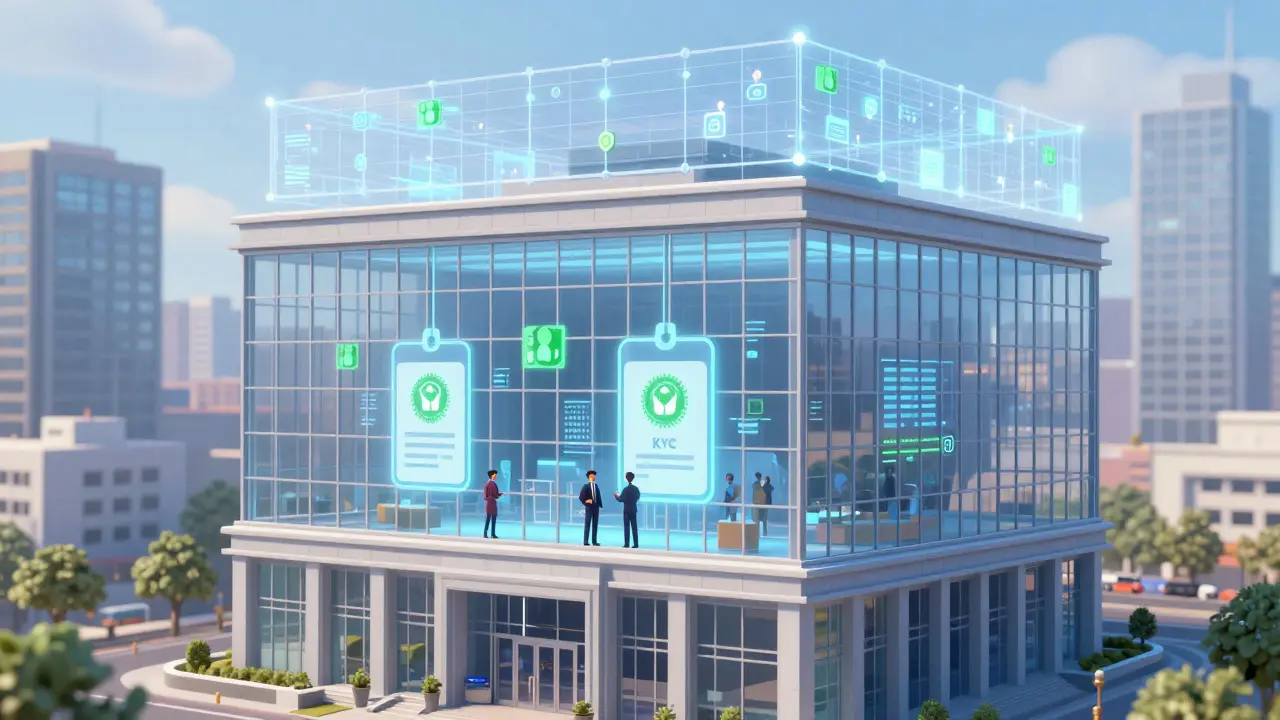
One standout feature is on-chain KYC (Know Your Customer) and AML (Anti-Money Laundering) capabilities. On most blockchains, identity is pseudonymous. While great for privacy, it's a nightmare for regulated entities. Venom allows developers to create compliant workchains where user identities are verified before they interact with the system. This means a government can launch a Central Bank Digital Currency (CBDC) on Venom without worrying about untraceable illicit flows.
A prime example of this in action is the partnership with Vietnam. The country is exploring a sovereign blockchain-backed financial system, and Venom is positioned as the underlying infrastructure. This isn't a pilot project; it's a national-scale deployment strategy. When a G20 nation considers your tech for its currency backbone, you know you're playing in a different league than typical DeFi protocols.
The Ecosystem: More Than Just a Chain
A blockchain is only as good as the tools built on top of it. Since mainnet launch, the Venom Foundation has rolled out a suite of essential infrastructure:
- VenomWallet: A non-custodial wallet available for desktop and mobile. It supports standard Web3 interactions and is optimized for the Venom network's speed.
- VenomBridge: Crucial for interoperability, allowing assets to move between Venom and other major chains like Ethereum and TON.
- VenomScan: The blockchain explorer where you can track transactions, validate blocks, and monitor validator performance.
- Web3.World: A development platform that helps builders deploy decentralized applications (dApps) without getting bogged down in complex setup processes.
These tools create a cohesive environment. You don't have to hunt for third-party integrations; the foundational pieces are provided by the foundation itself, reducing technical debt for new projects entering the space.
Risks and Considerations
No investment is without risk, and Venom is no exception. Here are the factors to keep in mind:
Centralization Concerns: Like many new institutional-grade chains, the early validator set may be smaller and more centralized than Bitcoin or Ethereum. As the network matures and more participants join, this should improve, but it remains a point of debate among purists.
Regulatory Dependency: Venom's value proposition relies heavily on government and institutional adoption. If global regulations shift against CBDCs or strict on-chain KYC, the primary use case could lose steam. Conversely, if regulations favor compliant blockchains, Venom stands to benefit disproportionately.
Token Unlock Schedule: With only ~12% of the supply circulating, significant unlocks are likely ahead. Large sell-offs from early investors or team allocations can create volatility. Always check the vesting schedules before making large positions.
Frequently Asked Questions
Is Venom a Layer 1 or Layer 0 blockchain?
Venom operates as a hybrid. It has a Layer 0 masterchain that provides security and consensus, and Layer 1 workchains that handle specific applications. This structure allows it to scale horizontally by adding more workchains rather than forcing all transactions onto a single chain.
Where can I buy VENOM tokens?
$VENOM is listed on several major centralized exchanges and decentralized platforms. You can also acquire it directly through the VenomGet platform or swap it using VenomBridge if you hold assets on other chains like Ethereum or TON.
How is Venom different from TON (The Open Network)?
While both focus on high throughput and have ties to Telegram's ecosystem (historically), Venom distinguishes itself by targeting institutional and governmental needs with built-in compliance features. TON leans more heavily into consumer-facing applications and social finance, whereas Venom emphasizes sovereign infrastructure and enterprise-grade stability.
Does Venom support NFTs and Gaming?
Yes. The low transaction fees make it ideal for gaming economies and frequent NFT minting. The TIP-3 token standard is designed to handle these assets efficiently, ensuring that game mechanics don't suffer from high gas costs or slow confirmation times.
What is the maximum supply of VENOM?
The maximum supply is fixed at 8,000,000,000 tokens. There is no infinite inflation; once the cap is reached, issuance stops, and the focus shifts entirely to burning mechanisms to reduce supply over time.