


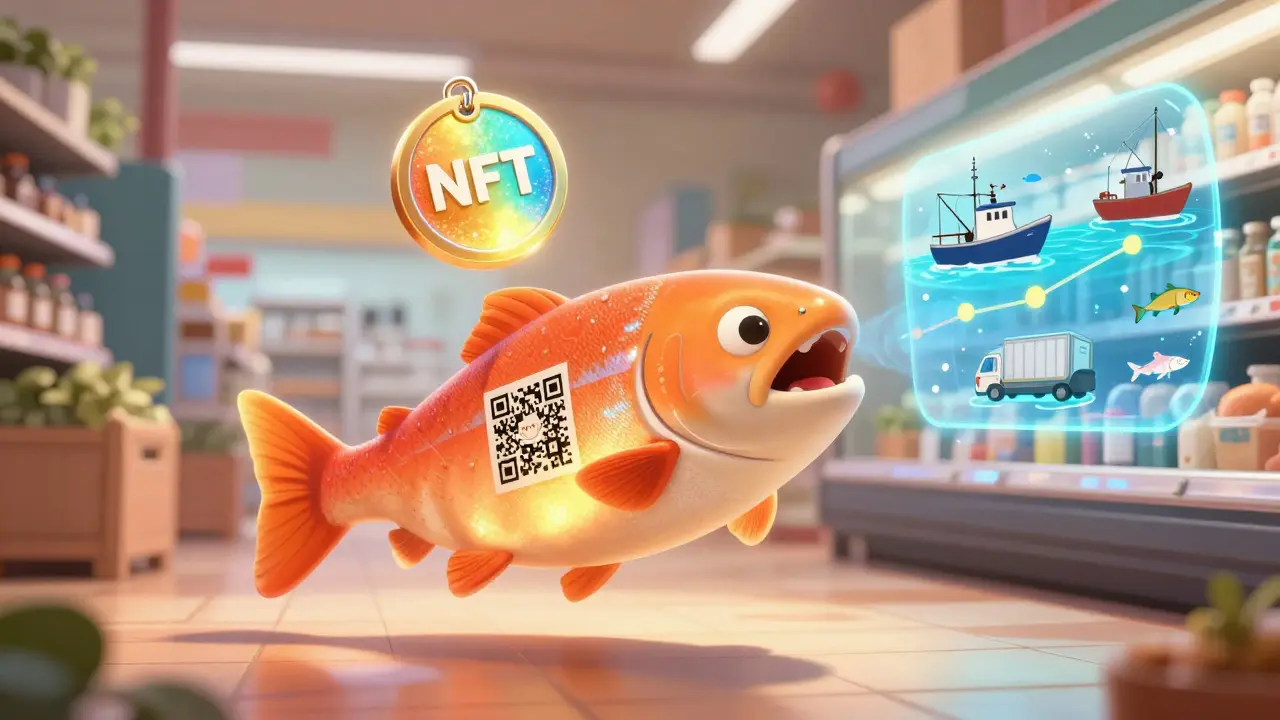
Imagine scanning a QR code on your organic salmon and seeing exactly where it was caught, which boat pulled it from the ocean, when it was processed, and who handled it before it reached your fridge. Not a story. Not marketing. A real, unchangeable digital record-verified by blockchain and tied to the actual fish in your hands. That’s not science fiction. It’s happening now, using NFTs to track food from farm to fork.
Why Food Traceability Matters More Than Ever
Food fraud isn’t just a niche problem. It costs the global food industry around $40 billion every year. Mislabelled seafood? That’s 30% of products. Organic produce falsely labeled? Up to 12% in Europe. And when a recall happens, it can take over a week to trace contaminated goods back to their source. In the meantime, people get sick, brands lose trust, and entire batches of safe food get thrown away. Consumers aren’t blind to this. Eighty-seven percent say they care about where their food comes from. But most labels today tell you nothing. “Product of Canada” doesn’t tell you if it was grown on a pesticide-heavy farm or a small organic plot. A barcode tells you the batch, not the individual item. That’s where NFTs step in.What Are NFTs Doing in the Food Supply Chain?
NFTs-non-fungible tokens-are usually talked about in the context of digital art or collectibles. But they’re not just pictures of apes. An NFT is a unique digital certificate stored on a blockchain. It can’t be copied, swapped, or altered. That makes it perfect for tracking one-of-a-kind items. In food, each item-say, a single mango or a specific batch of organic eggs-gets its own NFT. This token holds data: origin, harvest date, temperature logs during transport, inspection reports, even the name of the farmer. That data is added at every step: harvested, packed, shipped, warehoused, delivered. Each touchpoint updates the NFT, creating a full, tamper-proof history. Unlike traditional barcodes that just point to a batch, NFTs track individual units. If one mango in a crate is contaminated, you don’t need to throw out the whole crate. You just pull the one with the bad NFT. That’s a game-changer for waste reduction and recall speed.How It Actually Works: From Field to Phone
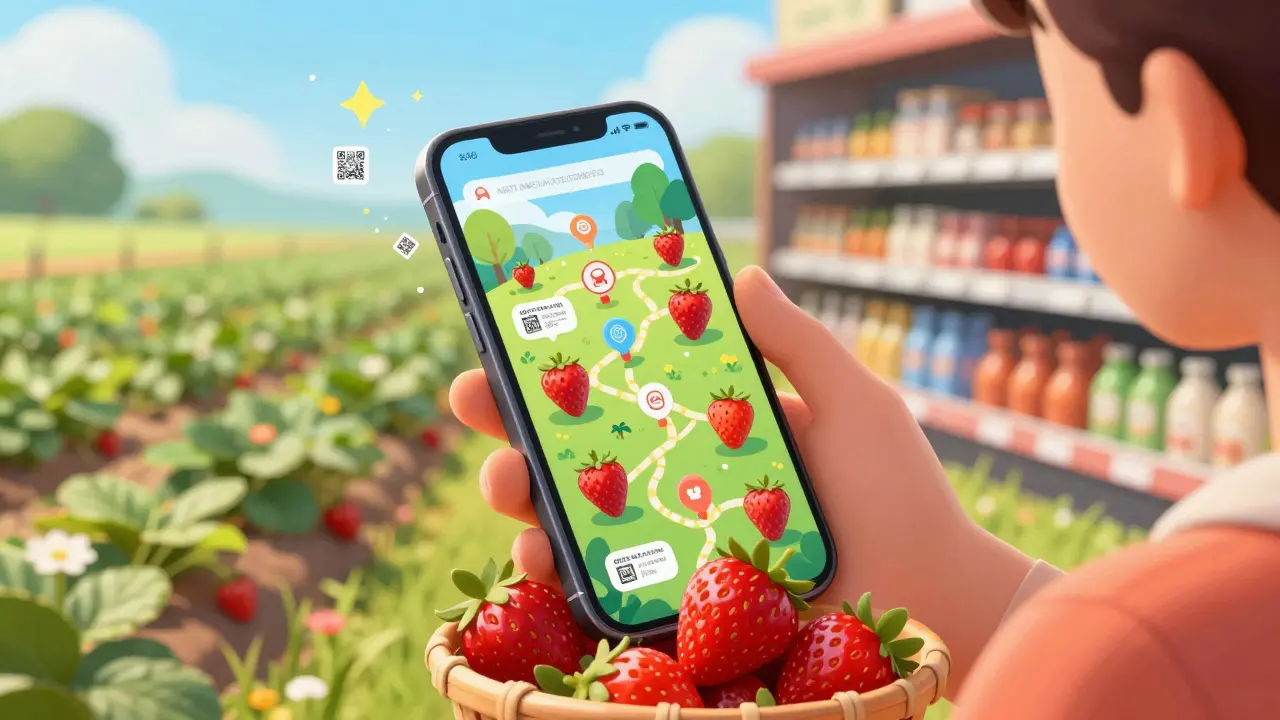
Here’s how it rolls out in real life:- A farmer attaches an NFC chip or QR code to a box of strawberries. That chip links to an NFT on a blockchain (usually Ethereum or Hyperledger Fabric).
- When the strawberries are picked, the farm logs the date, location, and pesticide use into the NFT.
- At the packing plant, temperature sensors auto-update the NFT with cooling data.
- When the truck leaves, GPS and humidity logs are added.
- At the warehouse, the NFT gets updated with storage conditions.
- At the store, the NFT is scanned and linked to the shelf.
- You scan the QR code on the package with your phone. In seconds, you see the full journey-no guesswork.
NFTs vs. Old Systems: What’s Different?
Traditional traceability uses GS1 barcodes and spreadsheets. They’re cheap, but they’re weak:- They track batches, not items.
- Data is often entered manually-prone to errors.
- Records can be changed or deleted.
- No way to verify authenticity beyond the label.
- Each item has a unique digital ID.
- Data is added automatically via sensors and IoT devices.
- Records are stored on a blockchain-impossible to alter.
- Anyone with access (farmers, inspectors, consumers) can verify the history.
Who’s Using It-and Who’s Not?
Right now, NFT traceability is mostly in high-value, high-risk products:- Organic produce: Fraud rates are high, and customers pay more for trust. 37% of organic producers are testing NFTs.
- Premium seafood: 30% of salmon is mislabeled. NFTs prove it’s wild-caught Alaskan, not farmed Atlantic.
- Coffee and wine: Premium brands use NFTs to prove origin and fair trade status.
The Real Barriers: Cost, Complexity, and Confusion
It’s not all smooth sailing.- Cost: Installing RFID/NFC readers, setting up blockchain nodes, training staff-it adds up. Small farms can’t afford it.
- Complexity: Supply chain managers need 40+ hours of training just to manage the system. Developers need to know Solidity or Chaincode.
- Consumer confusion: Only 22% of people regularly scan traceability codes. Many find the apps clunky or the data overwhelming. One Reddit user said the salmon’s NFT data was “clear as mud” because three different apps showed it differently.
- Regulation: The EU and US don’t yet recognize digital NFT records as legal proof of labeling. A QR code can’t replace a printed “organic” stamp-yet.
What’s Next? The Road to 2030
The market for blockchain food traceability hit $1.84 billion in 2024. NFTs made up $153 million of that-still small, but growing fast. The EU’s Digital Product Passport initiative, launching in 2027, will require digital traceability for many food items. That’s a huge push. The FAO started a global standard in March 2025 to make sure all these systems can talk to each other. By 2030, Gartner predicts 65% of premium food products will use NFT traceability. MIT’s AgriTech Lab says it’ll become standard for high-value perishables within seven years. But for commodity foods-rice, wheat, sugar-it’s a tougher sell. Without industry-wide cost-sharing or government subsidies, NFTs won’t make sense for those products.What You Can Do Today
You don’t need to build a blockchain to benefit. Start by looking for NFT-tracked products at your local store. Brands using this tech often highlight it on packaging: “Scan for the full journey.” When you scan, pay attention:- Does the data feel real? (Specific dates, locations, names)
- Is it easy to understand?
- Does it change how you feel about the product?
Final Thought: Transparency Isn’t a Feature. It’s the New Standard.
NFTs in food traceability aren’t about flashy tech. They’re about trust. In a world where food fraud is common and recalls are slow, giving people the truth-clear, instant, and unchangeable-isn’t just smart business. It’s the bare minimum. The technology is ready. The data is there. The question isn’t whether NFTs can track your food. It’s whether you’re ready to demand to know where it came from.Can NFTs really prevent food fraud?
Yes-when properly implemented. NFTs create an immutable, tamper-proof record of a product’s journey from origin to sale. If a product is falsely labeled as organic or wild-caught, the NFT will show the real data. This makes fraud much harder to get away with. Experts estimate NFT traceability could reduce food fraud by up to 75%, especially in high-value sectors like seafood and organic produce.
Are NFTs just for expensive food?
Currently, yes. The setup cost for NFT traceability is high-between $50,000 and $500,000 per product line. That makes sense for premium items like organic salmon, specialty coffee, or wine, where customers pay more for authenticity. For low-margin goods like canned beans or white rice, the cost outweighs the benefit. But as technology gets cheaper and standards improve, it may eventually expand.
Do I need a special app to scan NFT food tags?
No. Most systems use QR codes or NFC tags, which work with any smartphone camera or NFC reader. You don’t need to download a proprietary app-just open your phone’s camera or use a built-in NFC scanner. Some brands offer their own apps for richer data, but basic scanning works with your default tools.
Is NFT food tracking safe and private?
Yes. NFT systems use strong encryption (256-bit) and decentralized storage. Only authorized parties (farmers, shippers, inspectors) can add data. Consumers see only what’s meant for them-like origin and safety info-not private business details. Your personal data isn’t collected when you scan. The system tracks the product, not you.
Will governments require NFT traceability?
Not yet-but they’re moving that way. The EU’s Digital Product Passport rule, starting in 2027, will require digital traceability for many food items. The U.S. FDA is also exploring digital labeling. NFTs are one way to meet those future rules. Right now, physical labels are still legally required, but digital NFTs are becoming a trusted supplement-and may eventually replace them.
How do NFTs compare to regular blockchain traceability?
Regular blockchain systems track batches-like all the mangoes in one crate. NFTs track individual items. That means if one mango is contaminated, you only pull that one, not the whole crate. NFTs also allow consumers to verify authenticity at the item level, not just the brand level. It’s more precise, more secure, and less wasteful.
Can farmers use NFTs without big tech support?
Not easily yet. Setting up NFT traceability requires IoT devices, blockchain integration, and technical know-how. Most small farms rely on cooperatives or distributors to handle it. But new platforms are emerging to simplify this-like low-cost NFC stickers and mobile apps that let farmers log data with a few taps. In the next few years, it’ll become much more accessible.


Write a comment