
NFT Gas Cost Calculator
Compare gas costs across different NFT standards based on your project size. Input your NFT quantity and see how ERC-721, ERC-1155, and ERC-721A stack up.
Default gas price: 55 gwei (as of late 2023)
When you buy an NFT, you’re not just buying a digital image. You’re buying proof-cryptographic, immutable, and verifiable-that you own something unique. But that proof doesn’t happen by magic. It’s built on NFT standards, the technical rules that decide how tokens behave, how they’re transferred, and who can interact with them. Without these standards, your NFT wouldn’t show up on OpenSea, wouldn’t transfer to your wallet, and wouldn’t be recognized by any platform. They’re the invisible architecture behind every digital collectible, game item, or virtual real estate deed.
What Makes NFT Standards Different from Regular Tokens?
Fungible tokens like ETH or USDC are interchangeable. One ETH is always equal to another. NFTs are the opposite. Each one is unique. That uniqueness needs to be encoded into the blockchain. That’s where standards come in. They’re not suggestions-they’re mandatory rules written into smart contracts. If a token doesn’t follow the standard, wallets and marketplaces won’t recognize it. It might exist on the blockchain, but it’s invisible to users. The first widely adopted NFT standard was ERC-721. Introduced in early 2018, it was built for CryptoKitties, the game that made NFTs go viral. Before ERC-721, there was no common way to represent unique digital assets. Developers had to build their own systems, which meant no interoperability. ERC-721 changed that. It defined three core functions:transferFrom, approve, and ownerOf. These functions made it possible for any wallet or marketplace to read, send, or display an NFT without needing custom code for each project.
How ERC-721 Works-and Why It’s Inefficient
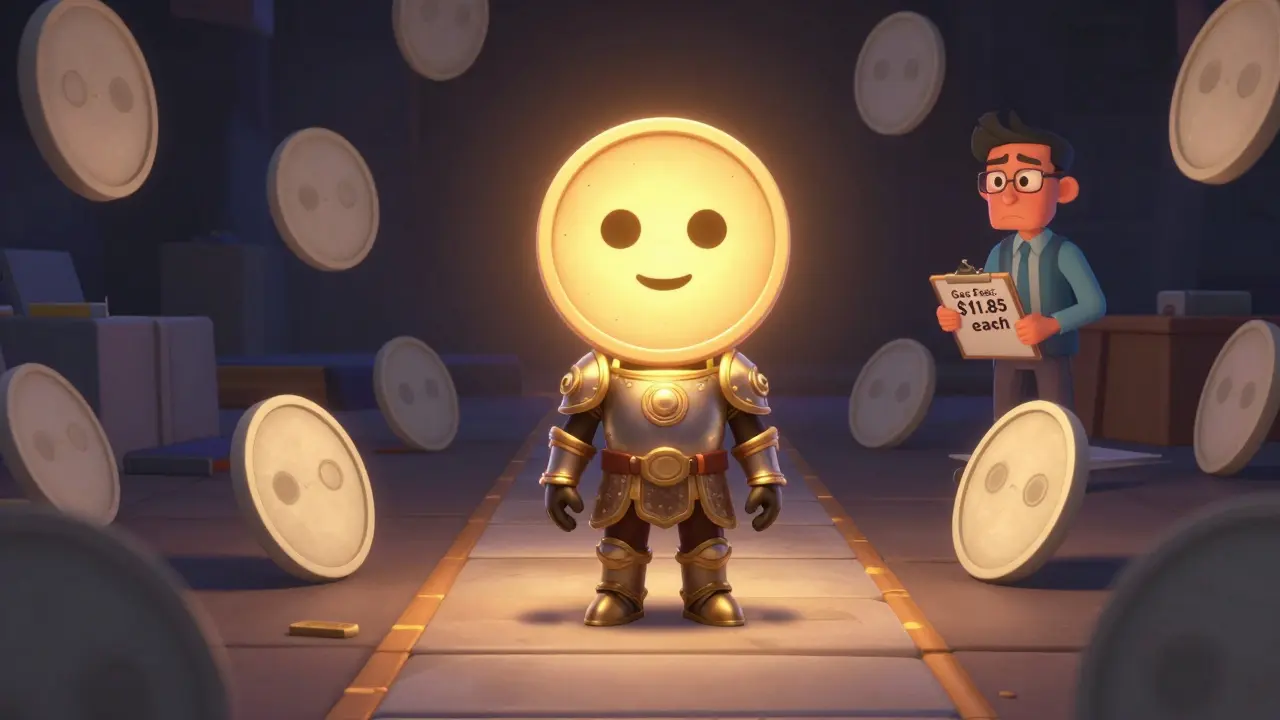
ERC-721 treats each NFT as a single, isolated item. To send five NFTs, you need five separate transactions. Each one costs gas. At an average Ethereum gas price of 55 gwei in late 2023, minting one ERC-721 NFT cost about $1.85. Five? That’s $9.25. For a collection of 10,000 NFTs, that’s over $18,000 in gas fees alone. That’s not just expensive-it’s unsustainable. There’s another hidden problem: recipient validation. ERC-721 requires that if you send an NFT to a smart contract, that contract must be able to receive it. If it doesn’t implement the correct interface, the transaction fails-and the NFT gets stuck. Developers lost millions of dollars in early days because they didn’t check if the recipient could handle the token. One Reddit user, CryptoCoder42, admitted to losing 0.5 ETH testing transfers to non-compliant contracts before understanding theonERC721Received requirement.
ERC-1155: The Game-Changer for Batch Operations
Enter ERC-1155. Developed by Enjin in 2018, it wasn’t meant to replace ERC-721-it was meant to solve its biggest flaw: inefficiency. ERC-1155 lets you bundle multiple NFTs, even mixed with fungible tokens, into one transaction. You can send 100 unique swords, 50 health potions, and 10 ETH all in a single call. Gas savings? Up to 90% compared to ERC-721. Enjin’s benchmarks showed each additional NFT in a batch saved 17,000-20,000 gas units. At 55 gwei, that’s $0.18 per extra token instead of $1.85. This made ERC-1155 the go-to standard for gaming. Axie Infinity uses it to transfer both SLP tokens and unique Axie NFTs in one transaction. Players save $4.20 per trade during network congestion. Game developers love it. In Enjin’s 2023 survey, 82% of game developers chose ERC-1155 for new projects. It’s not just cheaper-it’s faster. Fewer transactions mean less network congestion and better user experience. But it’s not perfect. Developers reported confusion managing mixed fungible and non-fungible tokens in the same contract. One Reddit thread from June 2023 found 41% of ERC-1155 users struggled with accounting for both types of assets. Still, the benefits outweigh the learning curve for most use cases.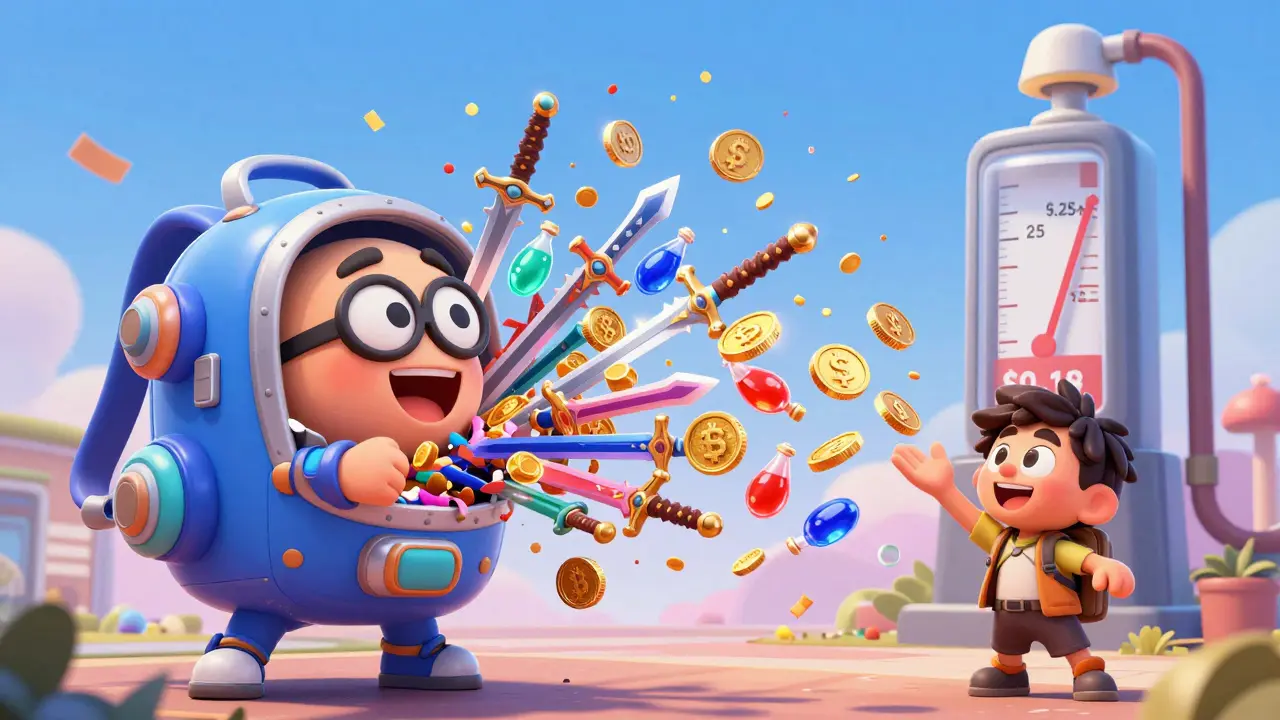
ERC-721A: The Evolution of an Old Standard
While ERC-1155 took over gaming, the art world stuck with ERC-721. Why? Because collectors care about provenance. Each token has its own history, its own identity. But they didn’t want to pay $18,000 to mint 10,000 pieces. So developers created ERC-721A. ERC-721A is a modified version of ERC-721 that allows batch minting. Instead of minting one by one, you can mint hundreds in a single transaction. NFTArtistMike on OpenSea’s forum said batch minting saved him $387 on his 100-piece collection. The gas cost dropped from $185 to $98. That’s still more than ERC-1155, but it’s a massive improvement over vanilla ERC-721. The catch? ERC-721A isn’t an official EIP. It’s a community-driven optimization. That means not all platforms support it out of the box. But major marketplaces like ZeroEx and LooksRare added support in late 2023. Its adoption grew 320% between Q1 and Q3 2023, according to DappRadar. It’s the best of both worlds: compatibility with existing ERC-721 infrastructure, plus batch efficiency.Other Standards: Sui, Stacks, and Beyond
Ethereum dominates the NFT market at 78.3%, but other chains are carving out their own standards. On Sui, NFTs follow the Object Display standard. Instead of storing metadata on IPFS, Sui lets builders choose where to store images-on-chain or off-chain. The standard also forces specific fields: name, description, link, project URL, and image URL. This ensures NFTs render consistently across wallets and marketplaces. Sui claims its object-oriented architecture cuts transfer time from 15 seconds to under 500 milliseconds. On Stacks, SIP-009 lets you create NFTs secured by Bitcoin’s blockchain. This appeals to users who trust Bitcoin’s security more than Ethereum’s. These NFTs are stored on Stacks but anchored to Bitcoin’s ledger. It’s a clever workaround for those who want Bitcoin’s finality with NFT functionality. Even Bitcoin itself is getting in the game. BRC-69, still in development as of late 2023, aims to bring native NFT support to Bitcoin’s Layer 1. If it gains traction, it could challenge Ethereum’s dominance by tapping into Bitcoin’s massive user base.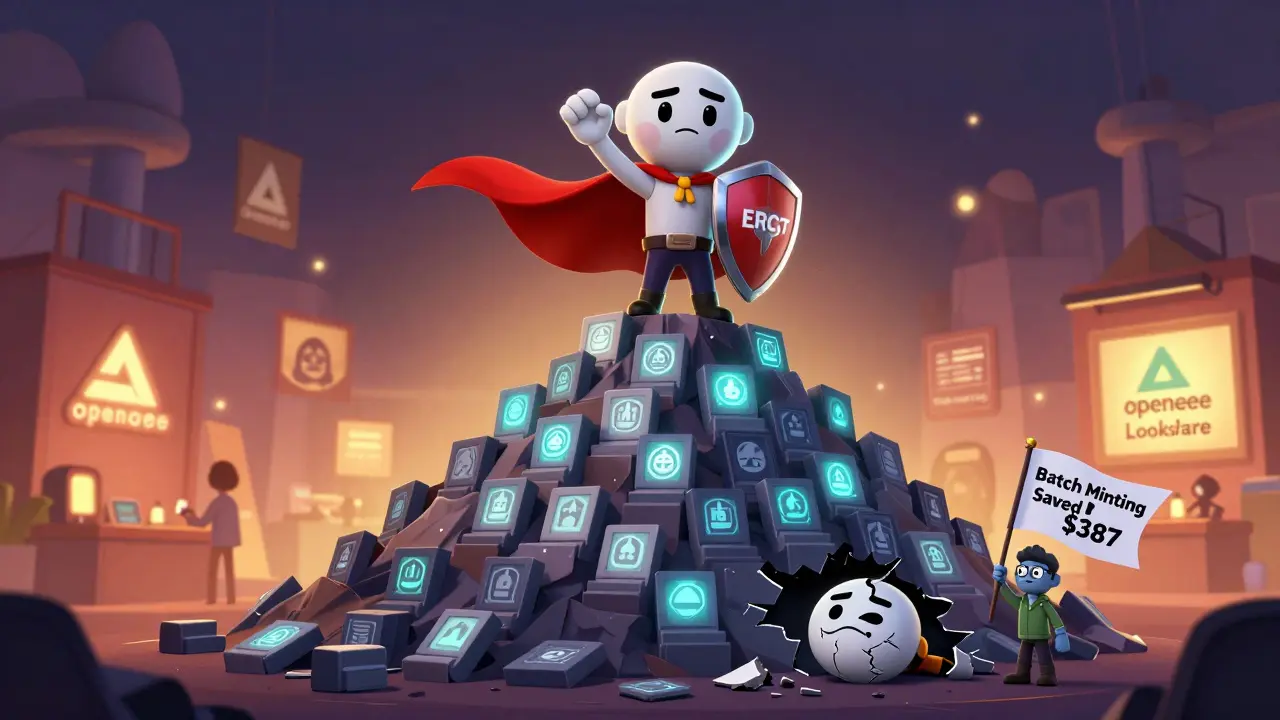
Choosing the Right Standard
So which one should you use?- Use ERC-721 if you’re creating a high-value art collection where individual provenance matters and you’re minting fewer than 1,000 pieces.
- Use ERC-721A if you’re still in the art space but want to mint 1,000+ NFTs affordably and need compatibility with OpenSea, SuperRare, and other legacy platforms.
- Use ERC-1155 if you’re building a game, metaverse, or any project that needs both fungible and non-fungible assets. It’s the most efficient for high-volume transfers.
- Use SIP-009 if your audience prioritizes Bitcoin security over Ethereum’s ecosystem.
- Use Sui’s standard if you’re targeting low-latency, high-throughput applications and don’t need Ethereum compatibility.


Write a comment