





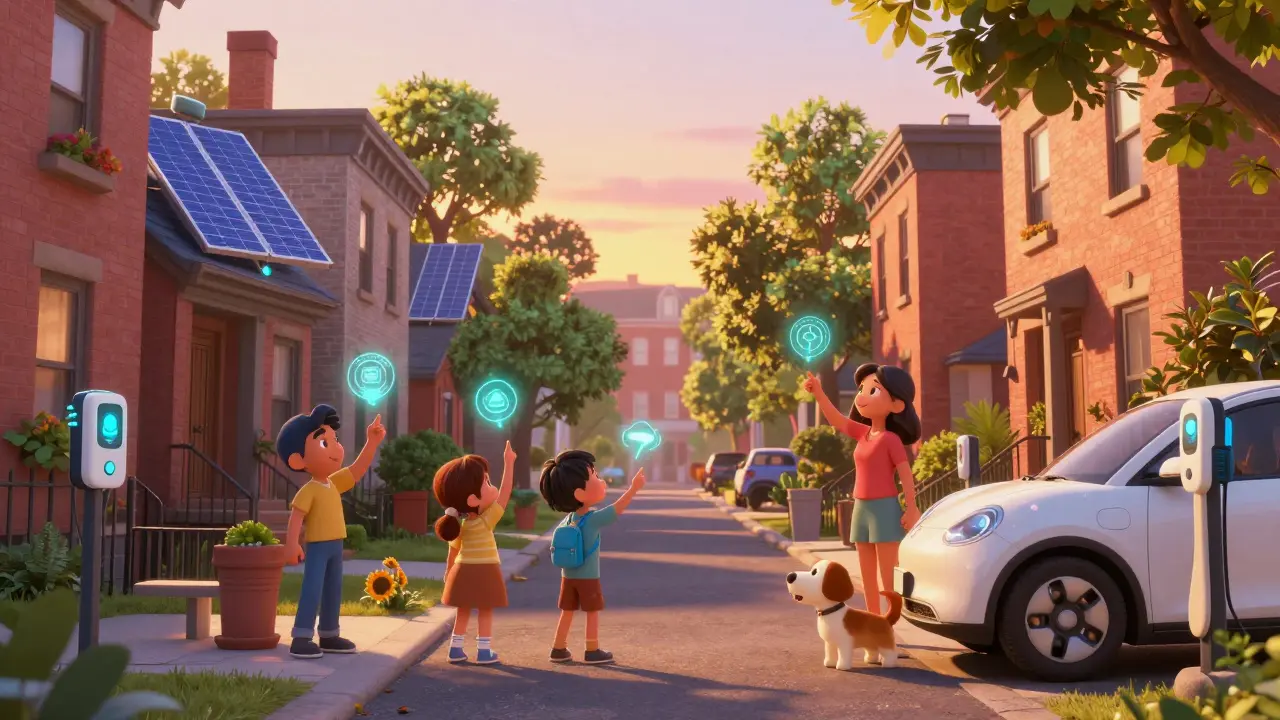
Imagine your neighbor’s solar panels generating more electricity than they need. Instead of that extra power going to waste-or being sold back to the grid at a low rate-it’s sold directly to you, automatically, for less than your utility charges. No middleman. No paperwork. Just a click. This isn’t science fiction. It’s happening right now, thanks to energy blockchain platforms.
What Is Energy Blockchain, Really?
Energy blockchain isn’t just blockchain tech applied to electricity. It’s a complete rewrite of how energy moves from producer to consumer. Traditional grids rely on big power plants, centralized utilities, and long supply chains. Energy blockchain flips that. It lets homes, businesses, and even electric vehicles trade power directly with each other using smart contracts-self-executing code on a blockchain that automatically handles payments and transfers when conditions are met.
Think of it like Venmo for electricity. You generate surplus solar power. Your neighbor needs it at 7 p.m. The system checks both your meter and theirs, confirms the transaction, and transfers the energy and payment in seconds. No invoice. No delay. No utility company taking a cut.
This model isn’t theoretical. Communities in Brooklyn, Berlin, and Melbourne are already doing it. And the technology behind it? It’s not just about security or transparency-it’s about scaling. A single neighborhood microgrid can generate thousands of tiny transactions a day. Most blockchains can’t handle that. That’s why only a few platforms are actually working at scale.
LO3 Energy’s Exergy: The Leader in Real-World Energy Blockchain
If you’re looking for the most mature, real-world energy blockchain platform, LO3 Energy’s Exergy system is the benchmark. Launched in 2016, it’s been running live in pilot projects for nearly a decade. What makes it different?
First, it doesn’t try to force every transaction onto the main blockchain. That would be slow and expensive. Instead, Exergy uses a hybrid model: most trades happen off-chain in local microgrid networks. Only the final settlement-say, daily totals or monthly balances-is recorded on the blockchain. This cuts costs by over 90% and makes the system fast enough for real-time trading.
Second, it uses AI to batch transactions. If 50 households in a street each trade small amounts of energy throughout the day, Exergy’s AI groups those into one single on-chain record. This reduces network congestion and keeps fees near zero. It’s not magic-it’s smart engineering.
Third, it tokenizes energy. Each kilowatt-hour becomes a digital unit you can buy, sell, or store. These aren’t crypto coins you trade for profit. They’re energy credits-backed by real power from solar panels or wind turbines. You use them to pay your neighbor, not speculate on price.
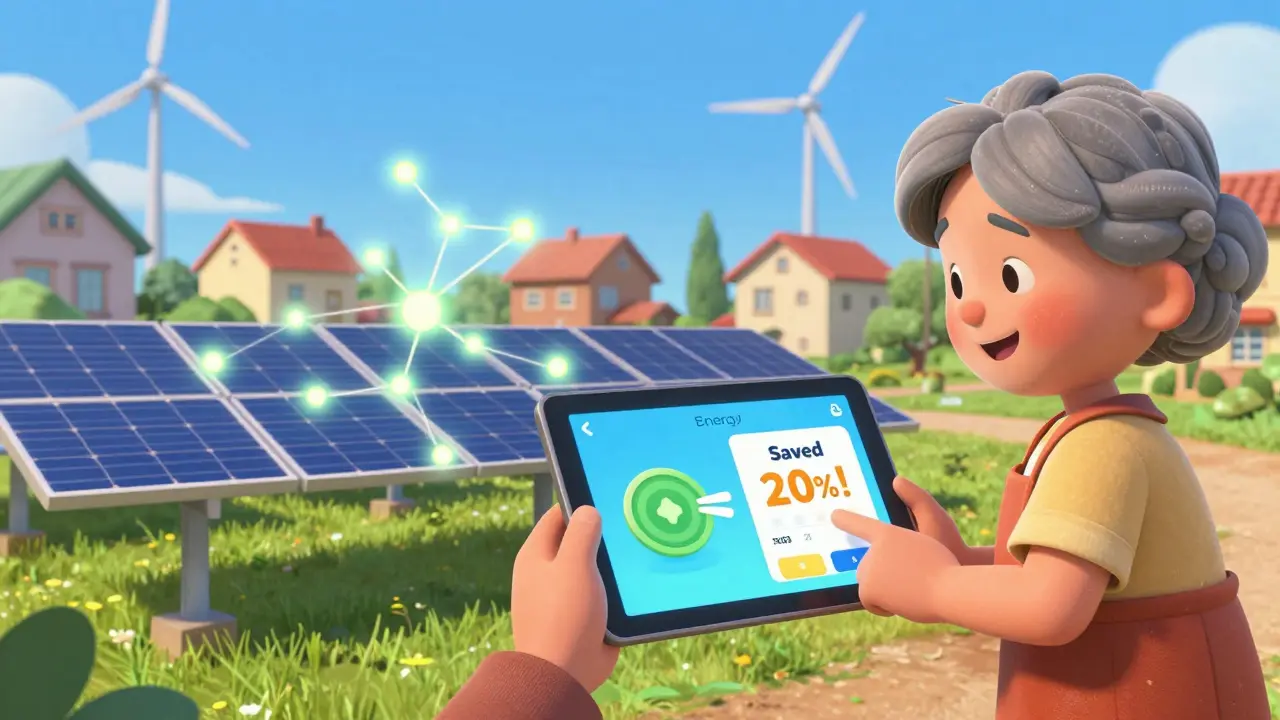
And the interface? Simple. Residents use a mobile app. One tap to sell surplus. One tap to buy from a nearby solar farm. No technical skills needed. That’s why LO3 Energy’s platform has been adopted by over 30 local energy cooperatives across Europe and North America.
General-Purpose Blockchains: Ethereum, Solana, Cardano-Can They Handle Energy?
While LO3 Energy builds specialized tools, other blockchain platforms are trying to plug into energy markets too. Here’s how they stack up:
| Platform | Speed (TPS) | Cost per Transaction | Energy Efficiency | Smart Contract Ecosystem | Best For |
|---|---|---|---|---|---|
| Ethereum A decentralized blockchain platform with the largest ecosystem of smart contracts | 20-30 | $1-$50+ | High (Post-merge PoS) | Excellent | Complex, long-term energy contracts, carbon credit tracking |
| Solana A high-performance blockchain designed for speed and low fees | 65,000+ | $0.0001-$0.001 | Medium | Good | High-frequency microtransactions, real-time grid balancing |
| Binance Smart Chain (BSC) A low-cost blockchain compatible with Ethereum tools | 1,000-2,000 | $0.01-$0.10 | Medium | Good | Cost-sensitive energy trading platforms, small-scale microgrids |
| Cardano An energy-efficient blockchain built with sustainability as a core principle | 250 | $0.05-$0.15 | Very High | Developing | Green energy projects, carbon offset tokenization |
| Polkadot A multi-chain network enabling interoperability between blockchains | 1,000+ | $0.10-$1 | High | Good | Connecting energy systems across different blockchain networks |
Ethereum is still the go-to for developers building complex energy contracts because of its mature tools and large developer base. But the high fees make it impractical for daily microtransactions between households. Solana’s speed and low cost make it tempting for real-time grid balancing, but its occasional network outages raise red flags for critical infrastructure. Cardano is the quiet contender-its energy-efficient design matches the values of renewable energy projects, but it lacks the apps and integrations needed for real deployment.
The bottom line? General-purpose blockchains are like trying to use a Swiss Army knife to perform brain surgery. You can do it-but you’ll get better results with the right tool.
Why Specialized Platforms Are Winning
Most blockchain projects in energy fail because they treat energy like a commodity to be traded like Bitcoin. But electricity isn’t Bitcoin. It’s perishable. It needs to flow instantly. It’s tied to physical infrastructure-wires, transformers, meters. It’s regulated by local utilities and government agencies.
Specialized platforms like LO3 Energy understand this. They don’t just build a blockchain. They build a full energy system: smart meters that feed real-time data, grid stability algorithms that prevent blackouts, regulatory compliance layers that meet local laws, and user interfaces designed for grandparents, not coders.
They also solve problems general blockchains ignore. For example, how do you verify that the 5 kWh you bought was actually produced by solar panels and not pulled from the coal grid? LO3 Energy ties each token to a specific renewable generator, verified by meter data and timestamped on-chain. That’s called renewable energy attribute tracking. It’s not a feature-it’s a requirement.
Another challenge: what if your neighbor’s solar system goes offline? The system needs to auto-re-route energy or pause the contract. LO3’s platform uses predictive load balancing to monitor grid conditions and shift supply before problems arise. That’s not something Ethereum can do out of the box.
Real Projects Making a Difference
Here are three live examples of energy blockchain in action:
- Brooklyn Microgrid (USA): Run by LO3 Energy, this project lets over 1,000 households trade solar power. Residents use the Exergy app to sell excess energy to neighbors. The system automatically settles payments in cryptocurrency, which users can convert to USD or hold as energy credits.
- Power Ledger (Australia): This platform connects solar farms to apartment complexes. Tenants pay for their share of rooftop solar via blockchain tokens. The system tracks usage, calculates fair pricing, and distributes payments to owners-no utility bill in sight.
- WePower (Europe): Focuses on renewable energy procurement for businesses. Companies buy future energy output from wind and solar farms via tokenized contracts. This gives developers upfront capital to build new projects, while buyers lock in green energy at fixed rates.
These aren’t demos. They’re running, paying users, and growing. In 2024, the Brooklyn Microgrid handled over 8 million energy transactions. That’s more than most crypto exchanges.
What’s Next? The Future of Energy Blockchain
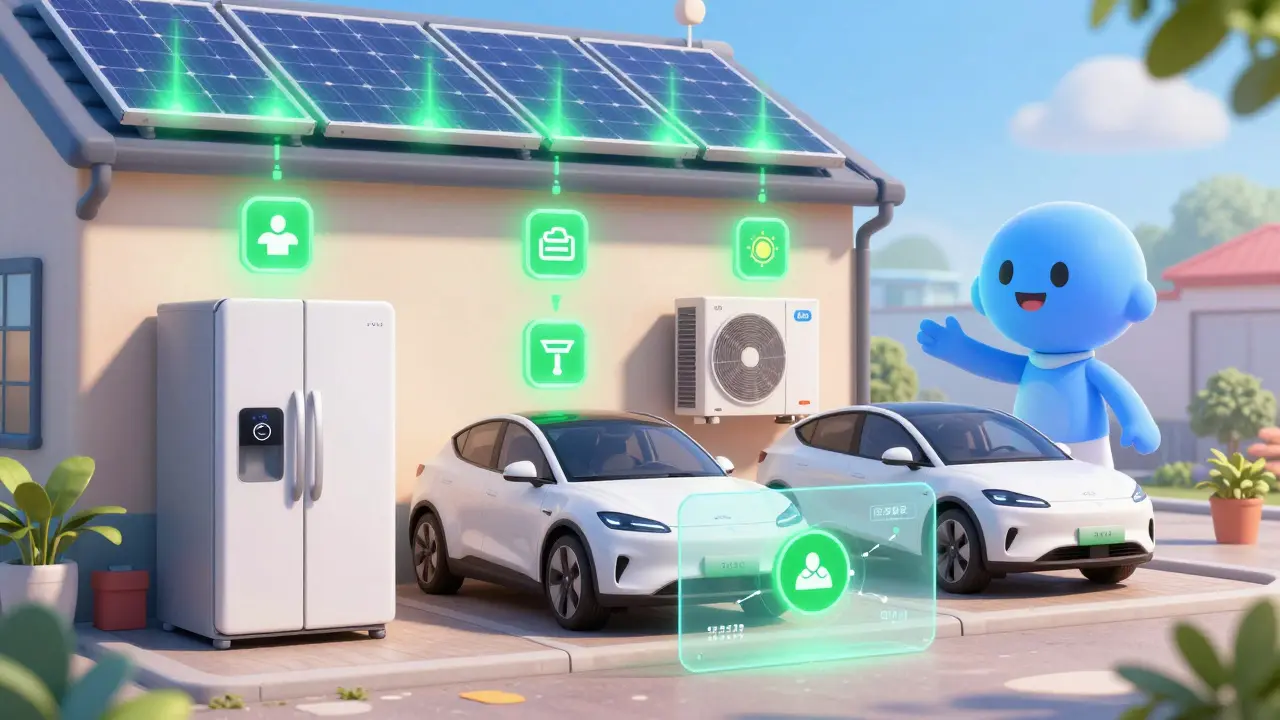
The next wave of innovation is merging energy blockchain with smart grids and IoT devices. Imagine your fridge, EV charger, and heat pump all talking to the blockchain. When your solar panels are producing, your car charges. When demand spikes, your heat pump dims slightly to free up power for a neighbor’s medical device. All automatic. All secure.
Regulators are catching up, too. The EU’s Clean Energy Package now legally recognizes peer-to-peer energy trading. In the U.S., states like California and New York are piloting blockchain-based grid incentives. By 2027, over 40% of new residential solar installations in Europe are expected to include blockchain trading options.
The biggest barrier? Not technology. It’s trust. People need to believe their neighbor’s solar panel is real, their payment is safe, and the system won’t break when they need it most. That’s why LO3 Energy and others focus on transparency-every transaction is visible, verifiable, and immutable.
Energy blockchain isn’t about replacing the grid. It’s about making it smarter, fairer, and greener. The future of energy isn’t centralized. It’s local. It’s peer-to-peer. And it’s already here.
Can I use energy blockchain at home right now?
Yes-but only if you live in a community that’s adopted it. Projects like Brooklyn Microgrid and Power Ledger are live in specific neighborhoods in the U.S., Australia, and parts of Europe. You need solar panels or access to a local renewable energy source, a smart meter, and an app provided by the platform. It’s not available nationwide yet, but pilot programs are expanding fast.
Do I need to understand cryptocurrency to use energy blockchain?
No. Most platforms like LO3 Energy’s Exergy use tokens that represent energy, not speculative crypto. You don’t buy or sell them on exchanges. The app handles everything in the background-payments appear as credits on your bill. You just click to sell or buy. It’s designed for regular homeowners, not tech experts.
Is energy blockchain more expensive than my current utility bill?
Usually cheaper. In pilot programs, users report savings of 15-30% on their energy bills. That’s because you’re cutting out the utility’s markup and buying directly from local producers. Plus, you get paid for surplus power instead of getting pennies back from your utility. Fees are near zero thanks to off-chain processing.
What happens if the blockchain goes down?
The system doesn’t rely on the blockchain for real-time trading. Most transactions happen locally on secure, private networks. The blockchain only records settlements-once a day or week. If the main chain has an issue, trading continues normally. Your lights won’t go out.
Can I use energy blockchain without solar panels?
Yes. Many platforms let you buy energy from others’ solar farms or wind projects. You don’t need to generate power yourself-you just need to be part of a participating community. Some even let you invest in shared renewable assets through tokenized shares.
If you’re thinking about joining an energy blockchain project, start by checking if your local utility or community group is running a pilot. Ask about smart meter access and whether they support peer-to-peer trading. The technology is ready. All you need is to be in the right place at the right time.


Write a comment